
Lifestyle
Jake Paul Net Worth: How Much Is He Worth in 2026?

Introduction
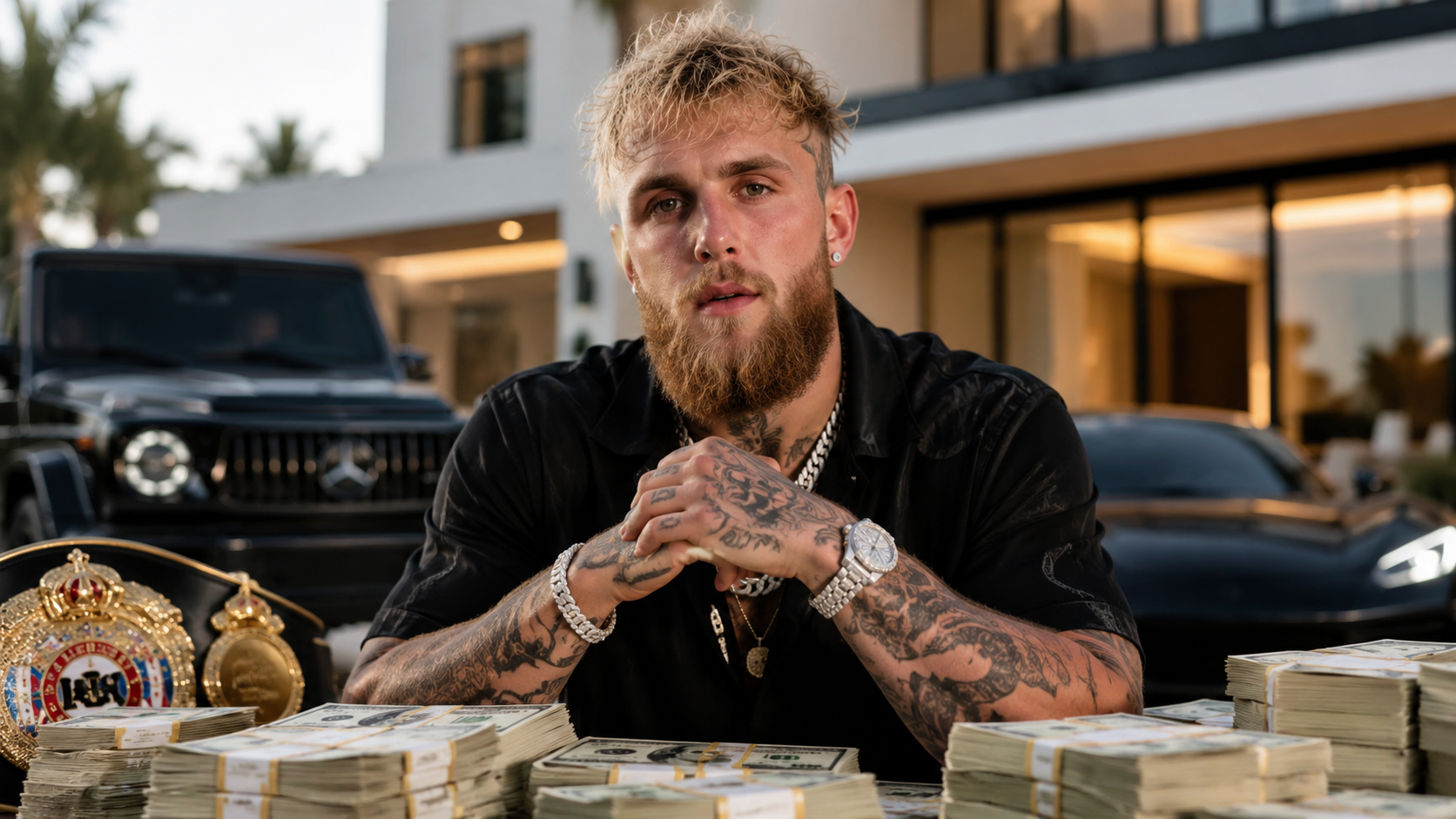
Jake Paul has gone from Vine clips and prank videos to million-dollar boxing purses and a seat at the table with venture capitalists. That jump raises an obvious question for anyone who’s followed his career: how much is he actually worth?
The honest answer is that nobody outside his accounting team knows the exact number. Net worth for private individuals is always an estimate, built from public earnings, business valuations, and educated guesswork. But there’s enough public information about Paul’s fights, brands, and investments to get a solid picture of where he stands financially in 2026.
Direct Answer
Jake Paul’s net worth is estimated at $100 million to $200 million as of 2026, with most trackers, including Celebrity Net Worth, citing a figure around $200 million. His wealth comes from boxing purses (including a reported $92 million payout for his fight against Anthony Joshua), YouTube and social media earnings, his boxing promotion company Most Valuable Promotions, the sports betting app Betr, the grooming brand W, and early-stage investments through his venture firm Anti Fund.
Where the Estimate Comes From
Net worth figures for celebrities are rarely official. Paul hasn’t published an audited financial statement, so outlets like Celebrity Net Worth build their numbers from a mix of contract disclosures, gate receipts, brand valuations, and comparisons to similar public figures. That’s why you’ll see a range rather than one fixed number — some sources land closer to $100 million, focused mainly on liquid earnings, while others push toward $200 million by factoring in his equity stakes and business ownership.
This spread isn’t a sign that anyone is wrong. It reflects a real distinction: cash and liquid assets versus paper wealth tied up in private company valuations that could rise or fall.
Key Facts
- Full name: Jake Joseph Paul, born January 17, 1997, in Cleveland, Ohio
- Estimated net worth: $100 million–$200 million as of 2026
- Primary income sources: boxing purses, YouTube, brand deals, business ownership
- Boxing record: 12 wins, 2 losses, as of early 2026
- Founder of Most Valuable Promotions (boxing promotion), Betr (sports betting), and W (grooming brand)
- Managing partner at Anti Fund, a venture capital firm with early stakes in companies like Ramp and Anduril
- Younger brother of YouTuber Logan Paul, whose own net worth is estimated around $150 million
How Jake Paul Built His Wealth
Starting on Vine and YouTube
Paul’s public career started on Vine in 2013, where six-second comedy clips built him an early following. When Vine shut down, he moved that audience to YouTube, launching his channel in 2014. Prank videos, vlogs, and a stint on the Disney Channel show Bizaardvark helped him cross into mainstream recognition, though the Disney role ended after backlash over his behavior in his neighborhood.
YouTube ad revenue alone wouldn’t explain a nine-figure fortune. What it gave Paul was something more valuable long-term: a large, engaged audience he could later convert into pay-per-view boxing buyers and product customers.
The Move Into Boxing
Paul’s professional boxing debut came in January 2020 against fellow YouTuber AnEsonGib, which he won by TKO. Since then, he’s built a record that includes wins over Nate Robinson, Ben Askren, Tyron Woodley (twice), Anderson Silva, and Nate Diaz.
Two fights stand out financially. His November 2024 bout against Mike Tyson, streamed on Netflix, reportedly earned him around $40 million and drew one of the largest audiences in combat sports history. His December 2025 fight against Anthony Joshua reportedly paid him roughly $92 million, according to Celebrity Net Worth — by far his largest single payday.
It’s worth noting these are gross figures. Boxers pay taxes, trainers, promotional costs, and other expenses out of a purse, so take-home pay is meaningfully lower than the headline number.
Most Valuable Promotions
In 2021, Paul co-founded Most Valuable Promotions (MVP), a boxing and combat sports promotion company. This matters for his net worth because it changes his financial position from “fighter getting paid a purse” to “promoter who also fights.”
When Paul fights on a card his own company promotes, he can collect both his fighter’s purse and a share of the promotional profit — ticket sales, pay-per-view revenue, and sponsorships that would otherwise go entirely to an outside promoter. MVP has also promoted other events, including women’s boxing cards, giving Paul a revenue stream independent of his own fights.
Betr and the Sports Betting Push
Paul co-founded Betr, a mobile sports betting and prediction market app, in 2022. The sports betting industry has grown rapidly in the U.S. as more states legalize it, and Paul’s built-in audience gave the app an unusual marketing advantage compared to competitors starting from zero.
Betr is a private company, so its exact contribution to Paul’s net worth is hard to pin down. Analysts typically estimate his stake’s value based on funding rounds and comparable companies rather than public financial statements.
W and Other Brand Ventures
Paul launched W, a men’s grooming and body care brand, in 2024. Celebrity-founded consumer brands are common, but they vary widely in how much they actually contribute to a founder’s net worth — some become genuine businesses, while others function more as marketing extensions of a personal brand. W is still relatively new, so its long-term value to Paul’s fortune isn’t yet clear.
Anti Fund and Venture Investing
Perhaps the least talked-about piece of Paul’s financial picture is Anti Fund, his venture capital firm. Through it, Paul has taken early-stage stakes in companies that have since grown substantially, including the corporate card and spend management company Ramp and the defense technology company Anduril.
Early investors in companies that later reach multibillion-dollar valuations can see the paper value of their stake grow enormously, even without selling anything. This is the part of Paul’s wealth that’s hardest to estimate accurately, since private company valuations change based on funding rounds that aren’t always public, and paper gains aren’t the same as cash in hand.
Why the Range Matters
A useful way to think about Paul’s net worth is in three layers:
- Liquid wealth — cash and easily sold assets from boxing purses and direct payments.
- Business equity — ownership stakes in MVP, Betr, and W, which have real value but aren’t as easy to convert to cash quickly.
- Investment stakes — his Anti Fund positions, which depend heavily on how those companies perform and whether they eventually go public or get acquired.
Estimates on the lower end of the range tend to weight liquid wealth more heavily. Estimates near $200 million usually give more credit to the business and investment layers. Neither approach is wrong — they’re just measuring different things.
Common Mistakes and Misconceptions
Mistake: Treating gross boxing purses as take-home pay. A $92 million purse headline doesn’t mean $92 million lands in a bank account. Taxes, team cuts, and promotional expenses reduce that figure substantially.
Mistake: Assuming net worth equals cash on hand. Most of Paul’s fortune, like that of most wealthy entrepreneurs, is tied up in business ownership and investments rather than sitting in a checking account.
Mistake: Ignoring MVP’s promotional revenue. People often calculate Paul’s boxing earnings using only his fighter purse, missing that he often profits again on the same event as a promoter.
Misconception: His wealth is purely from being a “YouTuber turned boxer.” While that’s the origin story, the bulk of his current and future net worth growth is tied to business ownership — MVP, Betr, W, and Anti Fund — not YouTube ad revenue or fight purses alone.
Real-World Example: How One Fight Affects Net Worth
Take the Anthony Joshua fight as an illustration. A reported $92 million purse doesn’t just add $92 million to a net worth figure in isolation. Analysts factor in:
- Taxes owed on the income (often a significant percentage in the U.S.)
- Payments to trainers, management, and his team
- Any portion reinvested into MVP or other ventures
- The promotional profit MVP may have earned on top of the fighter purse
This is why a single big payday can move a net worth estimate by tens of millions rather than dollar-for-dollar with the headline number.
FAQ
Q1: What is Jake Paul’s net worth?
Ans: Estimates place Jake Paul’s net worth between $100 million and $200 million as of 2026, with Celebrity Net Worth citing approximately $200 million.
Q2: How does Jake Paul make money?
Ans: He earns through boxing purses, his promotion company Most Valuable Promotions, YouTube and social media, the sports betting app Betr, the grooming brand W, and venture investments through Anti Fund.
Q3: How much did Jake Paul make from boxing?
Ans: His most notable paydays include a reported $40 million for fighting Mike Tyson in 2024 and a reported $92 million for fighting Anthony Joshua in 2025. These are gross figures before taxes and expenses.
Q4: Is Jake Paul richer than his brother Logan Paul?
Ans: Most estimates put Jake Paul’s net worth around $50 million higher than Logan Paul’s, whose fortune is estimated at roughly $150 million.
Q5: Why do net worth estimates for Jake Paul vary so much?
Ans: Because his wealth includes private business equity and investment stakes that aren’t publicly disclosed. Estimates differ based on how much value analysts assign to those private holdings versus his more easily verified cash earnings.
Q6: What businesses does Jake Paul own?
Ans: He co-founded Most Valuable Promotions, Betr, and the brand W, and he runs the venture capital firm Anti Fund, which holds early-stage stakes in companies like Ramp and Anduril.
Key Takeaways
- Jake Paul’s net worth is estimated at $100 million to $200 million as of 2026, with most sources leaning toward the higher end.
- His fortune spans boxing purses, promotional revenue through MVP, brand ownership, and venture investments.
- Gross fight purses don’t equal take-home pay once taxes and expenses are factored in.
- A meaningful share of his wealth is in private business equity and investment stakes, which are harder to value precisely than cash earnings.
- His net worth has grown substantially since his early YouTube days, driven more by business ownership than by any single revenue stream.
Conclusion
Jake Paul’s financial story doesn’t fit neatly into “YouTuber who got rich” or “boxer who got lucky.” His net worth reflects a combination of entertainment earnings, boxing paydays, and a genuine business portfolio spanning promotion, betting, consumer products, and venture capital. The exact number will likely keep shifting as his companies grow and his boxing career continues, but the underlying pattern is clear: he’s converted early internet fame into ownership stakes across several industries, which is a large part of why estimates of his wealth keep climbing.

Crystle Stewart: From Miss USA 2008 to Pageant Executive
Crystle Stewart’s name comes up in a lot of different searches. Some people remember her as the woman who wore the Miss USA crown in 2008. Others know her from her acting roles in Tyler Perry productions. And more recently, people search her name because of her time running the Miss USA and Miss Teen USA organizations, and the controversy that ended it.
This article pulls all of that together in one place: her early life, her pageant career, her acting work, her business ventures, and what happened during her tenure as a pageant executive.
Direct Answer: Who Is Crystle Stewart?
Crystle Stewart is an American actress, model, and former beauty pageant titleholder born on September 20, 1981, in Houston, Texas. She won Miss Texas USA and Miss USA in 2008, then represented the United States at Miss Universe 2008, placing in the top 10. She later built an acting career, most notably in Tyler Perry’s “For Better or Worse,” and from 2020 to 2023 served as president and national director of the Miss USA and Miss Teen USA pageants before stepping down amid controversy.
Early Life and Education
Stewart grew up in the Houston area, in Missouri City, Texas. She’s the daughter of Robert Stewart III and Cynthia Diane Franklin and grew up alongside two siblings. As a teenager, she competed as a track athlete, earning a silver medal in the 4x400m relay at the 1994 Junior Olympics.
She attended Elkins High School in Missouri City before moving on to the University of Houston, where she earned a bachelor’s degree in consumer science and merchandising in 2007.
None of this pointed directly at a pageant career right away. Stewart has said the idea of competing for Miss USA didn’t take hold as a real goal until she was in her twenties, which is later than many titleholders start out.
The Long Road to Miss USA
Winning Miss USA in 2008 wasn’t Stewart’s first attempt at a crown. It took her five tries at the state level before she finally won Miss Texas USA.
Here’s how her run at the Texas title actually played out:
- 2002–2003: Competed as Miss Fort Bend County, reaching the semifinals in her first try.
- 2004–2005: Competed again as Miss Fort Bend County, finishing third runner-up in 2005.
- 2006: Competed as Miss Harris County and finished first runner-up.
- 2007: Finished first runner-up again, this time as an at-large delegate.
- 2008: Finally won the Miss Texas USA title, becoming only the second African American woman to hold it, after Chelsi Smith won it in 1995.
That kind of repeated near-miss is common in pageant circuits, but it’s easy to overlook when people only see the eventual win. Stewart’s path is a good example of how state-level competition often takes years of building experience, stage presence, and interview skills before a win happens.
Miss USA 2008 and Miss Universe
Stewart was crowned Miss USA on April 11, 2008, becoming the ninth Texan to hold the national title. During her reign, she made public appearances, worked with charities, and attended events like the White House Correspondents’ Association dinner.
She then went on to compete at Miss Universe 2008, held in Vietnam, where she placed in the top 10. Pageant watchers often point to a stumble during the evening gown portion of that competition as a moment that may have affected her final placement, though she still finished among the top competitors that year.
After her reign as Miss USA ended, Stewart stayed connected to the pageant world by hosting competitions, including Miss Teen USA and Miss Texas USA events.
Acting Career
Stewart moved into acting a few years after her pageant reign. In 2011, she took a guest role as Vanessa on the TV series “House of Payne.” That same year, she landed a starring role as Leslie Morris in the Tyler Perry-produced series “For Better or Worse,” which ran on OWN and TBS until 2017. The show gave her steady, recurring TV work rather than a one-off appearance, which helped her build a longer acting résumé.
She also appeared in the Tyler Perry film “Acrimony” in 2018, a project that expanded her visibility beyond television into film.
Outside of scripted roles, Stewart worked as a model, represented by the Neal Hamil Agency in Houston, and took on hosting work for pageant broadcasts.
Miss Academy and Business Ventures
Stewart didn’t just perform in pageants; she also built a business around teaching pageant skills. She created the Miss Academy, a program focused on coaching people in public speaking, poise, and the kind of presentation skills that show up in pageant competition and in everyday professional life.
This background in coaching and training set her up for the next major chapter of her career: running the Miss USA organization itself.
Leading the Miss USA and Miss Teen USA Pageants
In November 2020, the Miss Universe Organization licensed operation of the Miss USA and Miss Teen USA pageants to Stewart. This made her the first Black woman to own and operate the Miss USA franchise, a historic first for a pageant system that had run for decades. Her company, Miss Brand, took over the licensing and day-to-day operation of the competitions.
As president and national director, Stewart oversaw production changes, including moving Miss USA’s broadcast and updating the pageant’s website and judging panels. She described her goal as reshaping pageantry for a new generation, emphasizing life skills alongside the traditional competition format.
The 2022 Rigging Allegations
Stewart’s run as head of Miss USA hit a major setback in October 2022. After R’Bonney Gabriel was crowned Miss USA 2022, several other contestants reacted by walking off the stage instead of congratulating her. In the days that followed, more than a dozen contestants publicly accused the organization, and Stewart’s company Miss Brand, of favoring Gabriel unfairly.
The Miss Universe Organization responded by suspending Stewart and launching a third-party investigation into the claims.
What the Investigation Found
The investigation into the rigging claims eventually concluded that those specific allegations were false. Gabriel’s win stood, and she went on to compete at Miss Universe 2023, becoming the first American to win that title in about a decade.
However, the same investigation surfaced separate issues, including questions about conflicts of interest and how earlier misconduct allegations involving Stewart’s then-husband, Max Sebrechts, had been handled. Sebrechts had served as vice president of Miss Brand and stepped down from that role in early 2023 after multiple contestants from 2021 accused him of inappropriate conduct, including an unwanted incident in a contestant’s hotel room. His departure was originally described as a structural change within the organization, but reporting later indicated it stemmed from these allegations.
Stewart’s Departure
By August 2023, Stewart had stepped down from her position, and Miss Brand’s licensing agreement with the Miss Universe Organization ended. Fashion designer Laylah Rose was announced as her replacement, taking over as president and CEO of Miss USA and Miss Teen USA that same day.
Even though Stewart was cleared of the specific rigging accusations, the combination of the suspension, the parallel misconduct allegations against her husband, and the broader disruption to the organization made her exit the practical outcome.
The fallout continued into 2024, when both the reigning Miss USA (Noelia Voigt) and Miss Teen USA (UmaSofia Srivastava) resigned within days of each other, citing concerns about the organization’s culture under its new leadership. While that turmoil happened after Stewart’s departure, it kept her name in the news as commentators looked back at how the organization had changed hands.
Personal Life
Stewart married Max Sebrechts, a Belgian model, in 2014. The couple have two children together, a daughter named Anne-Jolie and a son named Max Jr. Sebrechts also worked within Miss Brand as a vice president before his departure in early 2023, which was tied to the same broader investigation that led to Stewart’s exit.
Common Mistakes and Misconceptions
A few points about Stewart’s story get mixed up or oversimplified online:
- “She was fired for rigging the pageant.” This isn’t accurate. The investigation found the rigging claims to be false. Her departure was tied to separate issues uncovered during that same investigation, not the original rigging accusation itself.
- “She still runs Miss USA.” She does not. Laylah Rose took over as president and CEO in 2023, and ownership has changed hands again since then.
- “She was Miss Universe.” Stewart never held the Miss Universe title. She competed at Miss Universe 2008 representing the United States and placed in the top 10, but did not win.
- “Her acting career started right after her pageant win.” There was a gap of a few years between her Miss USA reign in 2008 and her first acting credit in 2011.
Key Facts
- Full name: Crystle Danae Stewart (also known as Crystle Stewart Sebrechts)
- Born: September 20, 1981, in Houston, Texas
- Education: Bachelor’s degree in consumer science and merchandising, University of Houston, 2007
- Titles held: Miss Texas USA 2008, Miss USA 2008
- Miss Universe 2008 placement: Top 10
- Acting credits: “House of Payne” (2011), “For Better or Worse” (2011–2017), “Acrimony” (2018)
- Business: Founder of the Miss Academy; former owner/operator of Miss Brand
- Pageant leadership: President and national director of Miss USA and Miss Teen USA, 2020–2023
- Spouse: Max Sebrechts (married 2014)
- Children: Two
Frequently Asked Questions
Q1: What is Crystle Stewart known for?
Ans: She’s best known for winning Miss USA in 2008 and for later becoming the first Black woman to own and run the Miss USA and Miss Teen USA pageant franchises, a role she held from 2020 to 2023.
Q2: Did Crystle Stewart win Miss Universe?
Ans: No. She represented the United States at Miss Universe 2008 and finished in the top 10, but the title went to someone else.
Q3: Why did Crystle Stewart leave Miss USA?
Ans: She was suspended in October 2022 after contestants accused her organization of rigging the pageant. An investigation cleared her of that specific claim, but separate issues found during the same investigation, including matters involving her then-husband’s conduct, led to her stepping down from the organization in August 2023.
Q4: Is Crystle Stewart still involved with Miss USA?
Ans: No. Her company Miss Brand’s licensing agreement ended in 2023, and Laylah Rose took over as president and CEO. Ownership of the Miss USA organization has changed again since then.
Q5: What TV shows or movies has Crystle Stewart appeared in?
Ans: Her most notable credit is the Tyler Perry series “For Better or Worse,” where she played Leslie Morris from 2011 to 2017. She also appeared in the Tyler Perry film “Acrimony” and had an earlier guest role on “House of Payne.”
Q6: Is Crystle Stewart married?
Ans: Yes, she married Max Sebrechts in 2014, and the couple have two children.
Key Takeaways
- Crystle Stewart won Miss Texas USA and Miss USA in 2008 after five years of competing at the state level.
- She placed in the top 10 at Miss Universe 2008 but did not win the international title.
- She built an acting career starting in 2011, most notably in Tyler Perry’s “For Better or Worse.”
- In 2020, she became the first Black woman to own and operate the Miss USA and Miss Teen USA pageant franchises.
- Rigging allegations in 2022 led to her suspension; an investigation later cleared her of that specific claim.
- Separate issues uncovered during the investigation, including conduct allegations against her then-husband, led to her departure from the organization in 2023.
Conclusion
Crystle Stewart’s career covers more ground than most people realize when they first search her name. She’s a former state and national pageant titleholder, a working actress, an entrepreneur who built a skills-coaching business, and, for a few years, the executive in charge of one of the country’s most recognized pageant brands. Her exit from that role in 2023 came from a complicated mix of a cleared allegation and separate issues that surfaced during the same investigation, which is a nuance that often gets lost in shorter summaries of her story.

Introduction
Morgan Wallen has spent the last few years turning country music into stadium-sized business. Between record-breaking album releases, sold-out tours, and a personal brand that draws as much attention as his music, fans and casual observers alike keep asking the same question: how much is he actually worth?
It’s a fair question. Wallen’s career has grown at a pace that’s unusual even by country music standards, and his income comes from more places than just record sales. He tours, he writes songs other artists record, he sells merchandise by the truckload, and he has business interests outside of music entirely. Understanding his net worth means looking at all of those pieces together, not just guessing at a single number.
This article breaks down what’s actually known about Morgan Wallen’s finances, where the estimates come from, how reliable they are, and what’s driving his continued growth in 2026.
Direct Answer: What Is Morgan Wallen’s Net Worth?
As of 2026, Morgan Wallen’s net worth is estimated at $35 to $40 million, according to sources including Celebrity Net Worth and Parade. This figure has grown sharply since 2024, when estimates put his wealth closer to $12 million, driven largely by the runaway success of his 2025 album I’m the Problem and the stadium-level Still the Problem Tour. Because artist finances aren’t publicly disclosed, exact figures vary by source, but most reputable estimates now fall within that $35–40 million range.
Who Is Morgan Wallen?
Morgan Cole Wallen was born May 13, 1993, in Sneedville, Tennessee, and grew up in a Baptist household where his father worked as a pastor. Music was part of his childhood — he learned piano and violin early on — but baseball was his first real ambition. He was on track for a college scholarship until an elbow injury pushed him toward music instead.
Wallen’s national profile started with a 2014 appearance on Season 6 of NBC’s The Voice. It took a few more years for his solo career to catch fire, but by 2018 his single “Whiskey Glasses” put him on the map in country music. Since then, he’s become one of the genre’s biggest commercial forces, with albums like Dangerous: The Double Album and One Thing at a Time setting streaming and chart records.
How Morgan Wallen Makes His Money
Net worth isn’t just a number pulled from thin air — it reflects actual, ongoing income streams. For an artist at Wallen’s level, that income comes from several different directions.
Touring Revenue
Touring is by far Wallen’s biggest earner, and it’s not close. His 2023 summer stadium tour reportedly grossed around $190 million, with Wallen personally taking home an estimated $70 million across those dates — roughly $2.3 million per show. His 2025 tour supporting I’m the Problem added an estimated $24 million in personal profit on top of that.
In 2026, the Still the Problem Tour continues this pattern: 23 stadium dates at NFL and college football venues, with opening support from Hardy, Ella Langley, and Brooks & Dunn, wrapping up in Philadelphia in late August. Stadium touring at this scale involves higher costs than smaller venues, but it also means dramatically higher ticket revenue, which is why touring dominates his income compared to almost every other source.
Album Sales and Streaming Royalties
Wallen’s catalog is enormous by any measure. He holds more RIAA-certified units than any other country artist in history, with over 265 million certified units across his catalog. One Thing at a Time became Spotify’s most-streamed album globally in 2023, with all 36 tracks charting on the Billboard Hot 100 at once — a feat almost no other artist has matched.
Streaming royalties are typically smaller per-play than people assume, but at Wallen’s volume of billions of cumulative streams, they add up to a steady and significant income stream, separate from touring and merchandise.
Songwriting and Publishing
Because Wallen writes or co-writes much of his own material, he earns publishing royalties in addition to performance royalties. This is a common but often overlooked income source for artists who write their own songs — it means he gets paid both as the performer and as the songwriter, which roughly doubles his cut of every stream or sale compared to an artist who only performs material written by others.
Merchandise and Business Ventures
Concert merchandise is a major revenue stream for touring artists, and Wallen’s stadium-level draw makes this a meaningful part of his income. Beyond merchandise, reporting points to growing business interests in and around Nashville, though the specifics of these ventures aren’t as publicly documented as his music and touring income.
Brand Partnerships
Unlike some artists who lean heavily on endorsement deals, Wallen’s income is weighted much more toward touring and music than sponsorships. The Still the Problem Tour does include corporate sponsors, but brand deals appear to be a smaller slice of his overall earnings compared to what he generates on stage.
Why the Net Worth Estimates Vary
If you search for Morgan Wallen’s net worth, you’ll notice the numbers aren’t identical across sources. Some put him around $35 million, others stretch to $40 million, and a few outlier estimates are considerably lower. This isn’t necessarily a sign that any particular source is wrong — it reflects a real limitation in how celebrity net worth is calculated.
Artists like Wallen aren’t publicly traded companies. They don’t file quarterly earnings reports, and their tour contracts, royalty splits, and business deals are private. Sites that estimate net worth are working from public data points — reported tour grosses, known album certifications, Forbes’ annual earnings rankings — and then making informed calculations to fill in the gaps. Two analysts working from the same public information can reasonably land on different final numbers, especially when they make different assumptions about touring costs, tax obligations, or how much of gross revenue an artist actually keeps.
Forbes ranked Wallen among the highest-paid musicians of 2025, listing his annual earnings for that year at around $33 million. That figure alone helps explain why his estimated net worth grew so quickly between 2024 and 2026 — earning that much in a single year, on top of an already substantial base, moves the total significantly.
How Morgan Wallen’s Net Worth Has Grown Over Time
Wallen’s financial trajectory tells its own story about how quickly an artist’s earning power can change once they cross into stadium-level touring.
- Early career (pre-2018): Estimated net worth in the low single-digit millions, before “Whiskey Glasses” broke through.
- 2020–2023: Steady growth driven by Dangerous: The Double Album and early tour success, alongside his CMA New Artist of the Year win in 2020.
- 2024: Net worth estimated around $12 million, reflecting his position before the I’m the Problem album cycle.
- 2025–2026: Estimates nearly tripled to $35–40 million, fueled by the album’s chart dominance, record streaming numbers, and stadium tour earnings.
This kind of jump isn’t unusual for an artist who moves from theater or arena shows into full stadium tours. The revenue ceiling at that level is simply much higher, and it shows up quickly in net worth estimates once a tour cycle wraps.
Common Mistakes and Misconceptions
Mistake: Assuming net worth equals cash in the bank. Net worth estimates typically include the value of future royalty streams, real estate, and other assets — not just liquid cash. An artist’s net worth can be tied up in ways that aren’t immediately spendable.
Mistake: Confusing tour gross with personal earnings. Headlines often cite total tour grosses, like the $190 million figure from Wallen’s 2023 run. That’s ticket revenue before production costs, venue fees, crew salaries, and other expenses — not what the artist personally keeps. Personal take-home is a fraction of that gross number.
Mistake: Treating any single source as definitive. Because artist finances are private, no net worth site has access to actual bank statements or tax returns. Even well-researched estimates are informed approximations, which is why cross-referencing multiple sources gives a more reliable picture than trusting one figure in isolation.
Misconception: That controversies have derailed his earning power. Wallen’s career has included well-publicized personal controversies, but his commercial numbers — chart performance, tour grosses, streaming figures — have continued climbing during the same period. Public controversy and commercial success aren’t mutually exclusive, and in Wallen’s case the data shows continued growth despite the headlines.
Real-World Example: How a Single Tour Cycle Moves the Needle
To understand why Wallen’s net worth estimate grew so quickly, it helps to look at what a single successful album-and-tour cycle can do. When I’m the Problem released in May 2025, it debuted at No. 1 and went on to spend 13 total weeks atop the Billboard 200 as of mid-2026. That kind of sustained chart performance drives streaming numbers, which drives royalty income, and it also fuels ticket demand for the tour that follows.
The Still the Problem Tour then converts that momentum into touring revenue, which — as covered above — is Wallen’s largest single income source. Layer in merchandise sales at each stadium stop, and a single album cycle can plausibly account for tens of millions of dollars in earnings over 12–18 months. That’s the mechanism behind the jump from roughly $12 million in 2024 to $35–40 million in 2026.
Key Facts
- Morgan Wallen’s estimated net worth in 2026 is $35–40 million.
- His 2023 stadium tour reportedly grossed around $190 million.
- He holds over 265 million RIAA-certified units, the most of any country artist.
- One Thing at a Time was Spotify’s most-streamed album globally in 2023.
- Forbes listed his 2025 annual earnings at approximately $33 million.
- His 2026 tour, Still the Problem, includes 23 stadium dates.
- A portion of ticket sales benefits the Morgan Wallen Foundation, which supports youth sports and music programs.
Frequently Asked Questions
Q1: What is Morgan Wallen’s net worth in 2026?
Ans: Most current estimates place it between $35 million and $40 million, based on touring revenue, album sales, streaming royalties, and business ventures.
Q2: How does Morgan Wallen make most of his money?
Ans: Touring is his largest income source by far, followed by streaming and album royalties, songwriting publishing income, and merchandise sales.
Q3: Why do net worth estimates for Morgan Wallen vary between sources?
Ans: Artist finances aren’t publicly disclosed, so estimates rely on public data like tour grosses and album certifications combined with informed assumptions. Different analysts can reasonably reach different totals.
Q4: How much did Morgan Wallen’s 2023 tour earn?
Ans: The tour reportedly grossed around $190 million in total ticket revenue, with Wallen’s personal take estimated at roughly $70 million after costs.
Q5: Has Morgan Wallen’s net worth grown recently?
Ans: Yes. Estimates put his net worth around $12 million in 2024, growing to roughly $35–40 million by 2026, largely due to the success of his 2025 album and tour.
Q6: Is Morgan Wallen the highest-paid country artist?
Ans: He’s consistently ranked among the highest-earning musicians in any genre by outlets like Forbes, though “highest-paid” rankings shift year to year depending on tour schedules and release cycles.
Key Takeaways
- Morgan Wallen’s 2026 net worth is estimated at $35–40 million, according to multiple sources.
- Touring is his primary income source, with his 2023 and 2025 tours generating tens of millions in personal earnings.
- His growth from roughly $12 million in 2024 to over $35 million by 2026 reflects the impact of a single successful album and tour cycle.
- Net worth figures for private individuals like Wallen are estimates, not confirmed facts, since artist finances aren’t publicly disclosed.
- Beyond touring, his income includes streaming royalties, songwriting publishing, and merchandise sales.
Conclusion
Morgan Wallen’s net worth reflects a career that’s scaled up quickly through touring, streaming, and songwriting income, even as public estimates continue to vary depending on the source and methodology behind them. What’s consistent across nearly every reputable estimate is the trajectory: steady growth through the early 2020s, followed by a sharp jump tied to his 2025 album cycle and the stadium tour that followed. Whether the true figure sits closer to $35 million or $40 million, the underlying pattern is clear — Wallen’s earning power has grown substantially alongside his commercial success in country music.
Introduction
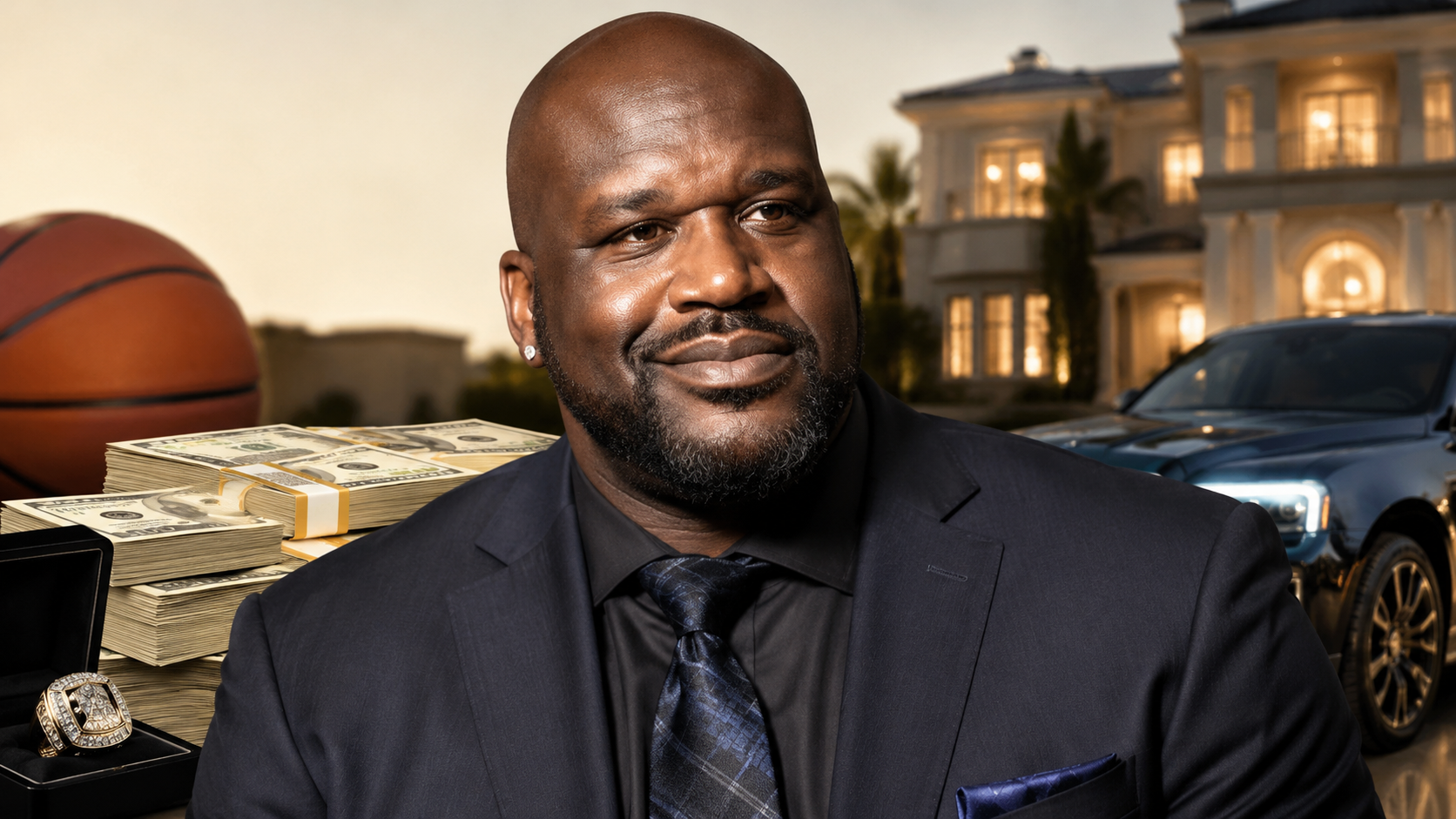
Shaquille O’Neal retired from basketball back in 2011, but he’s still one of the most visible names in sports business. People search for his net worth for a mix of reasons — some want to know how a basketball salary turns into lasting wealth, some are curious whether the billionaire jokes he makes on TV are actually true, and some just want to understand how someone stays this financially active more than a decade after their last game. The real answer involves a lot more than basketball.
Direct Answer
Shaquille O’Neal’s net worth is estimated at approximately $500 million as of 2026, according to Celebrity Net Worth and other financial outlets. He earned roughly $292 million in NBA salary over his 19-year career, but most of his current wealth comes from endorsements, restaurant franchises, media work, and business investments made after he retired from professional basketball.
How Shaquille O’Neal Made His Money
NBA Career Earnings
O’Neal played 19 seasons in the NBA, from 1992 to 2011, suiting up for the Orlando Magic, Los Angeles Lakers, Miami Heat, Phoenix Suns, Cleveland Cavaliers, and Boston Celtics. Over that career, he earned an estimated $286 to $294 million in salary alone, depending on the source and how bonuses are counted.
His early contracts were modest by today’s standards — he made roughly $4.5 million total during his four seasons with the Orlando Magic. His pay jumped significantly after he signed with the Los Angeles Lakers in 1996, and it peaked with a $100 million contract with the Miami Heat between 2004 and 2008. During his playing days, O’Neal won four NBA championships, three Finals MVP awards, and was selected to 15 All-Star teams, which kept his market value high even as he aged.
Endorsement Deals
O’Neal built one of the most recognizable endorsement portfolios in sports, and unlike his salary, this income never stopped when he retired. He has had long-running deals with brands including Pepsi, Reebok, Icy Hot, Gold Bond, and The General insurance company, among others. At his career peak, his endorsement income reportedly crossed $200 million.
What makes O’Neal’s case unusual is that his endorsement earnings didn’t fade after he left the court. He has continued to sign new deals well into retirement, in part because his TV persona kept him in front of audiences just as consistently as his playing career once did.
Media and Television Work
Since retiring, O’Neal has built a second career as a television personality, most notably as an analyst on TNT’s Inside the NBA. That role, combined with other media appearances, commercials, and public speaking engagements, reportedly earns him somewhere in the range of $8 million to $10 million a year — separate from his endorsement income.
This matters because it shows how O’Neal’s income shifted after basketball. Instead of one big paycheck from a team, his money now comes from a mix of smaller, recurring sources: media contracts, brand deals, and business income, all running at the same time.
Business Ventures and Franchises
Franchising has become one of the biggest parts of O’Neal’s financial picture. Over the years, he has owned stakes in more than 150 restaurant franchise locations, including Five Guys, Auntie Anne’s, and Papa John’s Pizza — he was an early and vocal investor in Papa John’s before it was acquired by a private equity firm. He has also built his own restaurant brand, Big Chicken, which has expanded into a multi-location chain carrying his name.
Beyond restaurants, O’Neal holds an equity stake in Authentic Brands Group, the company that manages and licenses well-known consumer brands, along with a long-term relationship with Reebok. These kinds of equity stakes work differently than a salary or endorsement fee — their value can rise or fall with the company itself, which is part of why some estimates of O’Neal’s wealth vary so widely.
Why Net Worth Estimates for Shaq Vary So Much
If you search around, you’ll find figures anywhere from $400 million to claims of billionaire status. There’s a simple reason for that gap: net worth estimates for public figures are approximations, not audited financial statements. Different outlets weigh private business equity, real estate, and franchise ownership differently, and none of them have access to O’Neal’s actual bank statements or tax filings.
O’Neal himself has jokingly referred to himself as a billionaire on television, which has led to some public back-and-forth. Fellow analyst Charles Barkley has publicly challenged that claim, arguing O’Neal’s actual wealth is well below ten figures. Most financial outlets, including Celebrity Net Worth, currently put his real net worth at roughly $500 million — a substantial fortune, but short of billionaire status.
Common Mistakes and Misconceptions
Mistake: Assuming his NBA salary is the main source of his wealth. O’Neal’s on-court salary, around $292 million over 19 years, is only part of the picture. His endorsement deals, franchise ownership, and media contracts have added up to significantly more over time, especially since he never stopped earning after retirement.
Mistake: Believing he’s a billionaire. Despite jokes made on television, most credible net worth estimates place O’Neal at approximately $500 million, not $1 billion. This distinction matters because “billionaire” gets thrown around loosely in sports media, and O’Neal’s own jokes have added to the confusion.
Mistake: Thinking his wealth has stayed flat since retirement. O’Neal’s estimated net worth has actually grown since he stopped playing basketball in 2011, climbing from roughly $400 million in the early 2020s to around $500 million today. Retirement didn’t slow his income — it shifted the sources.
Misconception: All of his wealth is liquid cash. A large portion of O’Neal’s net worth is tied up in business equity, franchise ownership, and brand stakes. Those assets carry real value, but they aren’t the same as cash in a bank account, and their worth can shift with the businesses themselves.
Real-World Example: How the Income Streams Stack Up
To understand how someone builds this kind of fortune after their playing days end, it helps to break down O’Neal’s income into simplified categories:
- NBA salary (1992–2011): approximately $286–294 million total, spread across 19 seasons
- Endorsements: over $200 million during his playing career, with tens of millions more earned annually since retiring
- Media work: an estimated $8–10 million per year from TV analyst work and appearances
- Franchise ownership: equity in more than 150 restaurant locations, including Big Chicken, Five Guys, Auntie Anne’s, and Papa John’s
- Brand equity: an ownership stake in Authentic Brands Group and a long-term relationship with Reebok
No single category explains O’Neal’s $500 million net worth on its own. It’s the combination of a long, well-paid playing career followed by more than a decade of consistent business and media income that adds up to the total.
Key Facts
- Shaquille O’Neal’s estimated net worth in 2026 is around $500 million.
- He earned an estimated $286–294 million in NBA salary across 19 seasons.
- He won four NBA championships and three Finals MVP awards.
- His endorsement income at its peak reportedly crossed $200 million.
- He reportedly earns roughly $95 million a year in total post-retirement income, including endorsements, media, and business.
- He owns stakes in more than 150 restaurant franchises, including his own Big Chicken chain.
- He holds equity in Authentic Brands Group and a longstanding partnership with Reebok.
- Despite jokes about being a billionaire, most financial estimates place his real net worth well below that mark.
Frequently Asked Questions
Q1: What is Shaquille O’Neal’s net worth?
Ans: As of 2026, Shaquille O’Neal’s net worth is estimated at approximately $500 million.
Q2: How much money did Shaq make playing in the NBA?
Ans: O’Neal earned an estimated $286 to $294 million in salary over his 19-year NBA career, not including endorsement income earned during those years.
Q3: Is Shaq a billionaire?
Ans: No. Despite jokes he’s made on television, most net worth estimates place his fortune at roughly $500 million, not $1 billion.
Q4: How does Shaq make money now that he’s retired?
Ans: His current income comes from television analyst work on TNT’s Inside the NBA, ongoing endorsement deals, restaurant franchise ownership, and equity stakes in companies like Authentic Brands Group.
Q5: What businesses does Shaq own?
Ans: He holds ownership stakes in more than 150 restaurant franchise locations, including Five Guys, Auntie Anne’s, and Papa John’s, along with his own restaurant brand, Big Chicken.
Q6: Why do net worth estimates for Shaq differ between sources?
Ans: Net worth figures for public figures are estimates based on publicly known assets and reported deals. They aren’t official financial disclosures, so different outlets calculate business equity and franchise value differently, leading to a range of estimates.
Q7: Does Shaq still earn endorsement money after retiring?
Ans: Yes. Unlike many retired athletes, O’Neal has continued signing and maintaining endorsement deals well into retirement, which is part of why his net worth has kept growing since he left the NBA.
Key Takeaways
- Shaquille O’Neal’s 2026 net worth is estimated at approximately $500 million.
- His NBA salary, while substantial at nearly $290 million, is only part of his overall wealth.
- Endorsements, media work, and franchise ownership now account for most of his income.
- His fortune has continued growing since retirement, unlike many athletes whose wealth plateaus after their playing days end.
- Despite public jokes about being a billionaire, credible estimates place him below that threshold.
- Net worth figures for public figures are estimates, not official or audited numbers.
Conclusion
Shaquille O’Neal’s financial story is less about one big NBA contract and more about what he did after the checks from basketball stopped coming. Endorsements, television work, and a genuinely large franchise portfolio have kept his income flowing for well over a decade past retirement, which is part of why his estimated $500 million net worth has kept climbing rather than sitting still.
-

 News2 months ago
Did Bruce Willis Pass Away? The Truth Explained
-

 News4 months ago
Who Is Julissa Thaler? The Case of Eli Hart and a Broken Child Welfare System
-

 Technology2 months ago
Christopher Knight’s Tribute to Jennifer Runyon Explained
-

 Food3 months ago
What Is VMC Paloma? Everything You Need to Know
-

 Heath2 months ago
How to Prevent Freezer Burn: A Complete Guide
-

 News3 months ago
Alexander Brothers: Case Timeline and Key Facts
-

 Sports3 months ago
Red Sox vs Reds: History, 2026 Matchups, and What Makes This Rivalry Worth Watching
-

 News3 months ago
Cheapest States to Live In: 2026 Rankings and Guide