Heath
How to Prevent Freezer Burn: A Complete Guide

Introduction
Opening the freezer to find grayish, dried-out patches on your favorite cut of meat or a frost-covered bag of vegetables is a familiar disappointment. That discoloration and texture change is freezer burn, and it’s one of the most common reasons food gets tossed out before it should be. The good news is that freezer burn isn’t inevitable. It happens because of specific, preventable conditions, and once you understand those conditions, keeping food fresh in the freezer becomes much easier.
This guide breaks down exactly why freezer burn happens, how to stop it, and what to do if it’s already affected your food.
Direct Answer
Freezer burn is prevented by removing as much air as possible from food packaging, using moisture-proof and airtight containers, keeping the freezer at a steady 0°F (-18°C) or below, and avoiding long storage times or repeated temperature changes. Vacuum sealing, double-wrapping, and pressing air out of freezer bags are the most effective everyday methods. Consistent freezer temperature matters just as much as packaging.
What Is Freezer Burn?
Freezer burn is a form of food dehydration and oxidation that happens when frozen food is exposed to air inside the freezer. It shows up as grayish-brown or white patches, a dry or leathery texture, and sometimes ice crystals on the surface of the food.
It’s important to understand that freezer burn is not spoilage in the sense of bacterial growth. Freezer-burned food is still safe to eat. The problem is quality, not safety. The affected areas taste bland, feel tough or dry, and the overall texture suffers, which is why most people choose to trim off the damaged parts or avoid eating it altogether.
Why Freezer Burn Happens
Understanding the mechanism behind freezer burn makes prevention much more intuitive.
Sublimation: The Core Process
Frozen food contains water in the form of ice crystals. When food is exposed to air inside the freezer, especially air that isn’t fully sealed off by packaging, the ice on the surface of the food slowly turns into water vapor without ever becoming liquid. This process is called sublimation. As moisture leaves the food’s surface, that area dries out and becomes damaged.
Air Exposure
Air is the main trigger for sublimation. Any gap between the food and its packaging, or any packaging that isn’t fully sealed, gives moisture room to escape. This is why loosely wrapped food or bags with excess air tend to develop freezer burn faster than tightly sealed ones.
Temperature Fluctuation
A freezer that doesn’t maintain a steady temperature makes freezer burn worse. Every time the freezer warms slightly, ice on the food’s surface can partially melt. When the temperature drops again, that moisture refreezes, often as frost on the inside of the packaging rather than back into the food. Repeating this cycle, which happens naturally every time a freezer door opens and closes, accelerates moisture loss over time.
Storage Duration
Freezer burn is also a function of time. Food stored for extended periods has more opportunity for slow sublimation to occur, even in well-sealed packaging. This doesn’t mean frozen food has a strict expiration date, but longer storage does increase the odds of quality loss.
How Freezer Burn Affects Different Foods
Not all foods show freezer burn the same way, and it helps to know what to look for.
Meat and poultry develop grayish-brown, dry patches on the surface. The texture near these spots becomes tough and stringy after cooking.
Vegetables often show white, frosty patches or become shriveled and rubbery. Their color may look faded compared to fresh-frozen product.
Fruit can develop ice crystals on the surface and become mushy or dry once thawed, particularly berries and sliced fruit.
Baked goods and bread tend to dry out and develop a stale, tough texture rather than visible discoloration.
Ice cream forms visible ice crystals on top and can develop a grainy, icy texture instead of staying smooth.
Key Methods to Prevent Freezer Burn
1. Remove as Much Air as Possible
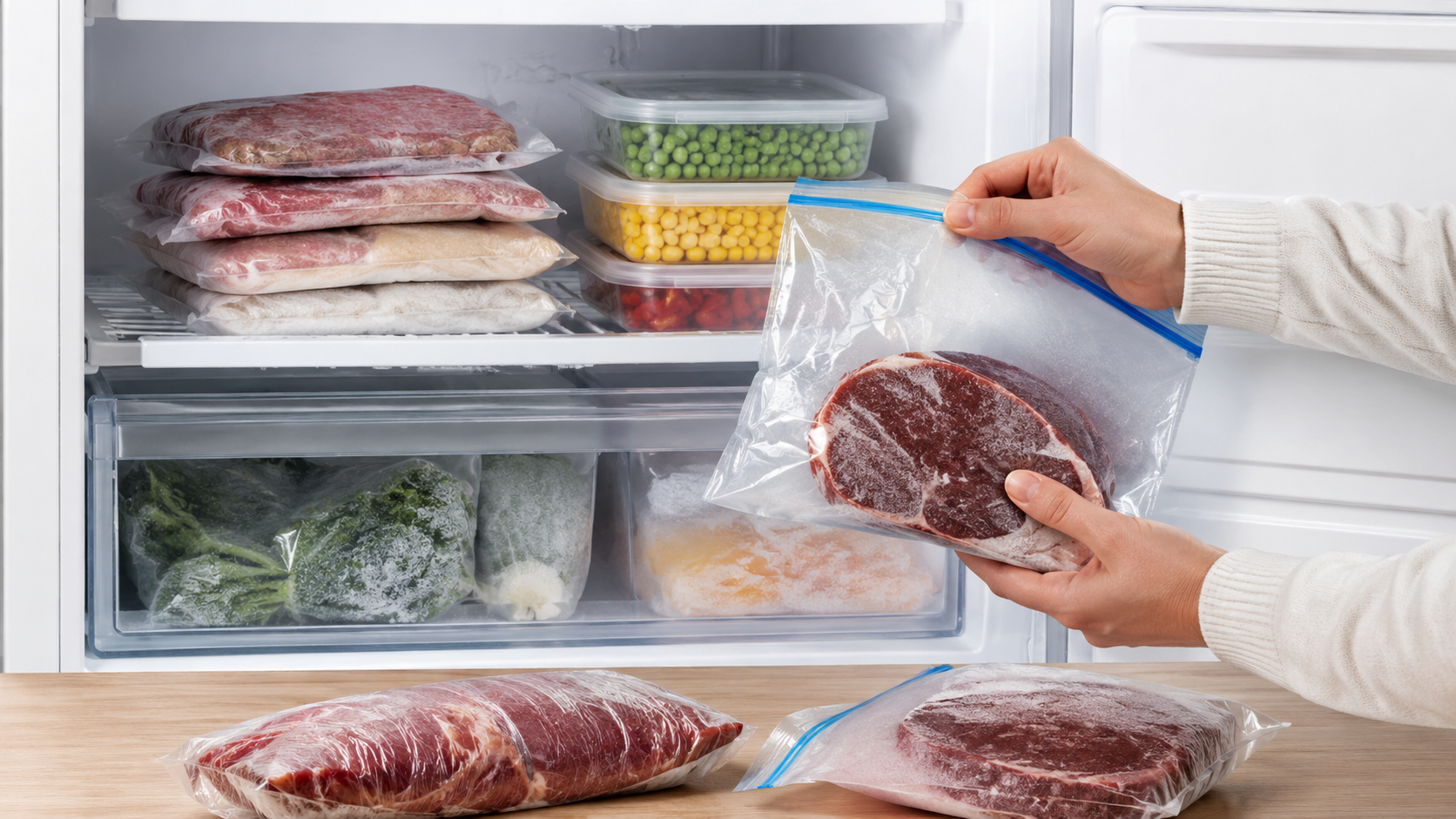
Air is the single biggest factor in freezer burn, so removing it is the most effective prevention step. Before sealing any bag or container, press out excess air by hand, or use the straw trick: insert a straw into a small opening in the bag, suck out the air, then quickly seal the rest.
2. Use Vacuum Sealing When Possible
Vacuum sealers remove nearly all air from a package before sealing it airtight. This is widely considered the most effective consumer method for preventing freezer burn, especially for meat, fish, and foods intended for long-term storage. If you freeze food regularly, a vacuum sealer is a worthwhile investment.
3. Choose the Right Packaging Materials
Not all packaging protects equally well against moisture loss. Freezer-specific bags and containers are thicker and more resistant to air and moisture transfer than standard storage bags or containers designed for the refrigerator or pantry.
Good options include:
- Freezer-grade zip-top bags
- Vacuum-seal bags
- Heavy-duty aluminum foil combined with plastic wrap
- Airtight freezer-safe containers with tight-fitting lids
Standard sandwich bags, thin plastic wrap alone, or containers not rated for freezer use tend to let more air and moisture through.
4. Double-Wrap Vulnerable Foods
For items especially prone to freezer burn, such as meat, fish, and baked goods, wrapping in plastic wrap first and then placing that in a freezer bag or foil adds an extra barrier against air exposure. This method is particularly useful when a vacuum sealer isn’t available.
5. Portion Food Before Freezing
Freezing food in the exact portions you’ll use later reduces how often a package is opened, thawed, and refrozen. Every time a package is reopened, it lets in fresh air and moisture, increasing the risk of freezer burn on future contents. Dividing bulk purchases into meal-sized portions before freezing solves this problem.
6. Keep the Freezer at a Consistent Temperature
A freezer set at 0°F (-18°C) or lower, and kept at a steady temperature, slows sublimation significantly. Avoid overloading the freezer with warm food, since this raises the internal temperature and can cause partial thawing of items already stored. Let hot or warm food cool to room temperature before freezing when practical.
7. Minimize Door Openings
Frequent door openings let warm, humid air into the freezer, which raises the internal temperature temporarily and contributes to the freeze-thaw cycles that worsen freezer burn. Organizing the freezer so items are easy to find helps reduce the time the door stays open.
8. Label and Date Everything
Labeling packages with the freezing date makes it easier to use older items first, following a first-in, first-out approach. This reduces the chances of food sitting in the freezer far longer than necessary.
9. Fill Air Gaps in Containers
When using rigid containers, leaving extra empty space at the top allows more air to surround the food. Choosing a container that closely matches the amount of food being stored, or pressing plastic wrap directly onto the food’s surface before sealing the lid, reduces that air gap.
Step-by-Step: Freezing Food to Prevent Freezer Burn
- Cool the food first. If it’s cooked, let it reach room temperature before freezing to avoid raising the freezer’s internal temperature.
- Portion it out. Divide into amounts you’ll realistically use in one sitting or meal.
- Wrap tightly. Use plastic wrap directly against the food’s surface for items like meat or baked goods.
- Remove air. Press air out of bags by hand, use the straw method, or use a vacuum sealer.
- Seal completely. Double-check zip seals or vacuum seals for full closure.
- Label with the date. Include the food type and freezing date on the outside of the package.
- Store at the back or bottom. These areas tend to have more stable temperatures than the door or front, which are exposed to warm air more often.
- Use within a reasonable time frame. While frozen food remains safe indefinitely, quality declines over time, so aim to use items within the recommended storage windows for that food type.
Common Mistakes That Cause Freezer Burn
Leaving too much air in bags. Simply zipping a bag closed without pressing out air is one of the most common causes of freezer burn.
Using non-freezer-safe packaging. Thin bags or containers designed for pantry or refrigerator use don’t provide enough of a moisture barrier for long-term freezing.
Overpacking the freezer. A freezer that’s too full can’t circulate cold air evenly, creating warm spots where freezer burn develops faster.
Storing food too close to the door. This area experiences the most temperature swings every time the freezer is opened.
Refreezing thawed food repeatedly. Each freeze-thaw cycle increases moisture loss and raises the risk of freezer burn.
Assuming freezer burn means the food is unsafe. This misconception leads people to throw away food unnecessarily. Freezer burn affects quality, not safety.
Ignoring temperature settings. Many people never check that their freezer is actually holding at 0°F (-18°C), assuming the default setting is adequate.
Real-World Examples
Consider a common scenario: a family buys a large pack of chicken breasts and freezes the whole package as-is, without repackaging. Every time they thaw the package to use two breasts, the remaining chicken is exposed to air and then refrozen. Within a few weeks, the exposed edges show classic gray, dry patches of freezer burn. If they had portioned the chicken into individual freezer bags with the air pressed out before the first freeze, each piece would have stayed fresh far longer, since only the portion being used would be exposed to air at any given time.
Another example involves bread. A loaf left in its original thin plastic bag and placed in the freezer often turns stale and dry within a few weeks. Wrapping the loaf tightly in plastic wrap, then placing it inside a freezer bag with the air removed, keeps it fresh for months by comparison.
Key Facts
- Freezer burn is caused by air exposure and moisture loss (sublimation), not bacteria.
- Freezer-burned food remains safe to eat, though texture and flavor are affected.
- The ideal freezer temperature for long-term storage is 0°F (-18°C) or lower.
- Vacuum sealing removes the most air and offers the strongest protection against freezer burn.
- Portioning food before freezing reduces repeated air exposure from reopening packages.
- Freezer-grade bags and containers offer better moisture protection than standard storage options.
- Frequent door openings and an overstocked freezer both contribute to temperature instability.
FAQ
Q1: What is freezer burn?
Ans: Freezer burn is dehydration and oxidation on the surface of frozen food caused by air exposure, resulting in dry, discolored patches and a tougher texture.
Q2: How does freezer burn happen?
Ans:It happens through sublimation, where ice on the food’s surface turns directly into water vapor and escapes through gaps in packaging or during temperature fluctuations.
Q3: Is freezer-burned food safe to eat?
Ans: Yes. Freezer burn is a quality issue, not a food safety issue. The affected areas can be trimmed off, or the food can be eaten as-is, though the texture and flavor may be noticeably worse.
Q4: Why is preventing freezer burn important?
Ans: Preventing freezer burn helps preserve the taste, texture, and nutritional quality of frozen food, reducing food waste and making meal preparation more reliable.
Q5: What’s the best way to prevent freezer burn at home?
Ans: Removing air from packaging, using freezer-safe wrapping, portioning food before freezing, and maintaining a steady freezer temperature of 0°F (-18°C) or below are the most effective combined strategies.
Q6: Does vacuum sealing completely eliminate freezer burn?
Ans: Vacuum sealing greatly reduces the risk by removing nearly all air, but it doesn’t guarantee zero freezer burn if the seal is compromised or the food is stored for a very long time.
Q7: How long can food stay in the freezer before freezer burn sets in?
Ans: This varies by food type and packaging quality. Well-sealed foods can last months without significant freezer burn, while poorly wrapped foods may show signs within a few weeks.
Q8: Can freezer burn be reversed?
Ans: No. Once moisture has left the food’s surface, it can’t be restored. Trimming the affected area or using the food in dishes where texture matters less, such as soups or stews, are the usual solutions.
Key Takeaways
- Freezer burn results from air exposure and moisture loss, not bacterial spoilage.
- It affects quality and texture, not food safety.
- Removing air from packaging is the single most effective prevention step.
- Vacuum sealing offers the strongest protection against freezer burn.
- A consistent freezer temperature of 0°F (-18°C) or lower slows the process significantly.
- Portioning food before freezing reduces repeated exposure to air.
- Freezer-grade packaging materials outperform standard bags and containers.
- Labeling and rotating stock helps ensure food is used before quality declines.
Conclusion
Freezer burn is a common but avoidable problem rooted in a simple cause: exposure to air and inconsistent temperatures. By focusing on airtight packaging, using freezer-appropriate materials, portioning food ahead of time, and keeping the freezer at a steady, cold temperature, most freezer burn can be prevented altogether. Understanding how it happens takes the mystery out of it and makes protecting food in the freezer a straightforward, repeatable habit.

-

 News2 months ago
Did Bruce Willis Pass Away? The Truth Explained
-

 News4 months ago
Who Is Julissa Thaler? The Case of Eli Hart and a Broken Child Welfare System
-

 Food3 months ago
What Is VMC Paloma? Everything You Need to Know
-

 Technology2 months ago
Christopher Knight’s Tribute to Jennifer Runyon Explained
-

 Sports3 months ago
Red Sox vs Reds: History, 2026 Matchups, and What Makes This Rivalry Worth Watching
-

 News3 months ago
Alexander Brothers: Case Timeline and Key Facts
-

 News3 months ago
Cheapest States to Live In: 2026 Rankings and Guide
-

 Technology2 months ago
Best Wireless Earbuds Under 200 Dollars 2024: A Practical Buying Guide