
News
Is Claire’s Closing? What’s Happening in 2026


Is Claire’s Closing?
If you grew up getting your ears pierced at the mall or buying butterfly hair clips by the handful, you’ve probably seen the headlines and wondered: is Claire’s actually going out of business? The short answer isn’t as simple as “yes” or “no,” because the story changed several times over the past year.
Claire’s, the tween and teen accessories retailer, filed for bankruptcy in August 2025. At one point, the company warned it might have to close all 1,500 of its North American stores. That didn’t happen. A buyer stepped in, most locations stayed open, and by mid-2026 Claire’s was actually expanding into new retail partnerships. Here’s what happened, in order, and what it means if you’re wondering whether your local store will still be there.
Direct Answer
Claire’s is not going out of business as of mid-2026. The company filed for Chapter 11 bankruptcy in August 2025 and closed roughly 300 to 700 stores as part of that process, but a private equity buyer, Ames Watson, purchased the North American business and kept the majority of locations open. Claire’s now operates more than 900 stores and has since struck licensing deals to sell products in Walmart, CVS, and Kohl’s, signaling growth rather than a full shutdown.
Why Claire’s Filed for Bankruptcy
Claire’s had been under financial pressure for years before its 2025 filing. This wasn’t even the company’s first bankruptcy; it also filed for Chapter 11 in March 2018 and struggled to fully recover afterward.
A few factors pushed the retailer back into financial trouble:
Heavy debt load. Claire’s carried a significant amount of debt, including a $475 million loan that was <cite index=”6-1″>raising concerns about its ability to pay due in 2026</cite>. Court filings also showed the <cite index=”6-1″>company had deferred debt interest payments earlier in the year to conserve cash</cite>.
Competition from fast fashion and e-commerce. Cheap, fast-shipping competitors changed how teens and tweens shop for accessories. Company leadership pointed to <cite index=”6-1″>increased competition from fast-fashion giants, along with inflation, rising interest rates, and tariffs on Chinese goods</cite> as key pressures on the business.
Declining mall traffic. Claire’s built its brand around mall locations, but foot traffic to traditional malls has been shrinking for over a decade. CEO Chris Cramer described this shift plainly, saying the <cite index=”3-1″>ongoing shift away from brick-and-mortar retail, combined with debt obligations and macroeconomic factors, made the closures necessary</cite>.
Slow payments to vendors. Analysts also flagged <cite index=”6-1″>growing delays in vendor payments as a sign of cash flow trouble</cite> in the months before the filing.
What Happened After the Bankruptcy Filing
The situation moved through several distinct phases over just a few months.
Phase 1: Initial closures and liquidation warning
Shortly after filing for bankruptcy, Claire’s announced plans to close <cite index=”4-1″>700 stores, including all Walmart shop-in-shops and Icing stores, with a warning that it might liquidate its entire 1,500-store North American footprint</cite> if no buyer came forward. This is the point where headlines about Claire’s “going out of business” spread widely, and understandably caused panic among longtime customers.
A bankruptcy court filing later listed 291 specific locations set to close, including <cite index=”7-1″>71 Claire’s and Icing stores across the Northeast</cite> alone. Local news outlets across the country, from New York to North Carolina to Connecticut, published lists of nearby stores shutting down.
Phase 2: A buyer emerges
Just weeks later, the outlook changed. Ames Watson, a private holding company, <cite index=”7-1″>agreed to acquire Claire’s North American business and intellectual property</cite>, and the deal was structured to keep the brand alive rather than wind it down.
Once the acquisition was announced, Claire’s <cite index=”5-1″>paused its planned store closures</cite>. Instead of losing all 1,500 stores, Ames Watson agreed to <cite index=”5-1″>acquire at least 795 Claire’s stores, and potentially as many as 950</cite>. According to court documents, this arrangement meant <cite index=”5-1″>nearly all store employees, plus many corporate staff, kept their jobs</cite>.
Phase 3: Expansion instead of shrinking
By spring 2026, Claire’s wasn’t just surviving, it was growing again. The company, <cite index=”2-1″>now operating more than 900 locations</cite>, announced a licensing partnership between Ames Watson and Centric Brands to <cite index=”2-1″>bring Claire’s products to more than 7,000 additional retail locations across North America</cite>, including shelves inside <cite index=”2-1″>CVS, Kohl’s, and Walmart</cite>.
This doesn’t mean 7,000 new standalone Claire’s stores are opening. It means Claire’s-branded jewelry and accessories will show up on shelves inside other retailers, similar to how a licensed brand might sell through a big-box partner without operating its own storefront in every location.
Common Mistakes and Misconceptions
Mistake: Assuming “bankruptcy” always means the company is shutting down for good. Chapter 11 bankruptcy is a legal process for reorganizing debt, not necessarily a company-ending event. Many well-known retailers have filed Chapter 11 and continued operating afterward.
Mistake: Thinking every Claire’s location is affected the same way. Store closures were concentrated in specific regions and specific formats, especially Walmart shop-in-shops and Icing-branded stores. Many individual Claire’s locations, particularly those in stronger-performing malls, were never on any closure list.
Mistake: Confusing the 2025 bankruptcy with the 2018 one. Claire’s also filed for bankruptcy in 2018 and emerged from that restructuring, though it continued to struggle with debt afterward. The 2025 filing was a separate, more serious financial event driven by newer pressures like inflation and shifting retail habits.
Mistake: Assuming the licensing expansion means fewer physical Claire’s stores. The Centric Brands deal adds new retail channels; it doesn’t replace or shrink the existing store count on its own.
Real-World Example
Imagine two Claire’s shoppers in different situations during this period. One lived near a Claire’s inside a struggling mall that also housed an Icing store; that location was likely on an early closure list. Another shopper’s local Claire’s was a standalone store in a busier shopping center; that location had a much better chance of staying open once Ames Watson’s acquisition went through. This is why closure lists varied so much by city and state; the outcome depended heavily on store format and location performance, not a single nationwide decision.
Key Facts
- Claire’s filed for Chapter 11 bankruptcy in August 2025.
- The company initially warned it could close up to 1,500 North American stores.
- A bankruptcy court filing listed 291 stores confirmed for closure, including 71 in the Northeast.
- Ames Watson agreed to acquire the North American business, along with 795 to 950 stores.
- Store closures were paused once the Ames Watson deal was announced.
- Claire’s operated more than 900 locations as of spring 2026.
- A licensing deal with Centric Brands is expanding Claire’s products into more than 7,000 additional retail locations, including CVS, Walmart, and Kohl’s.
- This was Claire’s second bankruptcy filing; the first was in March 2018.
FAQ
Q1: Is Claire’s going out of business?
Ans: No. Claire’s filed for bankruptcy in August 2025 and closed a portion of its stores, but the business was purchased by Ames Watson and continues to operate, with more than 900 stores as of 2026.
Q2: How many Claire’s stores closed?
Ans: Court filings identified 291 specific locations for closure, though the company had warned closures could reach up to 1,500 stores before the Ames Watson deal was finalized and closures were paused.
Q3: Did Claire’s stop selling in Walmart?
Ans: Claire’s shop-in-shops inside Walmart were included in the original closure plans. However, a later licensing agreement with Centric Brands announced plans to bring Claire’s products back into retailers including Walmart, CVS, and Kohl’s.
Q4: Why did Claire’s file for bankruptcy?
Ans: Claire’s cited heavy debt obligations, increased competition from fast-fashion retailers, declining mall foot traffic, inflation, tariffs, and rising interest rates as the main factors behind its 2025 bankruptcy filing.
Q5: Has Claire’s filed for bankruptcy before?
Ans: Yes. Claire’s previously filed for Chapter 11 bankruptcy in March 2018 and struggled financially in the years after emerging from that process.
Q6: Will my local Claire’s store close?
Ans: It depends on the specific location. Many closures targeted Walmart shop-in-shops and Icing stores, while standalone Claire’s locations in stronger markets were more likely to remain open. Checking local news coverage or the official Claire’s website is the most reliable way to confirm a specific store’s status.
Q7:Who owns Claire’s now?
Ans: Ames Watson, a private holding company, acquired Claire’s North American business and intellectual property as part of the 2025 bankruptcy proceedings.
Key Takeaways
- Claire’s filed for bankruptcy in August 2025 due to debt, competition, and declining mall traffic.
- Store closures were significant but far smaller than the worst-case scenario the company initially warned about.
- Ames Watson’s acquisition kept the majority of Claire’s stores open and preserved most jobs.
- By 2026, Claire’s was expanding again through a licensing deal reaching thousands of additional retail shelves.
- The brand is not shutting down; it’s operating in a smaller, restructured form with new growth channels.
Conclusion
Claire’s bankruptcy filing in 2025 sparked real concern that the mall staple might disappear entirely, and for a while, that outcome looked possible. But the story shifted once Ames Watson stepped in, store closures were paused, and the company held onto the majority of its footprint. Heading into the second half of 2026, Claire’s is not just surviving; it’s finding new ways to reach customers beyond its traditional mall stores. Whether a specific location near you closed depends on where it was and what format it operated in, but the brand as a whole is still very much open for business.

Introduction
Many people search for Marsha Garces Williams after watching Mrs. Doubtfire or Patch Adams and noticing her name in the production credits, or after reading about Robin Williams’s family life. She’s often described only as “Robin Williams’s ex-wife,” but that label leaves out most of her story. Garces Williams built her own career in film production, co-founded a production company, and has spent decades supporting environmental and humanitarian causes. This article lays out who she is, how her career developed, what her marriage to Robin Williams looked like, and what she’s known for today.
Direct Answer
Marsha Garces Williams is an American film producer and philanthropist born June 18, 1956, in Milwaukee, Wisconsin. She met actor Robin Williams in 1984 while working as a nanny for his son, later became his personal assistant, and married him in 1989. The couple had two children, Zelda and Cody, and co-founded Blue Wolf Productions, through which she produced films including Mrs. Doubtfire and Patch Adams. She and Williams divorced in 2010 after 21 years of marriage.
Early Life and Background
Marsha Lynn Garces was born on June 18, 1956, in Milwaukee, Wisconsin, and grew up in the nearby village of Shorewood, where she attended Shorewood High School. Her family background reflects two distinct cultural roots: her father, Leon Garces, was Filipino, born in Ubay, Bohol, and immigrated to the United States in 1929 before serving in the U.S. Navy during World War II. Her mother, Ina Rachel Mattila, was of Finnish descent. Robin Williams later referred to her, half-jokingly, using a nickname that blended both sides of her heritage.
Before she entered the entertainment industry, Garces worked as a painter and a waitress — a fairly ordinary start for someone who would go on to help shape some of the most recognizable comedies of the 1990s.
How She Met Robin Williams
In 1984, Garces was hired as a nanny for Zachary “Zak” Williams, Robin Williams’s young son from his first marriage to Valerie Velardi. At the time, Williams and Velardi’s marriage was already under strain, and the couple divorced in 1988. According to Velardi, the romantic relationship between Williams and Garces began only after she and Williams had separated.
Garces became pregnant with Williams’s child in late 1988, and the two married on April 30, 1989. This timeline — a caregiver-turned-partner story that unfolded during the breakdown of a first marriage — has followed Garces Williams in press coverage for decades, sometimes overshadowing the professional path she built afterward.
Career as a Film Producer
Garces Williams’s entry into the film industry grew directly out of her role in Robin Williams’s household. After working as the family’s nanny, she began serving as his personal assistant on set, including for Good Morning, Vietnam (1987) and Dead Poets Society (1989). That hands-on experience with production logistics gave her a working knowledge of how films actually get made, which set the stage for her later producing credits.
Founding Blue Wolf Productions
In 1991, Garces Williams and Robin Williams founded Blue Wolf Productions, a company built to develop and produce projects tailored to Williams’s talents. Through Blue Wolf, she moved from assistant to producer, taking on creative and logistical responsibility for entire films rather than supporting someone else’s production.
Notable Films and Projects
Her producing credits include several titles that remain widely watched today:
- Mrs. Doubtfire (1993) — A comedy about a divorced father who disguises himself as an elderly British nanny to stay close to his children, a role that in some ways echoed the caregiving relationship through which Garces Williams and Robin Williams first met. The film won the Golden Globe Award for Best Motion Picture – Musical or Comedy.
- Patch Adams (1998) — A biographical drama about a doctor who used humor as a treatment tool, based on the real-life physician Hunter “Patch” Adams.
- Jakob the Liar (1999) — A drama set in a Jewish ghetto during World War II, showing that her producing work extended beyond comedy into more serious dramatic territory.
- Robin Williams: Live on Broadway (2002) — A concert film capturing one of Williams’s stand-up performances, which earned a Primetime Emmy nomination for Outstanding Variety, Music, or Comedy Special.
- Extinction Soup (2014) — A documentary about shark conservation, reflecting Garces Williams’s later shift toward environmental storytelling and advocacy.
Taken together, this filmography shows a producer who worked across genres — mainstream comedy, biographical drama, historical fiction, live performance, and documentary film — rather than someone confined to a single type of project.
Marriage to Robin Williams
Marsha Garces Williams and Robin Williams were married for 21 years, from April 30, 1989, until their divorce was finalized in 2010. During that time they had two children together:
- Zelda Rae Williams, born in 1989, who has become an actress, director, and writer in her own right.
- Cody Alan Williams, born in 1991.
Their marriage combined a personal partnership with a professional one, since much of Garces Williams’s producing work happened on projects tied to her husband’s career. In March 2008, she filed for divorce, citing irreconcilable differences, and the divorce was finalized in 2010. Robin Williams later remarried, to Susan Schneider, in 2011.
Robin Williams died in August 2014. Garces Williams’s public profile since then has largely been tied to preserving his legacy and continuing the philanthropic causes they were involved with during their marriage.
Philanthropy and Advocacy
Beyond film production, Garces Williams has been involved with several charitable and environmental organizations, including Doctors Without Borders and Seacology, a nonprofit focused on protecting island ecosystems and cultures. Her later producing work, particularly Extinction Soup, reflects a documented interest in ocean conservation and wildlife protection that extends past her film career into direct advocacy.
Common Mistakes and Misconceptions
Misconception: She was “just” a nanny who married into fame. While Garces Williams did start as a nanny in the Williams household, she went on to build an independent producing career spanning multiple decades and film genres. Reducing her to that one starting role overlooks the production work she did afterward.
Misconception: She and Robin Williams met while he was still happily married. Public reporting, including statements from Robin Williams’s first wife, indicates the romantic relationship between Williams and Garces developed after Williams and his first wife had already separated, not during an intact marriage.
Misconception: Her career ended after the divorce. Garces Williams continued producing work after her divorce from Williams, including the 2014 documentary Extinction Soup, and has remained active in philanthropic and environmental causes.
Real-World Example: From Assistant to Producer
Garces Williams’s career path is a useful example of how behind-the-scenes industry experience can lead to a producing credit. She didn’t start in a film school or a studio executive training program — she started as household staff, then moved into an assistant role on active film sets, learning the practical mechanics of production (scheduling, logistics, coordinating with a lead actor) before stepping into a producer’s chair herself. That trajectory is less common in an industry that often favors formal credentials, which is part of why her career is sometimes cited as an example of an unconventional route into film producing.
Key Facts
- Full name: Marsha Lynn Garces Williams (née Garces)
- Born: June 18, 1956, in Milwaukee, Wisconsin
- Occupations: Film producer, philanthropist
- Married Robin Williams: April 30, 1989
- Divorced: Finalized in 2010, after filing in March 2008
- Children: Zelda Rae Williams (b. 1989) and Cody Alan Williams (b. 1991)
- Production company: Co-founder of Blue Wolf Productions (1991)
- Notable film credits: Mrs. Doubtfire, Patch Adams, Jakob the Liar, Robin Williams: Live on Broadway, Extinction Soup
- Philanthropic ties: Doctors Without Borders, Seacology
Frequently Asked Questions
Q1: Who is Marsha Garces Williams?
Ans: She is an American film producer and philanthropist, best known as the producer of Mrs. Doubtfire and Patch Adams and as the second wife of actor Robin Williams.
Q2: How did Marsha Garces Williams meet Robin Williams?
Ans: She met him in 1984 while working as a nanny for his son, Zak, from his first marriage. She later became his personal assistant on film sets before their relationship became romantic.
Q3: When did Marsha Garces Williams and Robin Williams get married and divorced?
Ans: They married on April 30, 1989, and divorced in 2010, after she filed for divorce in March 2008 citing irreconcilable differences.
Q4: What films did Marsha Garces Williams produce?
Ans: Her producing credits include Mrs. Doubtfire (1993), Patch Adams (1998), Jakob the Liar (1999), Robin Williams: Live on Broadway (2002), and the documentary Extinction Soup (2014).
Q5: Does Marsha Garces Williams have children?
Ans: Yes. She and Robin Williams had two children: daughter Zelda Rae Williams and son Cody Alan Williams.
Q6: What is Marsha Garces Williams known for today?
Ans: Beyond her film production credits, she is known for her philanthropic work with organizations like Doctors Without Borders and Seacology, and for her role in Robin Williams’s personal and professional life during their 21-year marriage.
Key Takeaways
- Marsha Garces Williams is an American film producer and philanthropist born in 1956 in Milwaukee, Wisconsin.
- She met Robin Williams in 1984 as a nanny for his son and later became his assistant before marrying him in 1989.
- She co-founded Blue Wolf Productions and produced several of Williams’s best-known films, including Mrs. Doubtfire and Patch Adams.
- She and Williams divorced in 2010 after 21 years of marriage and two children together.
- Her later work, including the documentary Extinction Soup, reflects an ongoing interest in environmental and humanitarian causes.
Conclusion
Marsha Garces Williams’s story is often told as a footnote to Robin Williams’s biography, but her own career reflects a distinct path through the film industry — from household caregiver to personal assistant to producer of several enduring films. Her work with organizations focused on conservation and humanitarian aid points to a life that has continued to evolve well beyond her marriage and divorce. Understanding her full career, not just her connection to a famous spouse, gives a more complete picture of the person behind films millions of people still watch today.

Introduction
If you’ve watched a Johnny Cash biopic, an Old West outlaw film, or a frontier-era TV drama, there’s a good chance James Keach had a hand in it — either in front of the camera or behind it. His name shows up in a lot of different places: as an actor in 1980s comedies, as a director of network television, and more recently as a producer of acclaimed music documentaries. That range is exactly why people search for him. He doesn’t fit neatly into one job title, and readers usually want to know how all those pieces fit together.
Direct Answer
James Keach is an American actor, director, and producer born December 7, 1947, in Savannah, Georgia. He is best known for playing Jesse James in The Long Riders (1980), producing the Johnny Cash biopic Walk the Line (2005), and directing the Dr. Quinn, Medicine Woman television series. He later shifted toward documentary filmmaking, winning a Grammy Award for producing Linda Ronstadt: The Sound of My Voice.
Who Is James Keach?
James Peckham Keach comes from a family already rooted in show business. His father, Stacy Keach Sr., worked as an actor, drama coach, writer, and producer, and his older brother is the well-known actor Stacy Keach. Growing up around that environment gave Keach an early foothold in the industry, but he also built a formal foundation for it: he earned a bachelor’s degree from Northwestern University in 1970 and a Master of Fine Arts from the Yale School of Drama, and trained as a classical Shakespearean actor.
That combination — family connections plus serious theatrical training — set him up for a career that has now spanned more than five decades, starting with television guest roles in the early 1970s and continuing into producing work today.
Early Acting Career
Keach’s first credits appeared in the early 1970s, with guest appearances on shows like Kung Fu, Kojak, Ironside, Starsky & Hutch, and S.W.A.T. This was typical for a working actor at the time: steady character roles across the era’s biggest procedural and action series, building experience and a reputation for reliability.
His film career picked up later in the decade with roles in Cannonball (1976) and Comes a Horseman (1978), but the role that changed his career came in 1980.
The Long Riders and His Breakout Role
In 1980, Keach starred as outlaw Jesse James in The Long Riders, a western he also co-wrote and produced. The film cast several sets of real-life acting brothers to play the outlaw gang members, with Keach and his own brother, Stacy Keach, playing Jesse and Frank James. The film is still considered one of the more historically minded westerns of its era, and it became Keach’s signature acting credit.
The Long Riders also led to one of the more meaningful relationships of his career. Johnny Cash was reportedly impressed enough by the film that he and his wife, June Carter Cash, became close friends with Keach. That friendship eventually led to Keach’s involvement in developing Walk the Line, the 2005 biopic about Cash’s life, which Keach produced decades later.
Throughout the 1980s, Keach also took supporting roles in comedies and dramas, including National Lampoon’s Vacation (1983) alongside Chevy Chase, The Razor’s Edge (1984) opposite Bill Murray, and Wildcats (1986) with Goldie Hawn. He played a leading role in the 1985 comedy Moving Violations as Deputy Hank Halik.
Moving Into Directing
By the early 1990s, Keach had shifted his focus toward directing, particularly in television. He directed episodes of The Young Riders, Covington Cross, and Jack’s Place, and he became closely associated with Dr. Quinn, Medicine Woman, directing 26 episodes of the series and its television movie between 1993 and 1999. The show starred his then-wife, actress Jane Seymour, which made the collaboration a family project as well as a professional one.
This period established Keach as a hyphenate — someone comfortable working as a director, executive producer, and occasional writer across the same projects, rather than sticking to a single role.
Walk the Line and Producing Feature Films
Keach’s producing career reached a high point with Walk the Line in 2005. The film, chronicling Johnny Cash’s life and his relationship with June Carter Cash, was a critical and commercial success and earned Reese Witherspoon an Academy Award for her portrayal of Carter Cash. Keach’s connection to Cash, formed years earlier through The Long Riders, gave the project a personal foundation that’s uncommon in typical studio biopics.
He continued producing and directing films through the following decade, including Blind Dating (2006) and Waiting for Forever (2010), both of which he directed and produced.
Later Career: Documentary Filmmaking
In the 2010s, Keach’s focus moved toward documentary filmmaking, particularly music documentaries about aging or ailing artists. In 2014, he directed Glen Campbell: I’ll Be Me, a documentary following country singer Glen Campbell’s farewell tour as he lived with Alzheimer’s disease. The film was widely praised for its unflinching, compassionate look at a musician’s decline, and it became one of Keach’s most recognized directing credits.
He followed that with other documentary work, including Augie (2018) and an executive producer credit on David Crosby: Remember My Name (2019). His most decorated recent project is Linda Ronstadt: The Sound of My Voice, a documentary about the singer’s career and her struggle with a Parkinson’s-related illness that ended her ability to sing. Keach won a Grammy Award as a producer on the film in 2021.
He has continued working in this space, including reportedly co-producing a biopic about Linda Ronstadt alongside her longtime manager, John Boylan.
Awards and Recognition
Keach’s career has been recognized across several categories, reflecting his range as a performer, director, and producer:
- Bronze Wrangler Award for Fictional Television Drama (1992 and 1993)
- Ellis Island Medal of Honor (2010)
- Grammy Award for producing Linda Ronstadt: The Sound of My Voice (2021)
- Multiple documentary festival honors, including Grand Jury Prizes and Audience Choice Awards for his music documentary work
- A News and Documentary Emmy nomination for Outstanding Arts and Culture Documentary (2020)
Personal Life
Keach has been married three times. His first marriage was to Holly Collins, sister of singer Judy Collins, with whom he had a son, Kalen Keach. He was later married to Mimi Maynard until 1993.
In 1993, Keach married actress Jane Seymour, his co-collaborator on Dr. Quinn, Medicine Woman. The couple had twin sons, John Stacy and Kristopher Steven, born in 1995. The boys were named after family friends Johnny Cash and Christopher Reeve, and after Keach’s brother, Stacy. Cash served as godfather to one twin, and Christopher Reeve to the other. Keach and Seymour separated in 2013, and their divorce was finalized in 2015. In 2024, Keach married Nancy Falkin Lynn.
Common Mistakes and Misconceptions
Mistake: Assuming he’s mainly known as an actor. While Keach built his early career on-screen, most of his most significant and awarded work over the last three decades has come from directing and producing, not acting.
Mistake: Confusing him with his brother, Stacy Keach. Because they share a last name, worked together on The Long Riders, and both had long Hollywood careers, the brothers are sometimes mixed up. Stacy Keach is primarily known as an actor, with credits like Mike Hammer and American History X, while James Keach’s most awarded recent work has been behind the camera as a producer and director.
Mistake: Thinking his documentary work is a recent pivot with no earlier connection. Keach’s documentary career actually connects directly back to his earlier work — his relationship with Johnny Cash from The Long Riders era eventually led to Walk the Line, and his interest in stories about musicians facing serious illness carried through to Glen Campbell: I’ll Be Me and the Linda Ronstadt documentary.
Key Facts
- Born December 7, 1947, in Savannah, Georgia
- Earned a BA from Northwestern University and an MFA from Yale School of Drama
- Best known for playing Jesse James in The Long Riders (1980)
- Produced Walk the Line (2005), the Johnny Cash biopic
- Directed 26 episodes of Dr. Quinn, Medicine Woman
- Directed the documentary Glen Campbell: I’ll Be Me (2014)
- Won a Grammy Award for producing Linda Ronstadt: The Sound of My Voice (2021)
- Received the Ellis Island Medal of Honor in 2010
- Son of actor Stacy Keach Sr. and younger brother of actor Stacy Keach
Frequently Asked Questions
Q1: What is James Keach best known for?
He’s best known for playing Jesse James in The Long Riders (1980), producing Walk the Line (2005), and directing episodes of Dr. Quinn, Medicine Woman.
Q2: Is James Keach related to Stacy Keach?
Yes. James Keach is the younger brother of actor Stacy Keach, and both are sons of actor and drama coach Stacy Keach Sr.
Q3: Did James Keach win any major awards?
Yes. He won a Grammy Award in 2021 as a producer on the documentary Linda Ronstadt: The Sound of My Voice, and he received the Ellis Island Medal of Honor in 2010.
Q4: Was James Keach married to Jane Seymour?
Yes. Keach and actress Jane Seymour were married from 1993 until their divorce was finalized in 2015. They have twin sons together.
Q5: What does James Keach do now?
In recent years, Keach has focused mainly on producing and directing documentaries, particularly music-related films, and has reportedly worked on a Linda Ronstadt biopic project.
Q6: How did James Keach get involved in Walk the Line?
His connection to Johnny Cash began after Cash saw The Long Riders and became close friends with Keach. That relationship eventually led Cash and June Carter Cash to involve Keach in developing the film that became Walk the Line.
Key Takeaways
- James Keach is an American actor, director, and producer active since the early 1970s.
- He is best known for playing Jesse James in The Long Riders, which he also co-wrote and produced.
- His friendship with Johnny Cash, formed after The Long Riders, led to his role producing Walk the Line.
- He directed dozens of episodes of Dr. Quinn, Medicine Woman, starring his then-wife Jane Seymour.
- His later career has centered on documentary filmmaking, including a Grammy-winning producing credit on a Linda Ronstadt documentary.
- He comes from a Hollywood family, as the son of Stacy Keach Sr. and brother of actor Stacy Keach.
Conclusion
James Keach’s career doesn’t reduce easily to one label. He’s been a working television actor, a leading man in a landmark western, a network TV director, a feature film producer, and, more recently, an award-winning documentary filmmaker. What ties it together is a consistent interest in real stories — outlaws, musicians, and people facing hardship — told with enough craft to hold up across five decades in an industry that rarely rewards that kind of range.
Introduction
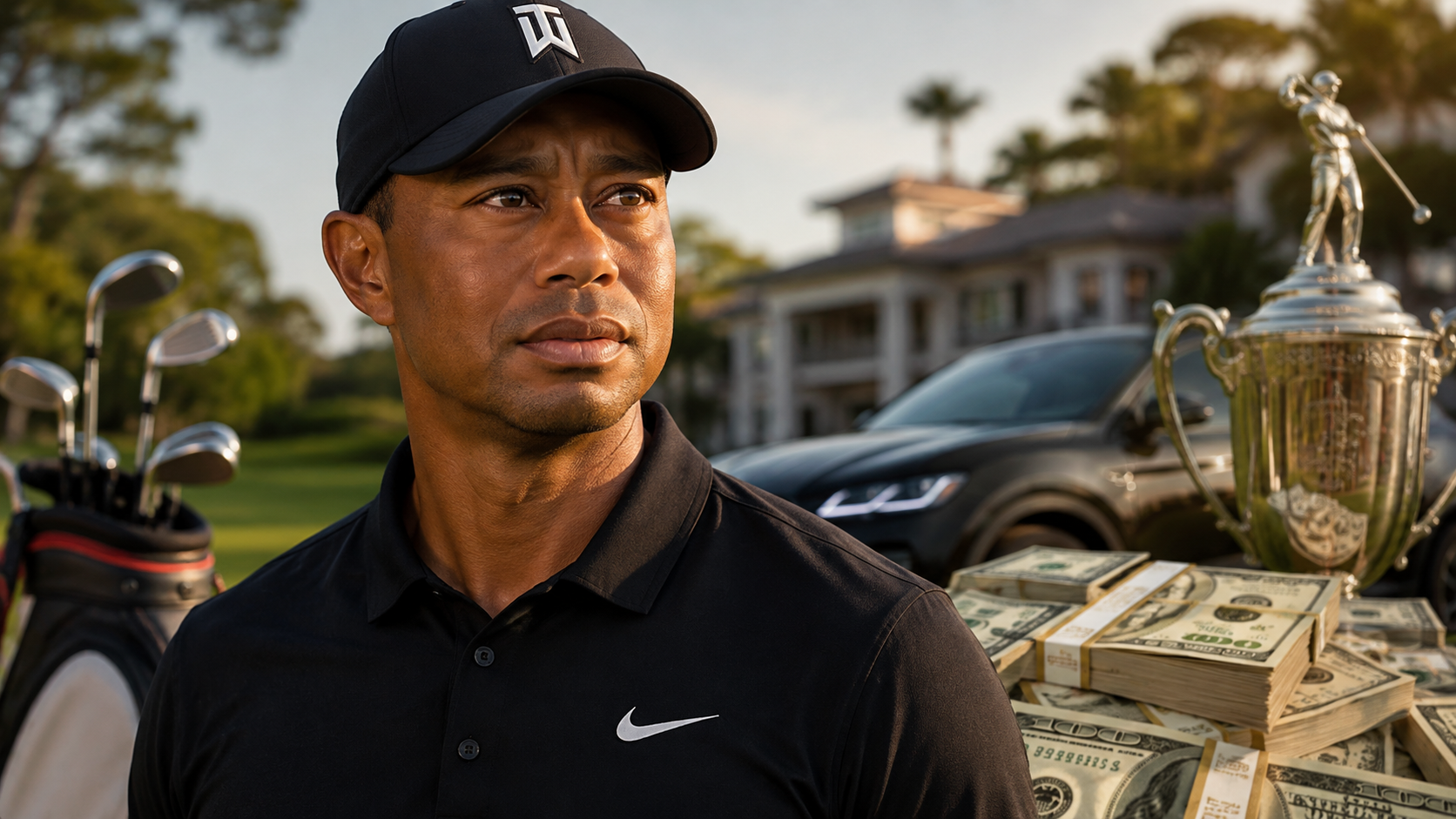
Tiger Woods is one of the most recognizable athletes on the planet, and his bank account reflects that. People search for his net worth for a lot of reasons — curiosity about how much a golfer can actually earn, interest in his business deals, or simple fascination with how someone builds billion-dollar wealth from a sport that doesn’t pay like basketball or soccer. The answer turns out to be more interesting than a single number, because most of Woods’ fortune didn’t come from winning tournaments at all.
Direct Answer
As of early 2026, Forbes estimates Tiger Woods’ net worth at approximately $1.5 billion, making him one of only two active professional athletes — along with LeBron James — to reach billionaire status while still active in their sport. Woods built this wealth through a combination of PGA Tour prize money (a record $121 million), decades of endorsement deals, and a growing portfolio of business ventures that now generate far more income than his golf earnings ever did.
How Tiger Woods Built His Fortune
Golf Career Earnings
Woods turned professional in 1996 at age 20, and he’s been the PGA Tour’s all-time leading money winner ever since. His official on-course earnings sit at roughly $121 million, a record that’s unlikely to be broken anytime soon given how the game’s pay structure has shifted. Across his full professional career, including bonuses, appearance fees tied to competition, and other golf-related income, Woods has earned close to $2 billion pretax.
It’s worth understanding why that career-earnings figure is so much larger than his official prize money. Tournament winnings are only one slice of what a top golfer takes home. Appearance fees at certain international events, bonus structures from the PGA Tour’s player impact programs, and performance-based incentives from sponsors all stack on top of what shows up on a leaderboard payout sheet.
Endorsement Deals
Endorsements are where Woods’ wealth really took off. His relationship with Nike began in 1996 with a five-year deal reportedly worth around $40 million — a massive sum at the time for an athlete who hadn’t yet won a major championship. Nike extended that partnership repeatedly over the following two decades as Woods became the face of golf apparel and equipment, with later extensions reportedly worth hundreds of millions of dollars combined.
Beyond Nike, Woods has held sponsorship agreements with companies including Rolex, Monster Energy, Bridgestone, TaylorMade, and Upper Deck, along with newer partnerships in gaming and digital collectibles through companies like 2K Sports and Autograph. These deals matter because endorsement income doesn’t depend on making the cut at a tournament — it flows in regardless of how Woods performs on any given weekend, which has been especially valuable during the years he’s dealt with injuries.
Business Ventures and Investments
The biggest driver of Woods’ current net worth isn’t golf or endorsements — it’s business ownership. Woods has built an operating company, TGR, that spans several ventures:
- TGR Design — a golf course architecture and design firm that has designed courses around the world
- Popstroke — a high-end miniature golf and entertainment chain that has expanded to multiple U.S. locations
- The Woods Jupiter — an upscale restaurant in Jupiter, Florida, that opened in 2015
- Full Swing — Woods holds an investment and ambassador role with this golf simulator company, whose technology has been used in professional golf broadcasts and the TGL indoor golf league
These ventures matter for a simple reason: business equity tends to appreciate and compound in ways that salary or prize money doesn’t. A restaurant chain or a design firm can grow in value independent of whether its founder ever picks up a club again, which is a big part of why Woods’ net worth kept climbing even during years when injuries limited his tournament play.
Real Estate
Woods also owns significant real estate, most notably a large estate on Jupiter Island in Florida. Reports have placed the value of his primary residence in the tens of millions of dollars, and he owns a second property in the same area. Real estate holdings like these are typically counted as part of an athlete’s net worth calculation, alongside cash, investments, and business equity.
Why Tiger Woods’ Net Worth Keeps Growing Despite Fewer Tournaments
This is a common point of confusion. Woods hasn’t played a full competitive schedule in years, and injuries have kept him out of most major championships since 2024. Yet his net worth has continued to climb. The explanation comes down to where his money actually comes from today.
Golf earnings now make up a small fraction of Woods’ total income. Forbes’ 2024 reporting showed his off-course earnings running many times higher than his on-course winnings in a given year. Endorsements, business ownership, and investment returns don’t require him to compete, so his fortune keeps growing even in years with minimal tournament activity. This is a pattern common among athletes who successfully transition from active competitor to businessperson — the wealth engine shifts from performance-based pay to equity-based wealth.
Common Mistakes and Misconceptions
Mistake: Assuming most of his money came from winning tournaments. Prize money is a relatively small piece of the picture. Even Woods’ PGA Tour-record $121 million in official earnings is dwarfed by his estimated $1.5 billion net worth. The gap is made up almost entirely by endorsements and business income.
Mistake: Treating “career earnings” and “net worth” as the same thing. Career earnings describe total income received over time, before taxes, business costs, and expenses. Net worth is a snapshot of current assets minus liabilities — it accounts for what someone still owns today, including appreciated investments and business equity, not just what they were once paid.
Mistake: Assuming injuries have hurt his finances. Because Woods’ income is now driven mainly by endorsements and business ventures rather than competitive play, his net worth has kept rising even in years with little or no tournament golf.
Misconception: He’s the richest golfer ever, full stop. Woods is the wealthiest golfer by most public estimates, but wealth rankings shift depending on the source, the year, and how privately held business assets are valued. Different outlets have published different figures — some placing his net worth closer to $800 million to $1 billion in earlier years, and Forbes’ more recent estimate at $1.5 billion. These numbers are estimates, not audited figures, since athletes and public figures generally don’t disclose exact net worth.
Real-World Example: How the Math Works
To understand how someone reaches billionaire status through golf, it helps to break down a hypothetical simplified version of the actual numbers:
- Career on-course earnings: roughly $121 million
- Estimated total career pretax earnings (including bonuses and appearance income): approaching $2 billion
- Ongoing endorsement income: tens of millions of dollars annually, even in years with limited play
- Business equity (Popstroke, TGR Design, Full Swing stake, The Woods Jupiter): a growing, appreciating asset base
- Real estate holdings: tens of millions of dollars in property value
None of these categories alone would create a billion-dollar net worth. It’s the combination — decades of income funneled into appreciating businesses and property — that produces the total.
Key Facts
- Tiger Woods’ 2026 net worth is estimated at $1.5 billion by Forbes.
- He holds the PGA Tour’s all-time record for career prize money, at roughly $121 million.
- Woods became a billionaire in 2022, according to Forbes, making him the second active athlete (after LeBron James) to reach that status.
- His career pretax earnings, including bonuses and off-course income, approach $2 billion.
- Major income sources include Nike and other endorsements, business ventures like Popstroke and TGR Design, and real estate.
- Woods owns property on Jupiter Island, Florida, reported to be worth tens of millions of dollars.
- His net worth has continued rising even during years with limited tournament play, because most of his income is no longer performance-based.
Frequently Asked Questions
Q1: What is Tiger Woods’ net worth?
Ans: As of early 2026, Forbes estimates Tiger Woods’ net worth at approximately $1.5 billion.
Q2: How did Tiger Woods become a billionaire?
Ans: Woods reached billionaire status primarily through decades of endorsement deals (especially with Nike), business ventures including Popstroke and TGR Design, and real estate, rather than through tournament winnings alone.
How much has Tiger Woods earned from golf?
Ans: He holds the PGA Tour’s all-time earnings record with roughly $121 million in official prize money. His total pretax career earnings, including bonuses and non-tournament income, approach $2 billion.
Q4: Is Tiger Woods richer than other top golfers?
Ans: By most public estimates, yes — Woods is generally considered the wealthiest golfer in history, ahead of other high earners like Phil Mickelson, largely because of his business ventures and long-running endorsement deals.
Q5: Does Tiger Woods still earn money if he’s not playing golf?
Ans: Yes. Most of his current income comes from endorsements and business ownership rather than tournament play, so injuries and reduced competition schedules haven’t stopped his net worth from growing.
Q6: What businesses does Tiger Woods own?
Ans: His operating company, TGR, includes a golf course design firm (TGR Design), a mini-golf entertainment chain (Popstroke), and a restaurant (The Woods Jupiter). He also holds an investment stake and ambassador role with golf simulator company Full Swing.
Q7: Are net worth estimates for celebrities exact figures?
Ans: No. Net worth figures for public figures, including Woods, are estimates based on publicly known assets, deals, and industry analysis. They aren’t audited or officially confirmed, and different outlets sometimes report different numbers.
Key Takeaways
- Tiger Woods’ 2026 net worth is estimated at $1.5 billion, per Forbes.
- Golf winnings make up a relatively small share of his total wealth.
- Endorsements, especially his long-running Nike partnership, contributed heavily to his fortune.
- Business ventures like Popstroke, TGR Design, and The Woods Jupiter now drive much of his income growth.
- His net worth has kept rising even with limited tournament play, since most income no longer depends on competing.
- Net worth estimates are approximations, not official disclosures.
Conclusion
Tiger Woods’ path to a $1.5 billion net worth shows how an athlete’s wealth can outgrow their sport. Tournament winnings got his career started and built his reputation, but endorsements and business ownership are what turned him into a billionaire. That shift — from performance-based pay to equity-based wealth — explains why his fortune has kept climbing even in years when injuries have kept him off the course.
-

 News2 months ago
Did Bruce Willis Pass Away? The Truth Explained
-

 News4 months ago
Who Is Julissa Thaler? The Case of Eli Hart and a Broken Child Welfare System
-

 Technology2 months ago
Christopher Knight’s Tribute to Jennifer Runyon Explained
-

 Food3 months ago
What Is VMC Paloma? Everything You Need to Know
-

 Heath2 months ago
How to Prevent Freezer Burn: A Complete Guide
-

 News3 months ago
Alexander Brothers: Case Timeline and Key Facts
-

 Sports3 months ago
Red Sox vs Reds: History, 2026 Matchups, and What Makes This Rivalry Worth Watching
-

 News3 months ago
Cheapest States to Live In: 2026 Rankings and Guide