
Sports
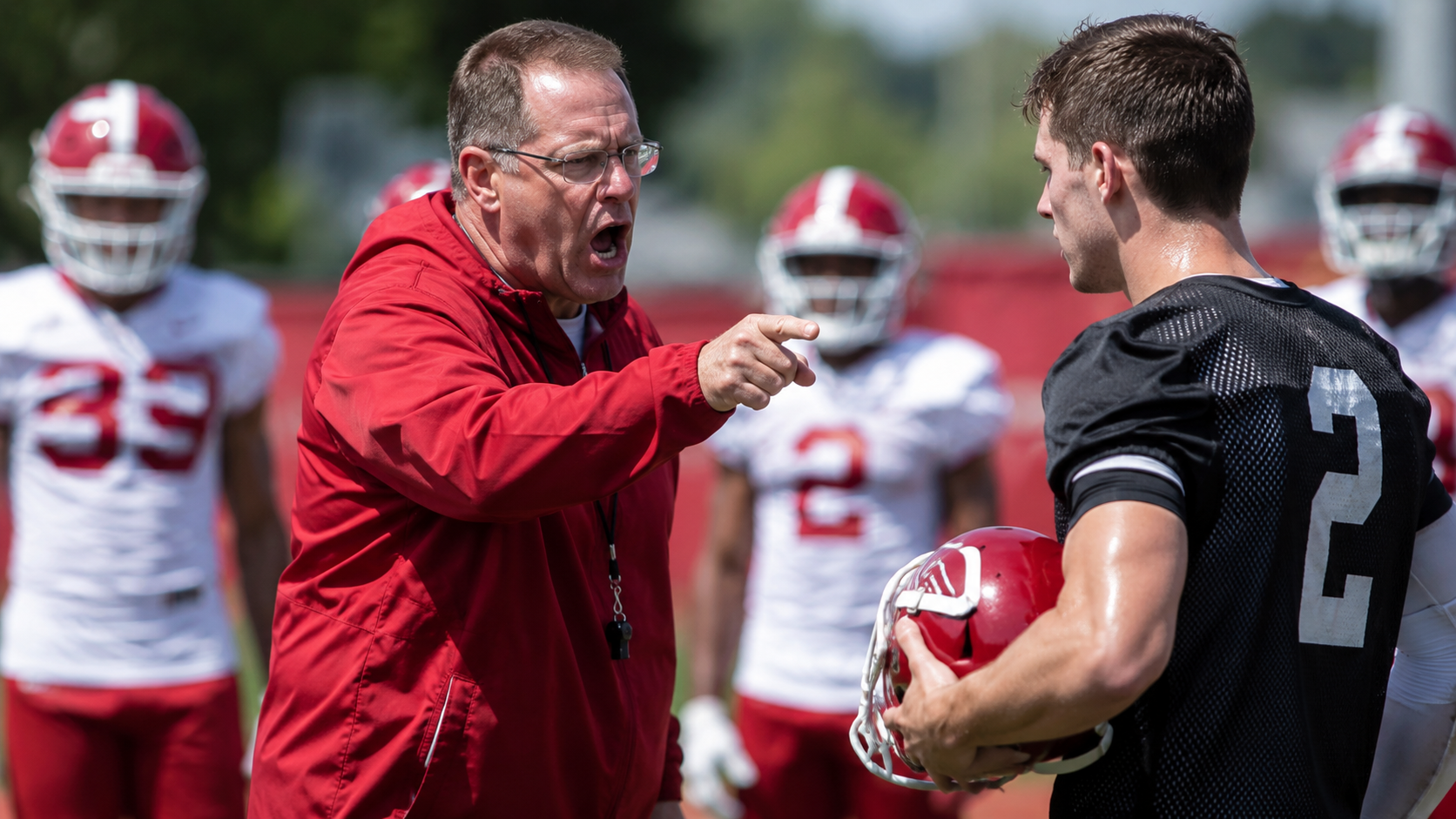
Why Curt Cignetti Rips Nick Marsh at Indiana Practice

Introduction
When a college football coach fresh off a perfect season and a national title calls out one of his own star transfers on day one of spring practice, people take notice. That’s exactly what happened when Indiana head coach Curt Cignetti spoke bluntly about wide receiver Nick Marsh following the Hoosiers’ first spring session. Readers searching for this story usually want to know what Marsh actually did, what Cignetti said, and whether this signals real tension inside the Indiana program. Here’s the full picture.
Direct Answer
Curt Cignetti criticized Indiana transfer wide receiver Nick Marsh after Marsh showed up to the Hoosiers’ first spring practice wearing gold cleats. Cignetti told reporters he didn’t like the shoes and said Marsh got a firm talking-to because of it, adding that Marsh may not have faced that kind of discipline at his previous school, Michigan State. Cignetti also praised Marsh’s work ethic in the same comments.
What Happened at Practice
Nick Marsh transferred to Indiana from Michigan State in January, arriving as one of the most sought-after receivers in the transfer portal. On the first day of spring practice, he showed up wearing gold cleats. Cignetti noticed, and he didn’t hold back when reporters asked him about it afterward.
He told the media he wasn’t a fan of the shoes and said Marsh had gotten a serious talking-to over the choice, joking that this kind of accountability might not have been part of Marsh’s routine at Michigan State. He also made clear the moment happened before practice even started, calling it an early wake-up call for the new arrival.
Even with the pointed comments, Cignetti didn’t stop there. He followed up by crediting Marsh for how hard he’d worked since arriving and for the way he’d contributed to the team.
Why This Story Got Attention
On the surface, this is a story about footwear. But it resonated with college football fans for a few reasons.
First, the timing mattered. This wasn’t a random midseason gripe — it happened on the very first day of spring practice, right as Indiana began building toward defending its national championship. Second, the target mattered. Marsh isn’t a walk-on or a depth piece; he’s one of the most talented transfer additions Indiana brought in during the offseason, and he had his choice of major programs before picking Indiana. Calling out a headline transfer that publicly signals a specific message about program culture.
Third, it fit a pattern people already associate with Cignetti. He’s known for being direct with players regardless of their reputation or production, and pairing criticism with praise in the same breath is part of how he’s built Indiana’s culture over the past two seasons.
Who Is Nick Marsh
Nick Marsh spent two seasons at Michigan State before transferring to Indiana. In his first season with the Spartans, he set a school freshman record with 41 catches for 649 yards and three touchdowns. In his second season, he posted 59 catches for 662 yards and six touchdowns. Recruiting analysts ranked him among the very top wide receivers available in the transfer portal that offseason, and Indiana beat out several other major programs to land him.
Marsh was expected to step into a larger role at Indiana following the departure of key offensive contributors from the team’s championship roster, including a Heisman-winning quarterback and a starting wide receiver who was expected to be drafted early.
Who Is Curt Cignetti
Curt Cignetti took over as Indiana’s head coach and quickly built one of the most successful stretches in program history. Over his first two seasons, the Hoosiers went 27-2, made two College Football Playoff appearances, and completed an undefeated 16-0 national championship season. That success is part of why his comments about Marsh drew so much attention — a coach with that track record has real credibility when he sets expectations for how players are supposed to carry themselves.
Cignetti has developed a reputation for being outspoken with reporters, often mixing criticism with genuine praise for the same player in the same conversation. The Marsh incident followed that same pattern closely.
Common Misunderstandings About This Story
Misunderstanding: Cignetti and Marsh have a real conflict. Nothing in Cignetti’s comments suggests animosity toward Marsh. He criticized a specific choice of footwear, then immediately praised Marsh’s effort and contributions to the team.
Misunderstanding: This was about performance, not appearance. The criticism was specifically about the gold cleats Marsh wore to practice, not about his play on the field or his stats.
Misunderstanding: This reflects poorly on Marsh as a player. Multiple reports note that Marsh has been one of Indiana’s hardest workers since arriving, and Cignetti said so directly in the same comments where he criticized the shoes.
Real-World Context
This kind of exchange is fairly common in college football, especially with high-profile programs that run tight cultures. Coaches often use small, visible moments — like uniform choices — to set expectations early with new players, particularly transfers who are still learning a program’s standards. A receiver who was a star performer at his previous school might assume certain leeway carries over to a new program, and coaches sometimes use public comments like these to correct that assumption quickly, before it becomes a habit.
Key Facts
- Curt Cignetti is Indiana’s head football coach, coming off a 16-0 national championship season.
- Nick Marsh transferred to Indiana from Michigan State in January, after two productive seasons with the Spartans.
- Marsh wore gold cleats to Indiana’s first spring practice session.
- Cignetti criticized the shoe choice publicly to reporters after practice.
- In the same comments, Cignetti praised Marsh’s work ethic and contributions to the team.
- Marsh is expected to be a key receiver for Indiana as the team replaces several departed offensive starters.
FAQ
Q1: What did Nick Marsh do to get called out?
Ans: He wore gold cleats to Indiana’s first spring practice, which Curt Cignetti publicly said he didn’t like.
Q2: Is Curt Cignetti actually upset with Nick Marsh?
Ans: Based on his own comments, no. He criticized the shoes specifically but also praised Marsh’s work ethic and performance since joining the team.
Q3: Where did Nick Marsh transfer from?
Ans: Michigan State, where he played two seasons and was one of the Spartans’ top receivers.
Q4: Why does this story matter for Indiana football?
Ans: It reflects the standard Cignetti has built at Indiana after two straight highly successful seasons, and it shows how he handles even top transfers who don’t meet that standard on small details.
Key Takeaways
- Curt Cignetti publicly criticized Nick Marsh for wearing gold cleats to Indiana’s first spring practice.
- Cignetti paired the criticism with praise for Marsh’s work ethic and contributions.
- Marsh is a highly regarded transfer from Michigan State, expected to play a significant role in Indiana’s offense.
- The moment reflects Cignetti’s broader coaching style rather than any lasting conflict between the two.
- Indiana enters the season replacing several key offensive starters from its championship roster, making Marsh’s role especially important.
Conclusion
This story is less about a genuine rift and more about how Curt Cignetti sets the tone for his program. A pair of gold cleats became a small but public moment to remind a talented new transfer what standards look like at Indiana, delivered the same way Cignetti has handled similar moments before — direct criticism, followed by real credit for effort and results.
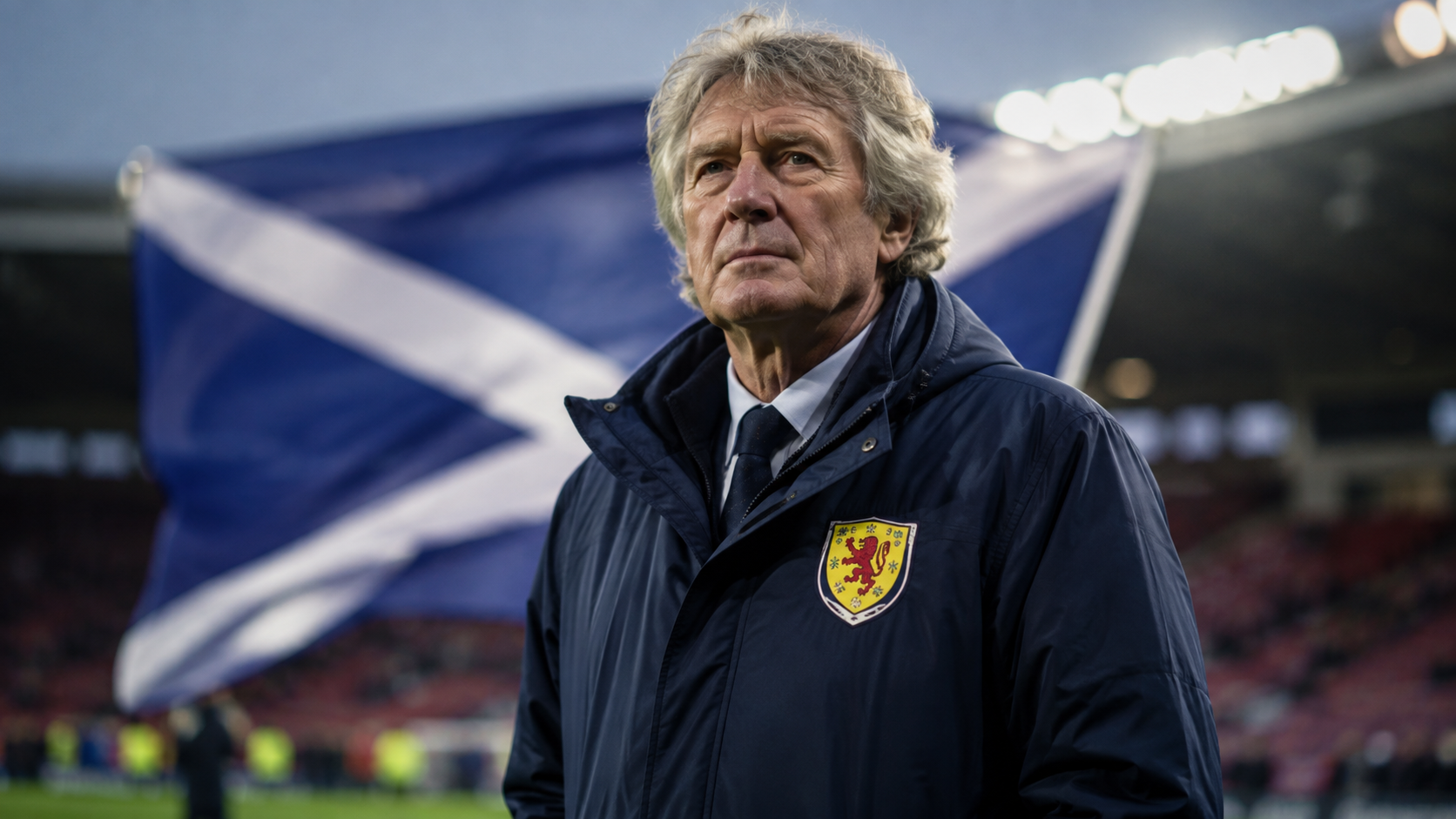
Craig Brown Biography: Life, Career, and Legacy of Scotland’s Longest-Serving Manager
Football fans searching for information about Craig Brown are usually trying to understand one thing: how did a part-time schoolteacher become the most successful Scotland manager of the modern era? His story is not the typical rise of a star player turned coach. It’s the story of a teacher who built a football career on patience, preparation, and an eye for talent that other clubs often missed.
Craig Brown spent more than 60 years involved in Scottish football, working as a player, teacher, club manager, and national team boss. He remains best known for leading Scotland to the 1996 European Championship and the 1998 World Cup, the last time the country reached football’s biggest stage. This article walks through his early life, playing career, coaching journey, and the legacy he left behind after his death in 2023.
Direct Answer: Who Was Craig Brown?
Craig Brown (1 July 1940 – 26 June 2023) was a Scottish football manager best known for leading the Scotland national team from 1993 to 2001. He guided Scotland to UEFA Euro 1996 and the 1998 FIFA World Cup, making him the longest-serving manager in the national team’s history. Before international management, Brown worked as a schoolteacher while managing Clyde, and he later managed Preston North End, Motherwell, and Aberdeen.
Early Life and Background
Craig Brown was born on 1 July 1940 in the Corkerhill area of Glasgow, Scotland. His father served in the Royal Air Force, so <cite index=”6-1″>Brown spent his early years living with his mother at his grandfather’s house in Glasgow, a period marked by frequent air raids during the Second World War.</cite>
Football was part of his life from childhood, but so was education. Brown trained as a teacher and earned a Bachelor of Arts degree along with a diploma in physical education. That academic background would shape the rest of his career. Long after he became a professional football manager, he continued to describe himself first and foremost as a teacher, and that identity showed in how he coached — with structure, communication, and a focus on developing young players.
Playing Career
Brown’s playing career never reached the heights his later coaching career did, but it gave him a grounding in the professional game that proved valuable later on.
- Rangers: He signed as a young player but struggled to establish himself in the first team.
- Dundee: A move to Dundee in the early 1960s brought his biggest on-field achievement — he was part of the Dundee squad that won the Scottish League Championship in the 1961/62 season, playing under manager Bob Shankly.
- Falkirk: Brown later moved to Falkirk, where persistent knee problems eventually forced him to stop playing.
A series of knee injuries cut his playing days short in the late 1960s. Rather than walking away from football, Brown used the setback as a turning point, shifting his focus toward coaching and teaching.
From Classroom to Dugout: The Teaching Years
While his football career stalled, Brown’s teaching career advanced steadily. He became a head teacher in Uddingston and later a lecturer in primary education at Craigie College in Ayr. For much of the 1970s and 1980s, he balanced full-time academic work with part-time football management, a juggling act that became one of the defining features of his early coaching years.
This dual career gave Brown something many football coaches lack: formal training in how people learn. He often credited his teaching background with helping him explain tactics simply and build trust with players, especially younger ones.
Early Management: Motherwell and Clyde
Brown’s first step into coaching came in 1974, when he was appointed assistant manager at Motherwell under Willie McLean. <cite index=”16-1″>At the time, Motherwell had just returned to Scotland’s top flight, and under McLean and Brown the club improved to a fourth-place league finish, helped by players such as Bobby Graham, Willie Pettigrew, and Bobby Watson.</cite> The team also reached the semi-final of the Scottish Cup that season, a highlight of Brown’s early coaching years.
In 1977, Brown took his first job as a manager in his own right, joining Clyde while still working as a college lecturer. Over nine seasons at Clyde, he won two Scottish Second Division titles, including one in his very first year in charge. He also built a reputation for developing talent and handling transfers shrewdly, sending several young players on to bigger clubs while keeping Clyde competitive on a limited budget.
Joining the Scottish Football Association
Brown’s move into international football began in 1986, when Alex Ferguson invited him to join the Scotland coaching staff for that year’s World Cup in Mexico. Brown later described this appointment as a turning point, since it opened the door to a long-term role with the national setup.
When Andy Roxburgh took over as Scotland manager, he asked Brown to serve as his assistant while also managing Scotland’s Under-21 team. In that dual role, Brown helped guide the Under-16 team to the 1989 World Cup final and led the Under-21s to a European semi-final in 1992. Scotland’s senior team also qualified for the 1990 World Cup and Euro 1992 during this period, giving Brown direct experience of major tournament football before he took the top job.
Scotland Manager: 1993 to 2001
Roxburgh stepped down after Scotland failed to qualify for the 1994 World Cup in the United States, and Brown was appointed Scotland manager in November 1993. It was not viewed as an obvious appointment. Bigger names were being discussed for the role, and Brown himself later admitted he did not expect to get the job. His record with the youth teams ultimately won over the selection committee.
Once in charge, Brown built a defensively disciplined Scotland side around a 3-5-2 formation. Critics sometimes wanted more attacking flair, but the results spoke for themselves. Over his first two qualifying campaigns, Scotland conceded just six goals in twenty matches, a remarkable defensive record that helped the team reach two major tournaments in a row.
UEFA Euro 1996
Scotland qualified for Euro 1996 in England, coming close to reaching the knockout stages before narrowly missing out. It was Scotland’s first European Championship appearance since 1992 and remains a high point of Brown’s tenure.
1998 FIFA World Cup
Two years later, Brown led Scotland to the 1998 World Cup in France, the country’s most recent World Cup appearance to date. Scotland opened the tournament against reigning champions Brazil before being eliminated after a group-stage defeat to Morocco.
Brown remained Scotland manager until 2001, ultimately taking charge of the national team in more matches than anyone before or since. He also led Scotland to a notable win over England at Wembley in 1999, though the team lost the two-legged Euro 2000 play-off to England on aggregate.
Later Club Career
After leaving the Scotland job, Brown moved into club management in England, taking charge of Preston North End from 2002 to 2004. He was later replaced by his own assistant, Billy Davies, with whom he went on to work again in a consultancy role at Derby County.
Brown’s club career appeared to be winding down until Motherwell called on him for a caretaker role in late 2009, following the departure of manager Jim Gannon. He performed well enough to be given the job permanently, guiding Motherwell to a strong league campaign and a run in the League Cup.
At age 70, Brown left Motherwell to take charge of Aberdeen in December 2010, after the Dons approached him following a heavy defeat to Hearts. He steadied a struggling Aberdeen side, working alongside assistant Archie Knox, though the team did not break into the top six of the Scottish Premier League during his tenure. Brown retired from front-line management in 2013, moving into a non-executive director role at Pittodrie, a position he held for the rest of his life.
Honors and Recognition
Brown’s contribution to Scottish football was formally recognized several times:
- He was awarded the CBE (Commander of the Order of the British Empire) for services to football in 1999.
- He was inducted into the Scottish Football Hall of Fame in 2010.
- He was also inducted into Motherwell’s club Hall of Fame in recognition of his early coaching work at Fir Park.
Common Misconceptions About Craig Brown
Misconception: Brown was a full-time football manager for his entire career. For much of the 1970s and early 1980s, Brown worked as a teacher and college lecturer while managing Clyde part-time. His football career developed alongside, not instead of, his teaching career.
Misconception: Brown’s cautious tactics meant Scotland played negative football. Brown’s teams were often built around a defensively solid 3-5-2 system, which drew criticism from fans who wanted more attacking play. However, this approach delivered qualification for two major tournaments in a row, a record no Scotland manager has matched since.
Misconception: Brown only succeeded with the national team. While the Scotland job is what he’s best remembered for, Brown also had solid club success, winning two Second Division titles with Clyde and steering both Motherwell and Aberdeen through difficult periods later in his career.
Real-World Example: Building a Squad from Youth Level Up
One of the clearest examples of Brown’s approach came through his work with Scotland’s youth teams before he became senior manager. By coaching the Under-16 and Under-21 sides through the late 1980s and early 1990s, Brown got to know a generation of young Scottish players firsthand. When he became senior manager in 1993, he already understood which players fit his system and how to get the best from them, rather than starting from scratch. This long-term relationship with players is a big part of why his qualifying campaigns for Euro 96 and the 1998 World Cup were so defensively strong.
Key Facts About Craig Brown
- Born: 1 July 1940, Glasgow, Scotland
- Died: 26 June 2023, in Ayr, aged 83
- Playing clubs: Rangers, Dundee, Falkirk
- Won the Scottish League Championship as a player with Dundee, 1961/62
- First management role: Assistant manager at Motherwell, 1974
- Managed Clyde from 1977 to 1986, winning two Second Division titles
- Scotland national team manager: 1993 to 2001, the longest tenure in the role
- Led Scotland to UEFA Euro 1996 and the 1998 FIFA World Cup
- Later managed Preston North End, Motherwell, and Aberdeen
- Awarded the CBE for services to football in 1999
- Inducted into the Scottish Football Hall of Fame in 2010
Frequently Asked Questions
Q1: What is Craig Brown best known for?
Ans: Craig Brown is best known for managing the Scotland national football team from 1993 to 2001, leading them to UEFA Euro 1996 and the 1998 FIFA World Cup — the last time Scotland reached a World Cup finals until 2026 qualifying developments changed that picture.
Q2:How long was Craig Brown Scotland manager?
Ans: Brown managed Scotland for around eight years, from November 1993 to 2001, taking charge of more matches than any other Scotland manager before or since.
Q3:Did Craig Brown play professional football?
Ans: Yes. He played for Rangers, Dundee, and Falkirk, winning the Scottish League title with Dundee in 1961/62, before a series of knee injuries ended his playing career.
Q4:What clubs did Craig Brown manage?
Ans: Brown managed Clyde, Preston North End, Motherwell, and Aberdeen at club level, in addition to his role as Scotland national team manager.
Q5:Craig Brown a teacher before he became a football manager?
Ans: Yes. Brown trained as a teacher and worked as a head teacher and later a college lecturer in primary education, managing Clyde part-time while continuing his teaching career.
Q6:When did Craig Brown die?
Ans: Craig Brown died on 26 June 2023 in Ayr, Scotland, at the age of 83, after a short illness.
Q7:Did Craig Brown receive any honors?
Ans: Yes. He was awarded the CBE for services to football in 1999 and was inducted into the Scottish Football Hall of Fame in 2010.
Key Takeaways
- Craig Brown was born in Glasgow in 1940 and died in Ayr in 2023.
- He combined a teaching career with football management for much of his early coaching life.
- He is Scotland’s longest-serving national team manager, in charge from 1993 to 2001.
- Under Brown, Scotland qualified for both Euro 1996 and the 1998 World Cup.
- He also managed Clyde, Preston North End, Motherwell, and Aberdeen at club level.
- He received the CBE in 1999 and was inducted into the Scottish Football Hall of Fame in 2010.
Conclusion
Craig Brown’s career shows that success in football management doesn’t always follow the expected path. He came to the job through teaching, not through a glittering playing career, and he built his reputation on patience, defensive organization, and genuine care for the players he coached. His record as Scotland’s longest-serving manager, backed by two major tournament appearances, remains a benchmark that later managers have been measured against. Long after he stepped away from the dugout, Brown stayed close to the game he spent a lifetime studying, right up until his death in 2023.
Introduction
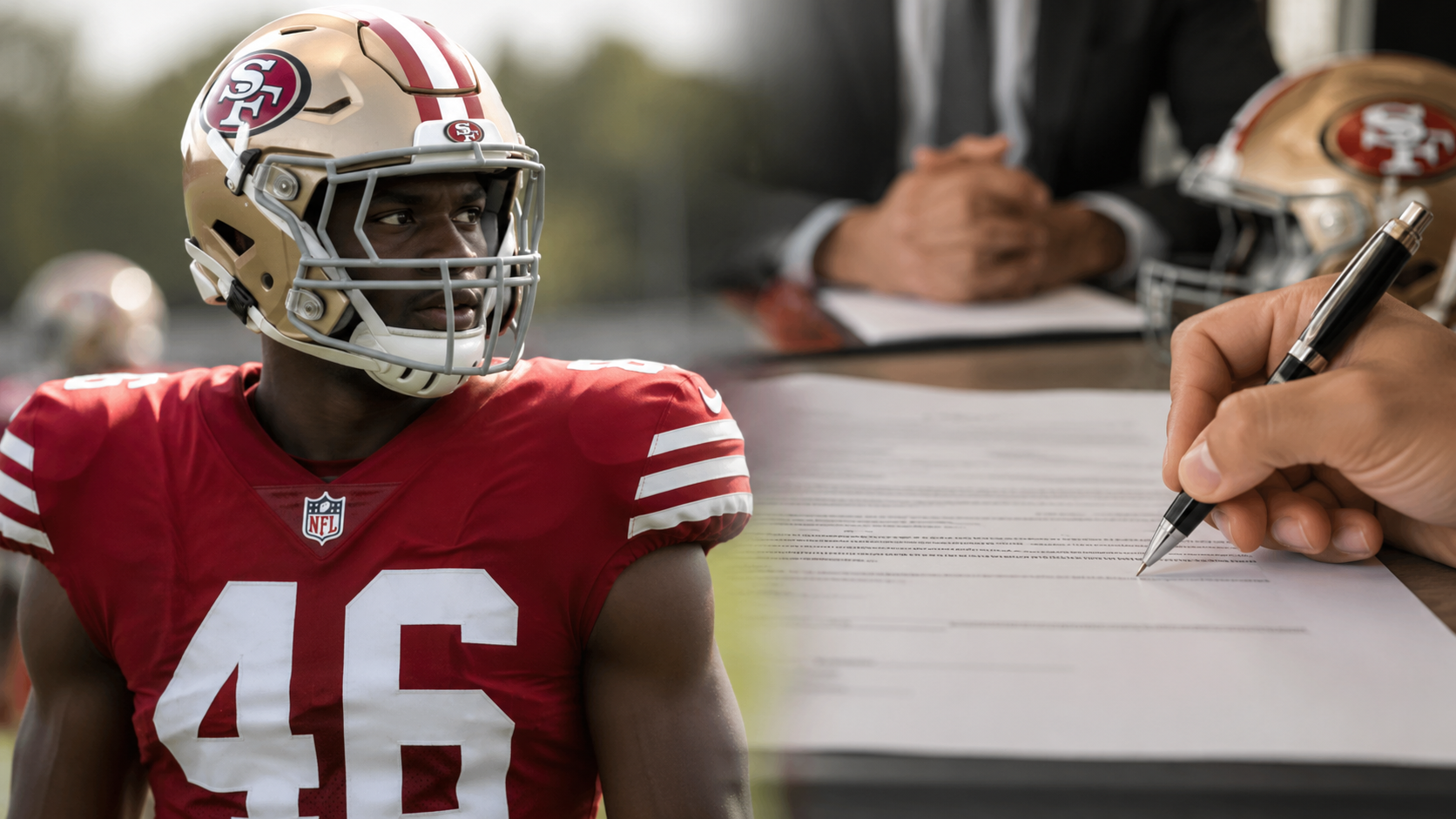
Every offseason, NFL front offices work through a stack of roster-management decisions that rarely make headlines but quietly shape a team’s depth chart. One of those decisions for the San Francisco 49ers involved offensive tackle Austen Pleasants, whose contract situation puzzled some fans who saw his name pop up in transaction reports without much explanation. If you searched for “49ers Austen Pleasants ERFA tender,” you’re probably trying to figure out what actually happened, what an ERFA tender is, and what it means for Pleasants’ future with the team.
This article breaks all of that down in plain language, using Pleasants’ actual situation as the example.
Direct Answer
The San Francisco 49ers tendered offensive tackle Austen Pleasants as an exclusive rights free agent (ERFA) for the 2026 season, worth roughly $1.075 million, according to Over The Cap. An ERFA tender is a one-year, minimum-salary offer teams can give players with fewer than three accrued NFL seasons whose contracts have expired. Because Pleasants has just one accrued season, the 49ers hold exclusive negotiating rights to him, meaning he cannot sign with any other team once tendered. His signing the tender simply keeps him under contract in San Francisco for another year.
What Is an ERFA Tender?
An exclusive rights free agent, or ERFA, is a player whose contract has expired but who has accrued fewer than three seasons in the league. Unlike restricted free agents (RFAs) or unrestricted free agents (UFAs), an ERFA has no real bargaining leverage. If his team extends a tender — an offer at roughly the league minimum salary for his experience level — he can either sign it or sit out. He cannot negotiate with other teams, and no other franchise can sign him to an offer sheet.
This system exists because the NFL wants to reward teams for developing young, lesser-known players without exposing those players to open-market bidding before they’ve built any real service time. In practice, ERFA tenders are close to a formality: teams almost always tender back the depth players they intend to keep, and most players sign without complaint since the alternative is walking away from a roster spot entirely.
Accrued Seasons and Why They Matter
“Accrued season” is the technical term for a year in which a player spends at least six games on a team’s active roster, injured reserve, or reserve/PUP list. Pleasants entered 2026 with only one accrued season, despite bouncing between multiple rosters since 2020. Time spent solely on a practice squad or offseason roster, without meeting the six-game threshold, does not count toward accrued status. That’s why a player can be in the league for several years and still qualify as an exclusive rights free agent rather than moving up to restricted or unrestricted status.
Who Is Austen Pleasants?
Pleasants is a 6-foot-7, 330-pound offensive tackle who went undrafted out of Ohio University in 2020 after earning second-team All-MAC honors. His path to a regular roster spot took the long way around. He signed with the Jacksonville Jaguars in 2020, was waived, then bounced through practice squad stints with the Panthers, Chargers, Bears, and Cardinals before joining the 49ers late in the 2024 season.
That kind of journey — four or five different practice squads before finally sticking — is common for offensive linemen who have the size and physical tools teams want but need time to develop technique against NFL-level pass rushers. San Francisco’s interest in Pleasants came at a moment when the team needed offensive line depth, and he made the most of the opportunity.
Why the 49ers Tendered Pleasants Again
The 49ers have leaned on offensive line depth more than most teams in recent seasons. Injuries to core starters, including left tackle Trent Williams and guard Aaron Banks in past years, forced backups into extended playing time. Pleasants was one of the players who stepped in during those stretches.
In the 2025 season, Pleasants appeared in 15 games and played 125 offensive snaps — both career highs. Pro Football Focus charted him as avoiding any sacks allowed despite giving up a handful of pressures in limited action the year before. That kind of steady, low-cost depth is exactly what an ERFA tender is designed to retain. For a modest financial commitment, the 49ers keep a lineman they already know and trust rather than gambling on an unfamiliar player in free agency or the draft.
How the Tender Amount Is Calculated
ERFA tender values are set by the league’s minimum salary scale, which increases with a player’s number of accrued seasons. Because Pleasants had one accrued season heading into 2026, his tender came in at approximately $1.075 million, matching the minimum salary for a player at that experience level. A player with zero accrued seasons would receive a lower tender, while a player with two accrued seasons would receive a higher one. This scale is set by the NFL’s collective bargaining agreement and adjusts slightly most years.
Step by Step: How an ERFA Tender Works
- Contract expires. The player’s rookie or prior contract ends, and he becomes a free agent.
- Team checks accrued seasons. If the player has fewer than three accrued seasons, he’s classified as an exclusive rights free agent rather than an RFA or UFA.
- Team decides whether to tender. The team can offer a one-year contract at the applicable minimum salary or let the player become a true free agent.
- Player signs or sits out. Because no other team can negotiate with him, the player typically signs, since refusing means missing a season of NFL pay entirely.
- Player reports for the season. Once signed, the player is under contract like any other roster member, subject to standard roster cuts, injury designations, and performance evaluations.
Common Mistakes and Misconceptions
Mistake: Assuming a tender means a big contract. ERFA tenders are minimum-salary deals. They reflect roster retention, not a reward for a breakout season. A team could tender a practice squad body simply to protect organizational rights to him.
Mistake: Confusing ERFA with RFA. Restricted free agents have accrued three seasons and receive tenders at set values that allow other teams to sign them to offer sheets, with compensation owed back to the original team. Exclusive rights free agents have no such option; other teams simply cannot pursue them once tendered.
Mistake: Thinking a tender guarantees a roster spot. Signing an ERFA tender puts a player under contract, but it does not guarantee he makes the 53-man roster. He can still be released in training camp or during final cuts, just like any other player on a one-year deal.
Real-World Example
Alongside Pleasants in 2025, the 49ers also tendered tight end Jake Tonges as an exclusive rights free agent. Both players signed their one-year deals in the same offseason announcement, illustrating how teams often handle several ERFA cases in a single wave rather than negotiating them individually. Neither transaction involved bidding, competing offers, or extended talks — just a tender, a signature, and a roster spot secured for the coming season.
Key Facts
- Austen Pleasants is an offensive tackle for the San Francisco 49ers, wearing No. 62.
- He went undrafted out of Ohio University in the 2020 NFL Draft.
- He joined the 49ers in December 2024 after stints with five other franchises.
- His 2026 ERFA tender is worth approximately $1.075 million.
- He played a career-high 125 offensive snaps across 15 games in 2025.
- An ERFA tender applies only to players with fewer than three accrued NFL seasons.
FAQ
Q1: What does ERFA stand for?
Ans: ERFA stands for exclusive rights free agent, a designation for players whose contracts have expired but who have fewer than three accrued NFL seasons.
Q2: How is an ERFA different from a restricted free agent (RFA)?
Ans: An RFA has three accrued seasons and can technically field offer sheets from other teams, with draft-pick compensation owed to his original team if he signs elsewhere. An ERFA has no such market; his current team holds exclusive rights, and he can only negotiate with them.
Q3: Is signing an ERFA tender mandatory?
Ans: No, but declining it usually means sitting out the season entirely, since no other team can sign him. In practice, nearly all ERFA players sign.
Q4: Does an ERFA tender guarantee a roster spot?
Ans: No. It secures a one-year contract, but the player still has to earn a spot on the 53-man roster through training camp and preseason performance.
Q5: Why did the 49ers tender Austen Pleasants specifically?
Ans: He posted career highs in games played and offensive snaps during the 2025 season and gave the team reliable depth behind their starting offensive line at a low cost.
Q6: What is Pleasants’ background before joining the 49ers?
Ans: He went undrafted out of Ohio University in 2020 and spent time on rosters or practice squads with the Jacksonville Jaguars, Carolina Panthers, Los Angeles Chargers, Chicago Bears, and Arizona Cardinals before signing with San Francisco in December 2024.
Key Takeaways
- An ERFA tender is a one-year, minimum-salary contract offer for players with fewer than three accrued NFL seasons.
- The 49ers tendered Austen Pleasants for 2026 at roughly $1.075 million.
- Pleasants earned the tender by delivering career-high playing time and reliable pass protection in 2025.
- ERFA status means a player cannot negotiate with or sign for other teams once tendered.
- Signing the tender does not guarantee a final roster spot; players still compete for playing time each summer.
Conclusion
The Austen Pleasants ERFA tender is a small transaction in the grand scheme of NFL offseasons, but it says a lot about how teams manage cost-effective depth. For a player who spent years bouncing between practice squads, earning a tender from the 49ers represents a foothold he built through steady, unspectacular play at exactly the moment his team needed it. Understanding the mechanics behind a move like this — accrued seasons, tender values, and the limits of exclusive rights status — makes the broader logic of NFL roster building much easier to follow.
Introduction
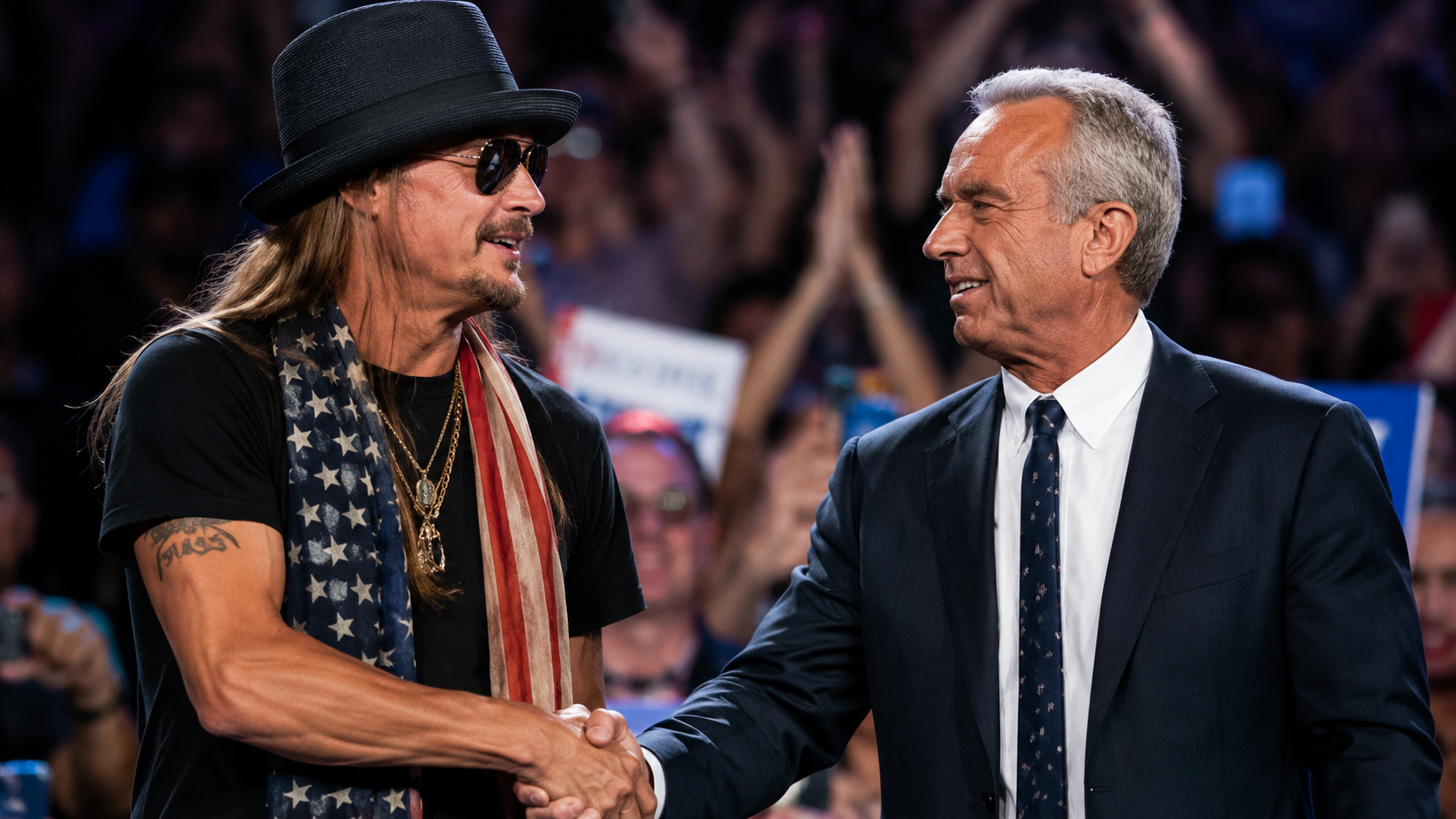
If you’ve seen clips of Kid Rock and Robert F. Kennedy Jr. shirtless in a sauna, playing pickleball, or drinking whole milk together, you’re not imagining things. The two paired up for a government-backed fitness video that spread quickly across social media in early 2026, and it left a lot of people with questions. Why is a rock musician appearing in an official health campaign? What’s the actual connection between Kid Rock and RFK Jr.? And what was the video actually trying to accomplish?
This article breaks down who these two men are to each other, what the viral moment involved, and the reactions it triggered across the political and cultural spectrum.
Direct Answer
Kid Rock and RFK Jr. are connected through their shared support for the Trump administration and RFK Jr.’s “Make America Healthy Again” (MAHA) initiative. In February 2026, the musician joined Health and Human Services Secretary Robert F. Kennedy Jr. in a viral workout video promoting exercise and unprocessed eating, produced as an official HHS campaign. The video drew widespread attention, mixing supportive reactions with mockery over its unusual style.
Who Is RFK Jr., and Why Does He Matter Here?
Robert F. Kennedy Jr. is a member of the prominent Kennedy political family and the son of former U.S. Attorney General Robert F. Kennedy. He built a long career as an environmental lawyer before becoming widely known for his views on vaccines and public health, which have drawn significant criticism from mainstream medical and scientific organizations.
Kennedy ran for president in 2024, first as a Democrat, then as an independent, before suspending his campaign and endorsing Donald Trump at a rally in Arizona. He later became Secretary of Health and Human Services under the Trump administration, a role that put him in charge of federal health policy, including the agency’s public messaging campaigns.
As HHS Secretary, Kennedy has pushed a platform he calls “Make America Healthy Again,” or MAHA, which centers on reducing consumption of ultra-processed foods, questioning some standard vaccine recommendations, and promoting what he describes as a return to natural, whole foods.
Who Is Kid Rock, and Why Is He Involved?
Kid Rock, born Robert James Ritchie, is a musician from Michigan known for blending rock, rap, and country influences in songs such as “Bawitdaba,” “Cowboy,” and “All Summer Long.” Beyond music, he has become one of the more visible celebrity supporters of Donald Trump, appearing at campaign rallies, performing at the Republican National Convention, and maintaining a public friendship with Trump that dates back years.
Kid Rock’s political involvement has grown steadily since Trump’s first presidential run, and he has become a regular presence at Trump-aligned events and gatherings. His connection to RFK Jr. specifically comes from this shared political alignment, along with a personal relationship the two describe as going back roughly a decade.
The Viral Workout Video
In mid-February 2026, Kennedy posted a roughly 90-second video to his official social media accounts showing himself and Kid Rock performing a series of physical activities together. According to reporting on the video, the pair were shown lifting weights, doing push-ups, sitting in a sauna, playing pickleball, and drinking glasses of whole milk while sitting in a pool. Kennedy was notably dressed in jeans throughout much of the video, including while in a cold-plunge tub, which became one of the more talked-about details.
The video used Kid Rock’s song “Bawitdaba” as its soundtrack and ended with the campaign slogan “Make America Healthy Again” displayed on screen. Kennedy captioned the post with a simple message: encouraging Americans to get active and eat real food.
This wasn’t a casual celebrity collaboration. The clip was produced and released as an official message from the Department of Health and Human Services, meaning it functioned as government-backed public health messaging rather than a personal social media post.
Why the Video Mattered Beyond the Novelty
Setting aside its unusual style, the video reflects a broader strategy behind the MAHA movement: using recognizable cultural figures to deliver health messaging in a format built for social media sharing, rather than a traditional public service announcement. Kennedy and Kid Rock both framed the video’s purpose around two ideas — encouraging physical activity and reducing reliance on processed food — positioning these as goals that people across the political spectrum could agree on regardless of other disagreements.
In follow-up interviews, Kennedy pointed to figures suggesting a large share of what Americans eat qualifies as ultra-processed, arguing that these products function more like manufactured “food-like substances” than actual food. Kid Rock, for his part, said the intent behind the video was to create something attention-grabbing enough that its underlying message about health habits would actually reach people who might otherwise ignore a standard wellness campaign.
Public Reaction
Reactions to the video were mixed and often intense. A significant portion of the online response leaned toward mockery, with many commenters describing the video as strange, awkward, or unintentionally comedic — particularly the choice to wear jeans into a pool and cold-plunge tub. Political commentators also raised questions about the appropriateness of using taxpayer-funded government channels for a stylized celebrity fitness video, especially given ongoing debates over funding cuts to public health programs during the same period.
At the same time, some viewers responded positively, framing the video as an entertaining way to promote a message they support: more physical activity and less reliance on processed foods. Supporters pointed out that unconventional or humor-driven content often reaches audiences that traditional health messaging fails to engage.
This split reaction is fairly typical of how MAHA-related messaging has been received more broadly. The underlying health goals, exercise and reduced processed food consumption, tend to draw broad agreement, while the specific methods and figures associated with the movement, including some of Kennedy’s other public health positions, remain more contested.
Common Misconceptions
That the video was a personal celebrity endorsement rather than official government messaging. Because of its casual, meme-like tone, some viewers assumed the video was simply two public figures goofing around. In reality, it was released through HHS’s official channels as part of the department’s public health messaging efforts.
That Kid Rock and RFK Jr.’s connection started with this video. The two have described a relationship going back roughly ten years, tied to their overlapping social and political circles rather than beginning with this specific campaign.
That the reaction to the video reflects a consensus on Kennedy’s broader health policies. Much of the criticism focused specifically on the video’s tone and production choices, not necessarily on the underlying MAHA message about diet and exercise, which has drawn more varied opinions depending on the specific policy in question.
Key Facts
- Kid Rock and RFK Jr. are connected through a personal relationship dating back roughly a decade and a shared alignment with the Trump administration.
- Robert F. Kennedy Jr. is the U.S. Secretary of Health and Human Services and the figurehead of the “Make America Healthy Again” initiative.
- The viral video was released in February 2026 through official HHS social media channels, not as a personal or independent celebrity post.
- The video featured the two men exercising, sitting in a sauna, playing pickleball, and drinking whole milk, set to Kid Rock’s song “Bawitdaba.”
- Public reaction was mixed, ranging from mockery of the video’s style to support for its underlying health message.
- The MAHA initiative broadly promotes reduced consumption of ultra-processed foods and increased physical activity.
Frequently Asked Questions
Q1: What is the connection between Kid Rock and RFK Jr.?
Ans: They share a personal friendship dating back about a decade, along with a mutual alignment with Donald Trump and his administration. That connection led to their joint appearance in an HHS-produced fitness video in 2026.
Q2: What is MAHA?
Ans: MAHA stands for “Make America Healthy Again,” a public health initiative led by HHS Secretary Robert F. Kennedy Jr. that focuses on reducing ultra-processed food consumption and promoting physical activity, among other health-related goals.
Q3: Was the Kid Rock and RFK Jr. video an official government production?
Ans: Yes. It was released through the Department of Health and Human Services’ official channels as part of its public messaging efforts, rather than being an independent or personal social media post.
Q4: Why did the video generate so much criticism?
Ans: Much of the criticism centered on the video’s unusual style and production choices, including Kennedy wearing jeans into a pool and cold-plunge tub, rather than the underlying message about diet and exercise itself.
Q5: Is Kid Rock involved in RFK Jr.’s official government role?
Ans: No. Kid Rock is a private citizen and musician. His involvement was limited to appearing in the promotional video and giving related media interviews; he does not hold a position within HHS or the federal government.
Q6: Did the video reflect Kid Rock’s political views?
Ans: Kid Rock has been a longtime, vocal supporter of Donald Trump and has appeared at numerous Trump-aligned political events. His participation in the MAHA video is consistent with that broader political alignment, though he framed the video’s specific message about health as something meant to appeal across political lines.
Key Takeaways
- Kid Rock and RFK Jr. are connected by a personal relationship and shared support for Donald Trump and his administration.
- Their February 2026 workout video was an official HHS production promoting the MAHA initiative’s focus on exercise and reduced processed food consumption.
- The video generated widespread attention, with reactions split between mockery of its style and support for its underlying message.
- RFK Jr. serves as U.S. Secretary of Health and Human Services, while Kid Rock remains a private citizen and longtime Trump supporter.
- The broader MAHA movement includes both widely shared health goals and more contested policy positions.
Conclusion
The Kid Rock and RFK Jr. video became a cultural moment less because of its message and more because of how it delivered that message. Behind the sauna scenes and pickleball games sits a straightforward government health campaign built around two familiar goals: move more, and eat less processed food. Whether people found the execution charming or cringeworthy, the video succeeded at getting a health message in front of a much wider audience than a standard public service announcement typically reaches.
-
 News2 months ago
Did Bruce Willis Pass Away? The Truth Explained
-

 News4 months ago
Who Is Julissa Thaler? The Case of Eli Hart and a Broken Child Welfare System
-

 Food3 months ago
What Is VMC Paloma? Everything You Need to Know
-

 Technology2 months ago
Christopher Knight’s Tribute to Jennifer Runyon Explained
-

 Heath2 months ago
How to Prevent Freezer Burn: A Complete Guide
-
 Sports3 months ago
Red Sox vs Reds: History, 2026 Matchups, and What Makes This Rivalry Worth Watching
-

 News3 months ago
Alexander Brothers: Case Timeline and Key Facts
-

 News3 months ago
Cheapest States to Live In: 2026 Rankings and Guide