Fashion
What Is Opalite? Meaning, Origin, and Properties

.What Is Opalite? Meaning, Origin, and Properties
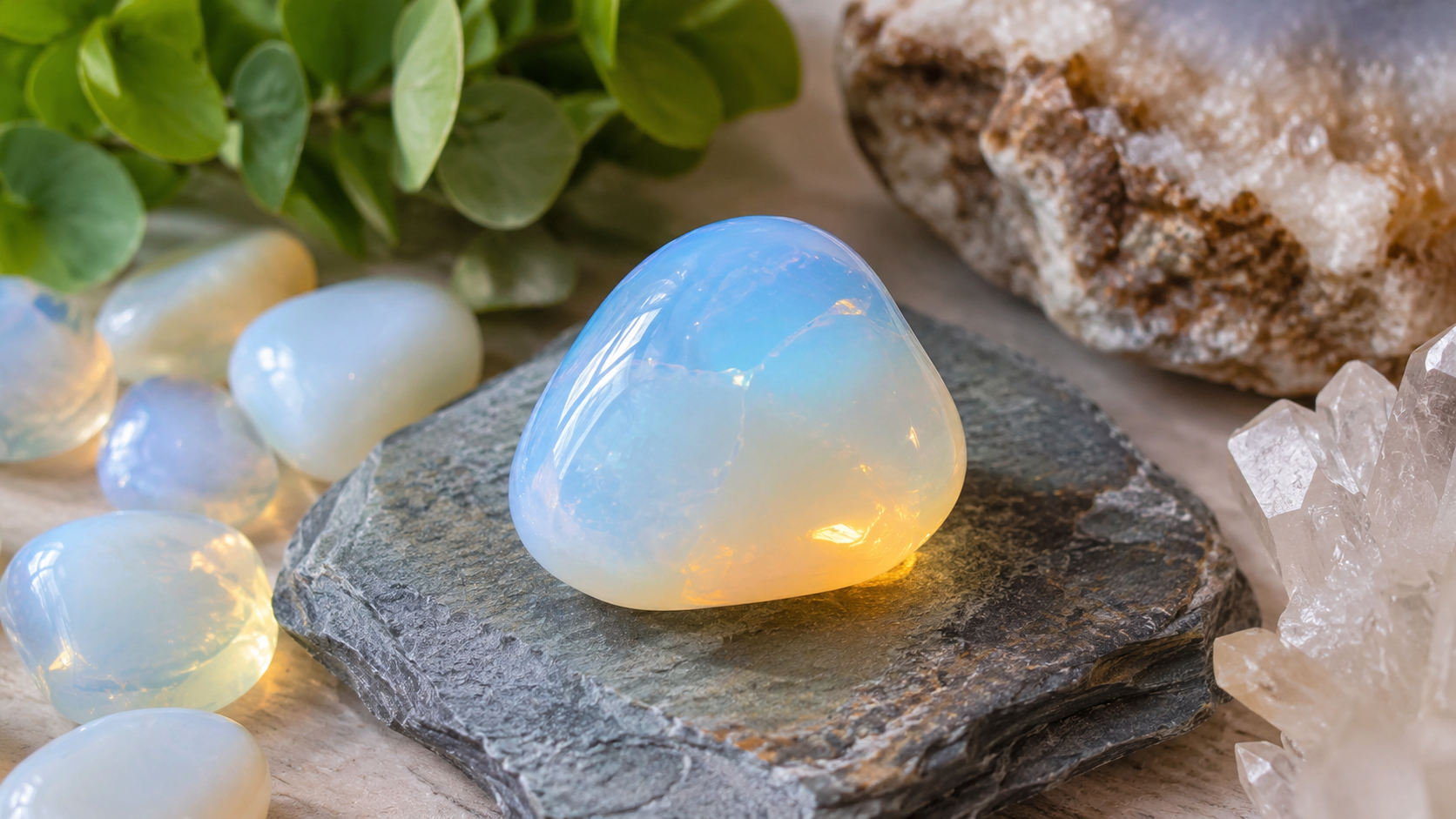
You’ve probably seen opalite before, even if you didn’t know its name. It’s that smooth, milky blue stone that seems to glow faintly from within, often shaped into beads, rings, or polished palm stones at gift shops and crystal markets. The color shifts slightly depending on the light, which is exactly what makes people stop and pick it up.
Once they do, the questions start. Is it a real gemstone? Is it the same thing as opal? Why does it look so uniform compared to other stones on the same shelf? These are fair questions, because opalite’s name is genuinely misleading, and most sellers don’t explain what it actually is before ringing it up.
This article covers what opalite is made of, how it’s produced, how it compares to real opal and moonstone, and what to know before buying it.
Direct Answer
Opalite is a man-made glass designed to imitate the look of natural opal. It’s typically produced by combining glass with materials such as dolomite and quartz, then treating it to create a milky, opalescent glow that shifts between blue and orange depending on the lighting. Despite its gemstone-sounding name, opalite is not a naturally occurring mineral, and it has no connection to genuine opal beyond a similar visual effect.
What Opalite Actually Is
Opalite is a manufactured glass product, not a mineral or mineraloid. It doesn’t form underground through geological processes the way genuine gemstones do. Instead, it’s made in a factory setting, where glass is combined with opacifying agents and sometimes metal compounds to produce its signature milky, glowing appearance.
The name “opalite” is a marketing term more than a scientific classification, and that’s part of why it causes confusion. Some sellers use it loosely to describe any opal-like material, including certain natural but low-grade forms of common opal that lack the vivid color play seen in gem-quality opal. In current commercial use, though, the vast majority of what’s sold as opalite is synthetic glass, not a natural stone at all.
Because opalite has no fixed crystal structure, geologists don’t classify it alongside true minerals. It behaves optically and physically like glass because, chemically, that’s essentially what it is.
How Opalite Is Made
Opalite production starts with a glass base, which is then treated with opacifying compounds to create its distinctive cloudy, luminous look. Manufacturers commonly use materials like dolomite, quartz, and small amounts of metal oxides to control the color and the strength of the opalescent glow.
The glass is melted, mixed with these additives, then cooled and shaped into beads, cabochons, or decorative pieces. During this process, tiny air bubbles or subtle swirl patterns can form inside the glass. Rather than being a flaw, this is actually one of the clearest signs that a piece is genuine manufactured opalite rather than a natural stone, since real minerals form differently and rarely show the same kind of bubble inclusions.
The characteristic blue-to-orange color shift happens because of how light interacts with the opacifying particles suspended in the glass. Held up to a light source, opalite often takes on a soft orange or golden tone, while against a darker background it reads as blue or lavender. This effect is similar to the optical phenomenon seen in some natural stones, which is exactly why opalite works so well as a visual stand-in for opal.
Opalite vs. Real Opal
The most important thing to understand about opalite is that it is not opal, despite the similar name and appearance.
Natural opal forms over long geological timeframes through a process involving silica-rich water depositing tiny spheres of material within rock cavities. This structure is what creates the true “play of color,” the flashes of rainbow-like color that shift as the stone moves, which is the defining feature of gem-quality opal.
Opalite, by contrast, doesn’t have this internal structure at all. Its glow comes from light scattering through glass and opacifying compounds, not from layered silica spheres. It also doesn’t display the same kind of multicolored flash; instead, it typically shows a more limited blue-to-orange shift.
Because opalite is manufactured rather than mined, it’s also significantly less expensive than natural opal, particularly compared to high-quality gem opal, which can be quite valuable depending on its color play and clarity.
Opalite vs. Moonstone
Opalite is also frequently mistaken for moonstone, since both stones share a similar pale, glowing appearance.
Moonstone is a natural feldspar mineral, formed from potassium, aluminum, and silica arranged in a defined crystal structure. It often contains natural internal inclusions and has a slightly higher hardness rating than opalite on the Mohs scale.
Opalite, again, is glass. It typically has a smoother, more uniform look than moonstone, without the natural internal texture that mineral specimens usually show. If a piece looks unusually flawless and perfectly consistent from every angle, that uniformity is often a sign it’s manufactured rather than natural.
Physical Properties of Opalite
Opalite has a Mohs hardness of roughly 5 to 6, similar to ordinary glass, which places it below more durable gemstones like quartz or moonstone. This means it can scratch relatively easily if stored carelessly alongside harder materials.
Its luster is typically described as dull to vitreous, meaning it can range from a soft, matte-like sheen to a more glassy shine depending on how it’s polished. Opalite is translucent to semi-transparent, allowing light to pass through it, which contributes to its glowing appearance.
Because it’s glass rather than a natural crystalline mineral, opalite doesn’t have cleavage planes or the internal structural properties that gemologists use to identify true minerals. Under magnification, air bubbles or faint swirl patterns are often visible, which is one of the more reliable ways to confirm a piece is opalite rather than a natural stone.
Common Uses of Opalite
Opalite shows up most often in jewelry and decorative items, largely because it’s affordable, easy to shape, and visually striking. Common products include beaded bracelets, pendants, rings, tumbled palm stones, and small carved figures like pyramids or spheres.
It’s also popular in the crystal and wellness community, where people use opalite for meditation, decoration, or personal collections. In these contexts, opalite is sometimes associated with themes like calm, clarity, or emotional balance. It’s worth being clear that these are beliefs held within spiritual and metaphysical practices rather than claims supported by scientific evidence. People are welcome to value opalite for how it makes them feel, but its physical composition as glass doesn’t carry any proven therapeutic properties.
Common Mistakes and Misconceptions
Assuming opalite is a type of opal. Despite the name, standard commercial opalite is synthetic glass. It shares a visual resemblance to opal but not its mineral composition or formation process.
Believing all opalite is fake or low quality. Opalite isn’t a scam or a poor substitute; it’s simply a different material with its own manufactured origin. Reputable sellers are usually upfront that it’s glass, and it’s priced accordingly.
Confusing opalite with moonstone based on color alone. The two can look similar at a glance, but they differ in composition, hardness, and internal structure. Checking for uniformity and visible bubbles can help tell them apart.
Expecting opalite to display full rainbow color play like precious opal. Opalite typically shows a more limited blue-to-orange shift rather than the multicolored flashes seen in gem-quality natural opal.
Assuming metaphysical claims about opalite are scientifically verified. Beliefs about emotional or spiritual benefits are part of personal or cultural practice, not measurable physical properties of the glass itself.
Real-World Examples
Jewelry shopping: Someone browsing a crystal shop sees a glowing blue bracelet labeled “opalite” priced far lower than the opal rings nearby. The price difference makes sense once it’s clear the bracelet is manufactured glass rather than a mined gemstone.
Identifying a mystery stone: A person examining an inherited piece of jewelry notices small bubbles inside a smooth blue stone under a light. That detail is a strong indicator the piece is opalite rather than natural moonstone or opal.
Buying online: A listing describes a pendant as an “opalite crystal” without clarifying that it’s synthetic. Knowing that opalite is standard glass helps a buyer set realistic price expectations before purchasing.
Key Facts
- Opalite is a man-made glass, not a natural mineral or mineraloid.
- It’s typically produced using glass combined with dolomite, quartz, and metal compounds.
- Opalite has a Mohs hardness of about 5 to 6, similar to ordinary glass.
- Its color often shifts between blue and orange depending on lighting conditions.
- Tiny air bubbles or swirl patterns inside the material are a common sign it’s manufactured rather than natural.
- Opalite is not the same material as natural opal or moonstone, despite visual similarities.
- It’s widely used in affordable jewelry and decorative items.
FAQ
Q1: What is opalite made of?
Ans: Opalite is made from glass combined with opacifying materials such as dolomite and quartz, along with small amounts of metal compounds that help create its milky, glowing appearance.
Q2: Is opalite a real crystal?
Ans: No. Opalite is manufactured glass, not a naturally forming crystal or mineral. It has no defined crystal structure the way genuine gemstones do.
Q3: Is opalite the same as opal?
Ans: No. Natural opal forms underground over long periods and displays true play of color from its internal silica structure. Opalite is synthetic glass that mimics opal’s general look without sharing its composition.
Q4: How can you tell if opalite is real or fake?
Ans: Since standard commercial opalite is already glass, “real” opalite simply means genuine manufactured glass rather than plastic or another substitute. Small air bubbles, a uniform appearance, and a blue-to-orange color shift under different lighting are common identifying signs.
Q5: Is opalite valuable?
Ans: Opalite is generally inexpensive compared to natural gemstones like opal or moonstone, since it’s factory-made rather than mined. Its value comes mainly from its appearance and craftsmanship rather than rarity.
Q6: What are the alternatives to opalite?
Ans: People looking for a similar glowing appearance in a natural stone often consider moonstone or genuine common opal, both of which are mined materials with their own distinct properties and price points.
Key Takeaways
- Opalite is a manufactured glass product designed to resemble natural opal, not a mineral itself.
- It’s made by combining glass with opacifying compounds like dolomite and quartz.
- Opalite differs from real opal and moonstone in composition, hardness, and internal structure.
- Visible air bubbles and a uniform, glassy appearance are common signs a piece is opalite.
- Metaphysical claims associated with opalite are matters of personal belief, not scientific fact.
Conclusion
Opalite is best understood as a well-made glass material that borrows its name and appearance from natural opal without sharing its geological origin. Knowing that it’s manufactured, rather than mined, helps explain both its affordability and its consistent, glowing look. Whether someone is buying it for jewelry, decoration, or personal meaning, understanding what opalite actually is makes it easier to know what to expect from it.

-

 News2 months ago
Did Bruce Willis Pass Away? The Truth Explained
-

 News4 months ago
Who Is Julissa Thaler? The Case of Eli Hart and a Broken Child Welfare System
-

 Technology2 months ago
Christopher Knight’s Tribute to Jennifer Runyon Explained
-
 Food3 months ago
What Is VMC Paloma? Everything You Need to Know
-

 Heath2 months ago
How to Prevent Freezer Burn: A Complete Guide
-

 News3 months ago
Alexander Brothers: Case Timeline and Key Facts
-

 Sports3 months ago
Red Sox vs Reds: History, 2026 Matchups, and What Makes This Rivalry Worth Watching
-

 News3 months ago
Cheapest States to Live In: 2026 Rankings and Guide