
Technology
What Does ATP Mean in Text? Slang, Uses & Examples


Direct Answer
In texting and on social media, ATP most commonly means “at this point.” People use it to express frustration, resignation, or a shift in how they feel about something, as in “ATP, I’m just done.” A second, less common meaning is “answer the phone,” used when someone is trying to reach you. Outside of texting, ATP can also refer to the Association of Tennis Professionals or, in science, adenosine triphosphate.
Why ATP Has More Than One Meaning
ATP is a good example of how the same three letters can mean completely different things depending on where you see them. In a group chat or TikTok comment, it’s almost always slang. In a tennis article, it’s an organization. In a biology textbook, it’s a molecule. None of these meanings overlap much, so the trick to understanding ATP isn’t memorizing a single definition — it’s reading the context around it.
ATP as “At This Point”
The slang meaning is the one most people are searching for. “At this point” is a phrase used when someone has reached a limit, made up their mind, or wants to sum up how they currently feel about a situation. Shortened to ATP, it fits the fast, casual style of texting and captions.
You’ll typically see it used with a tone of:
- Frustration — “ATP I’m just going to cancel the whole trip.”
- Resignation or acceptance — “ATP I’ve stopped expecting a reply.”
- Tired humor — “ATP this is just my personality now.”
It usually shows up at the start or end of a sentence, almost like a verbal shrug. The tone can be serious, sarcastic, or joking, so the same three letters can carry very different emotional weight depending on the rest of the message.
Where This Meaning Shows Up
This slang use of ATP is most common in:
- Text messages between friends
- TikTok captions and comments
- Instagram and Snapchat chats
- Group chats, especially among teens and young adults
It’s casual language, not something you’d use in a work email or formal writing.
ATP as “Answer the Phone”
A second, older texting meaning is “answer the phone.” It shows up when someone is trying to get a hold of you and you’re not picking up, often written with extra emphasis, like “ATP!!” This meaning is far less common than “at this point,” but it can cause confusion if you read it out of context. A message like “Why aren’t you picking up?? ATP!” is a clear sign this is the meaning being used, since the surrounding sentence is about a phone call rather than a feeling or opinion.
ATP Outside of Texting
Because ATP is also a real acronym in other fields, it’s worth knowing the other common meanings so you don’t mix them up.
ATP in Sports
In tennis, ATP stands for the Association of Tennis Professionals, the organization that governs the men’s professional tennis tour and maintains player rankings. If you see “ATP” in a sports headline or on a tennis broadcast, it almost certainly refers to this organization rather than the texting slang.
ATP in Science
In biology and chemistry, ATP stands for adenosine triphosphate, a molecule that stores and transfers energy inside living cells. This is the meaning you’d encounter in a science class or textbook, and it has nothing to do with texting or emotion.
How to Tell Which Meaning Is Being Used
Context almost always makes the meaning obvious. A few quick clues:
- Casual chat, caption, or comment with an emotional tone → “at this point”
- Message about calls or reaching someone → “answer the phone”
- Sports article, tournament, or ranking discussion → Association of Tennis Professionals
- Science class, textbook, or biology discussion → adenosine triphosphate
If you’re still unsure, look at the rest of the sentence. Slang uses of ATP are almost always attached to a feeling or opinion, while the other meanings show up in more specific, topic-driven contexts.
Common Mistakes and Misconceptions
Mistake: Assuming ATP always means the same thing everywhere. Because ATP has completely unrelated meanings across texting, sports, and science, reading it without context can lead to real confusion, especially for anyone unfamiliar with the slang.
Mistake: Treating ATP as formal language. The slang meaning of ATP is casual and expressive. It doesn’t belong in professional emails, formal writing, or business messaging, even though it’s fine in texts or social captions.
Misconception: ATP is brand new slang. While it feels like a recent Gen Z term, the “at this point” usage has been building for years as part of a broader trend of shortening common phrases for texting and captions. It has simply become more visible and widespread recently.
Real-World Example
Imagine a friend texts you: “ATP I’m just going to drive myself, this ride situation is a mess.” Here, ATP signals frustration and a decision that’s already been made. Compare that to a coworker who texts, “Call you in five, ATP!” after several missed calls. Same three letters, but the second message is almost certainly asking you to answer the phone, not expressing an opinion.
Key Facts
- ATP most commonly means “at this point” in texting and social media.
- A secondary texting meaning is “answer the phone.”
- In tennis, ATP stands for the Association of Tennis Professionals.
- In biology, ATP stands for adenosine triphosphate, a molecule that stores cellular energy.
- The correct meaning depends entirely on context.
- ATP is casual slang and isn’t appropriate for formal writing.
FAQ
Q1: What does ATP mean in a text message?
Ans: It most often means “at this point,” used to express a current feeling, opinion, or decision.
Q2: What does ATP mean on TikTok or Instagram?
Ans: The same as in texting — “at this point.” It’s commonly used in captions and comments to express frustration, acceptance, or humor.
Q3: Can ATP mean something other than “at this point”?
Ans: Yes. In casual texting it can also mean “answer the phone.” Outside of texting, it can refer to the Association of Tennis Professionals or, in science, adenosine triphosphate.
Q4: Is it okay to use ATP in professional messages?
Ans: No. ATP is informal slang best suited for texting and casual social media, not emails or workplace communication.
Q5: How do I know which meaning of ATP is being used?
Ans: Look at the context. An emotional or opinion-based sentence points to “at this point,” a message about phone calls points to “answer the phone,” and sports or science content points to their respective meanings.
Key Takeaways
- ATP in texting usually means “at this point.”
- It can also mean “answer the phone” in casual messages.
- Outside of texting, ATP refers to tennis’s governing body or the molecule adenosine triphosphate.
- Context is the fastest way to figure out which meaning applies.
- It’s casual slang, not suited for formal communication.
Conclusion
ATP is short, casual, and depends heavily on where you see it. In most texts and social posts, it means “at this point,” a quick way to express how someone currently feels about a situation. Once you know the handful of other meanings out there, from a missed phone call to a tennis organization to a biology term, decoding ATP in any conversation becomes pretty straightforward.
Introduction
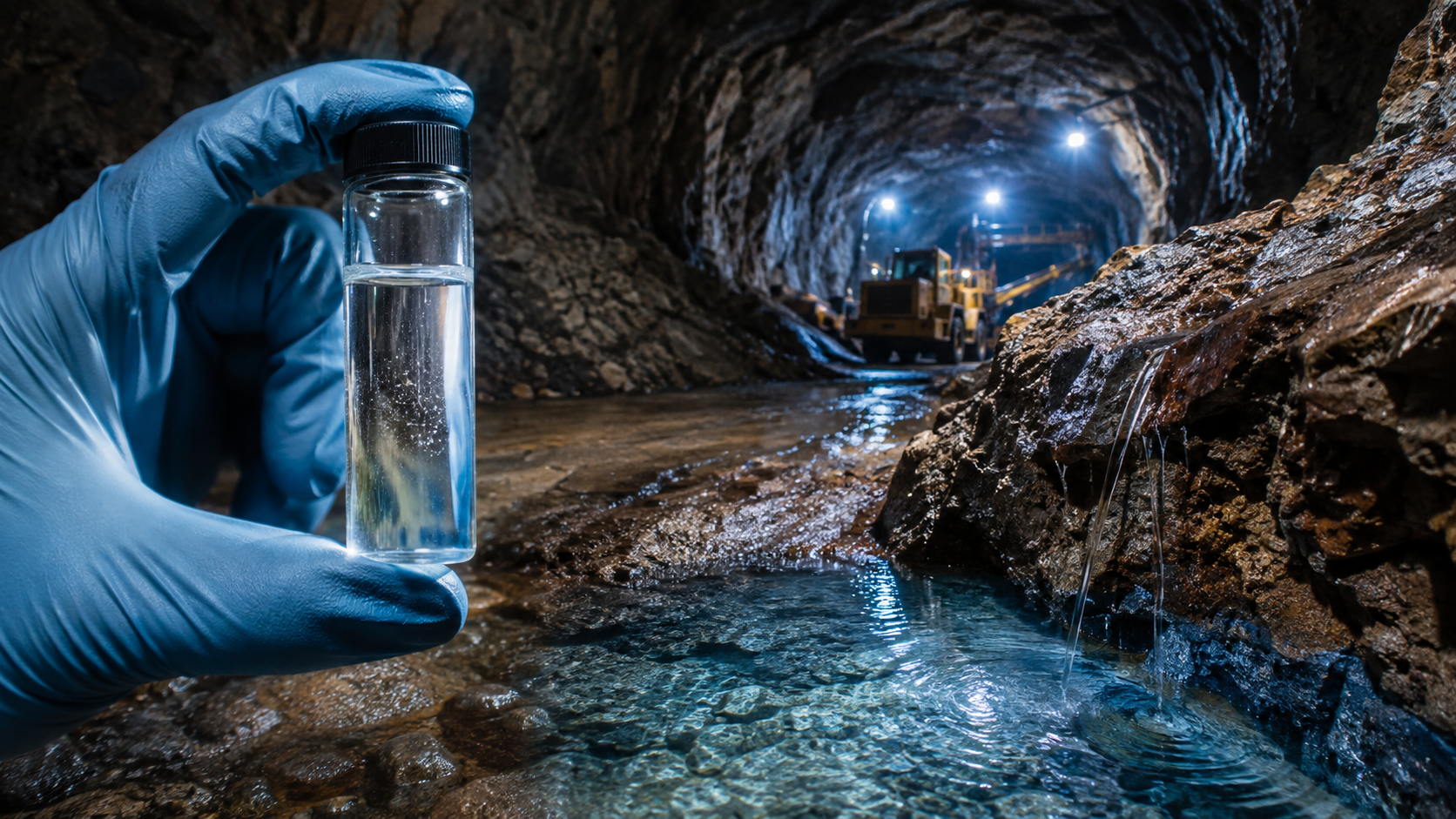
Deep beneath northern Ontario, in one of the world’s deepest mines, scientists found something far more surprising than the metal ore they were searching for: water that has been trapped underground for roughly two billion years. That’s older than plants, older than animals, and older than almost anything most people picture when they think about the history of life on Earth. It’s easy to see why this discovery keeps resurfacing in search results and news stories. This article explains where the water was found, how scientists figured out its age, what it’s actually like, and why it matters for science well beyond Canada.
Direct Answer
The Canadian mine known for billion-year-old water is Kidd Creek Mine near Timmins, Ontario. Water trapped in rock fractures roughly 2.4 to 3 kilometers underground has been dated to between about 1.5 and 2 billion years old, making it the oldest known water on Earth. Scientists dated it using noble gas analysis and found it also contains evidence of ancient microbial life that survives without sunlight.
Where This Ancient Water Was Found
Kidd Creek Mine, Ontario
The water comes from Kidd Creek Mine, an underground copper, zinc, and silver mine located about 24 kilometers north of Timmins, Ontario. Kidd Creek is the deepest base metal mine in the world, with excavation reaching close to 3,000 meters below the surface. The mine sits on the Canadian Shield, a huge expanse of ancient continental rock surrounding Hudson Bay, and its ore body formed roughly 2.7 billion years ago on what was once an ancient ocean floor.
Why This Location Made the Discovery Possible
Most of Earth’s original ocean floor has long since been recycled through plate tectonics, meaning rock from billions of years ago rarely survives at the surface or anywhere accessible to humans. Kidd Creek’s unusual depth and geological stability gave researchers a rare chance to reach rock, and the water trapped inside it, that had remained essentially undisturbed since the Precambrian era.
How Scientists Determined the Water’s Age
The Discovery Timeline
Geoscientist Barbara Sherwood Lollar, of the University of Toronto, first visited Kidd Creek in 1992. In 2013, her team, working with researchers led by Greg Holland, reported on fracture fluids collected about 2.4 kilometers underground and published findings in the journal Nature. That study estimated the water had a minimum residence time of around 1.5 billion years, already a record at the time. As mining operations pushed deeper, researchers followed. By 2016, at a depth approaching 3 kilometers, they identified water with an estimated age of roughly 2 billion years, a finding presented at the American Geophysical Union meeting that December. A follow-up 2018 study analyzing fracture fluids from about 2.9 kilometers down estimated mean residence times ranging from roughly 1 to 2.2 billion years, with the team settling on an average close to 1.7 billion years as its best overall estimate.
The Noble Gas Method
Dating water this old isn’t possible with the carbon dating methods used for more recent organic material. Instead, scientists rely on noble gases, elements like helium, neon, and xenon that accumulate in trapped water over extremely long timescales. As Sherwood Lollar has described it, the water “accumulates them, like passengers getting on a train.” By measuring the concentration of these gases, researchers can calculate roughly how long the water has been isolated from the surface and cut off from any newer water sources.
What the Ancient Water Is Actually Like
This isn’t clean drinking water sitting quietly underground. The water flowing out of Kidd Creek’s deep fractures is up to 10 times saltier than ordinary seawater, thick and almost syrupy in texture, and gives off a strong sulfuric smell. When exposed to oxygen at the surface, it changes color from clear to a faint orange, a reaction caused by iron dissolved from the surrounding rock. Sherwood Lollar has noted that, generally speaking, the older the water, the saltier it tends to be. She has personally tasted the water and described it as “terrible.”
Despite the unpleasant description, the water isn’t just a curiosity. It flows out of boreholes and fractures at rates of liters per minute, far more volume than researchers originally expected to find sealed away at that depth.
Why This Discovery Matters
A Window Into Ancient Earth Chemistry
Because this water has been isolated from the surface for so long, its chemistry offers a rare, direct look at conditions that existed on Earth billions of years ago, long before the atmosphere and oceans looked anything like they do today. Researchers see it as a potential clue to the kind of chemical environment that existed before or around the time life first began.
Evidence of Life Without Sunlight
Later research went further than simply dating the water. A 2024 study published in Communications Earth & Environment used genetic, lipid, and isotope evidence to identify an active microbial community living in fracture water roughly 2.4 kilometers down. The dominant organism identified, a salt-tolerant bacterium researchers named Candidatus Frackibacter, survives by processing hydrogen released from chemical reactions in the surrounding rock rather than relying on sunlight or photosynthesis in any way.
It’s worth being precise here: this doesn’t mean the microbes themselves are billions of years old. Researchers were careful to note that the organisms could be as young as the most recently mixed water in the fracture system, even if that water sits within a much older, isolated environment. To account for possible contamination in an active mine, the research team compared deep samples against water and microbes collected from exposed surfaces near the mine entrance.
Clues for the Search for Life on Other Planets
This kind of deep, sunless, chemically sustained ecosystem has drawn interest well beyond geology. NASA researchers have visited Kidd Creek specifically to study what its deep fluids and microbial life can suggest about the potential for similar life surviving beneath the surface of Mars or other planets, where sunlight-dependent life would be impossible but rock-water chemical reactions could still occur.
Common Misconceptions About This Discovery
Misconception: This is the only ancient water ever found underground. Kidd Creek holds the current record for the oldest dated water, but researchers don’t believe it’s necessarily unique. Similar ancient, isolated water may exist in deep, stable rock formations elsewhere in the world; scientists are actively searching other sites to compare chemistry and age.
Misconception: The water is exactly 2 billion years old, full stop. Different studies and different noble gas dating models have produced a range of estimates, generally between about 1.5 and 2 billion years, depending on the depth sampled and the specific method used. Scientists describe these as best estimates rather than a single, precise number.
Misconception: The microbes found in the water are billions of years old themselves. The water’s isolation age and the age of the organisms living in it aren’t the same thing. Researchers have explicitly cautioned that the microbes could be much younger than the water surrounding them.
Misconception: This water could safely be used as a resource. Given its extreme salinity, unusual chemistry, and depth, this water isn’t a practical source of drinking water or anything resembling it. Its scientific value lies in what its chemistry and isolation reveal, not in any practical use.
Real-World Example: A Sample You Can See
A sample of this billion-year-old water isn’t locked away in a lab forever. In November 2020, a sample collected from Kidd Creek was added to the permanent collection at Ingenium, Canada’s national museums of science and innovation, based in Ottawa. This gives members of the public a way to see, at least through a display case, physical evidence of one of the oldest known water sources on the planet.
Key Facts
- The water was found in Kidd Creek Mine, near Timmins, Ontario, the world’s deepest base metal mine.
- Estimates for the water’s age range from roughly 1.5 to 2 billion years, based on different studies and sampling depths.
- Scientists date the water using noble gas analysis rather than carbon dating.
- The water is up to 10 times saltier than seawater and gives off a strong sulfuric odor.
- The surrounding ore and rock formed approximately 2.7 billion years ago on an ancient ocean floor.
- A 2024 study identified an active microbial community living in the fracture water, sustained by hydrogen from rock-water reactions rather than sunlight.
- NASA researchers have studied the site for clues about potential life on Mars.
- A sample of the water is on public display at Ingenium in Ottawa.
Frequently Asked Questions
Q1: What is the oldest water on Earth?
Ans: The oldest confirmed water on Earth was found in Kidd Creek Mine in Ontario, Canada, with estimates placing its age at roughly 1.5 to 2 billion years old.
Q2: How do scientists know how old the water is?
Ans: Researchers use noble gas analysis, measuring elements like helium and xenon that accumulate in trapped water over long periods, to estimate how long the water has been isolated underground.
Q3: Can this ancient water be consumed?
Ans: No. It’s extremely salty, has an unpleasant sulfuric Ans: smell, and contains a complex, potentially harmful chemical composition. It isn’t intended or safe for drinking.
Q4: Does the water contain living organisms?
Ans: Yes. A 2024 study found evidence of an active microbial community in the fracture water, including a bacterium that survives on hydrogen released from surrounding rock rather than sunlight.
Q5: Is this the only place ancient water like this exists?
Ans: Probably not. Kidd Creek holds the current record for the oldest dated water, but scientists believe similar ancient, isolated water could exist in other deep, geologically stable locations around the world.
Q6: Why do scientists care about this discovery?
Ans: It offers a rare look at ancient Earth chemistry, evidence that life can survive in extreme, sunless environments, and clues that may help researchers evaluate whether similar conditions could support life on other planets, such as Mars.
Q7: Where can I see a sample of the water?
Ans: A sample collected from Kidd Creek is part of the permanent collection at Ingenium, Canada’s national museums of science and innovation, in Ottawa.
Key Takeaways
- The oldest known water on Earth was discovered in Kidd Creek Mine near Timmins, Ontario.
- Estimates place the water’s age between roughly 1.5 and 2 billion years, based on noble gas dating methods.
- The water is extremely salty, syrupy, and has a strong sulfuric smell, making it unsuitable for drinking.
- Researchers found an active microbial community living in the water, sustained by chemical reactions in the rock rather than sunlight.
- The discovery has implications for understanding both ancient Earth chemistry and the potential for life on other planets.
Conclusion
The billion-year-old water found deep in Ontario’s Kidd Creek Mine represents one of the more remarkable discoveries in modern geoscience, a direct physical link to conditions on Earth long before complex life existed. Beyond its age, the presence of microbial life surviving without sunlight has given researchers a new way to think about where life might exist, both on this planet and potentially on others. As scientists continue searching other deep, stable rock formations around the world, Kidd Creek’s record may eventually be matched or broken, but for now it remains the oldest known water on Earth.

Introduction
If you’ve noticed headlines about Toyota, BMW, or Nissan shifting car production into the United States, you’re seeing one of the more significant shakeups in the auto industry in decades. Buyers want to know whether their next vehicle will be built domestically, workers want to know if new plants mean new jobs, and industry watchers want to understand what’s actually driving these decisions. This article breaks down which automakers are relocating production, why they’re doing it, and what it actually means for prices, jobs, and the vehicles on dealer lots.
Direct Answer
Automaker production relocation to the US refers to car manufacturers shifting vehicle assembly from factories in Mexico, Canada, Japan, or Europe into US-based plants. This trend accelerated after 2025 due to steep new US import tariffs. Toyota, Honda, BMW, Mercedes-Benz, Volvo, and Nissan have all announced US production shifts, though most automakers are moving specific models into existing factories rather than building new ones from scratch.
Why Automakers Are Moving Production to the US
Tariff Policy Changes
The biggest driver behind this shift is trade policy. For years, light vehicles imported into the US faced a modest 2.5% tariff. That rate jumped sharply, in some cases by ten times or more, depending on the country of origin. Rates have since been negotiated down somewhat for certain trading partners: 10% for UK-made cars and SUVs (on the first 100,000 vehicles exported annually), and 15% for vehicles from the EU, Japan, and Korea. Even at these reduced levels, the tariffs are far higher than what automakers dealt with before, which changes the math on where it makes sense to build a car.
The Expiration of USMCA
Adding to the uncertainty, the United States-Mexico-Canada Agreement, the trade pact that had governed North American auto manufacturing since the first Trump administration, was not renewed. That kicked off a decade-long process to wind the agreement down, which removed a layer of predictability that automakers had relied on for years when deciding where to locate factories.
Government Pressure and Incentives
Beyond tariffs themselves, the current administration has pushed automakers directly, including linking reduced tariff rates for Japanese and Korean imports to commitments from those countries to invest more heavily in US industries. Some automakers have also floated their own proposals, such as Volkswagen’s suggestion that companies get a dollar of tariff relief for every dollar invested in US manufacturing, though this idea hasn’t been formally adopted by US authorities.
Which Automakers Are Actually Moving Production
Toyota
Toyota announced it will shift much of its Tacoma pickup production from Mexico to a $3.6 billion expansion of its existing San Antonio, Texas plant, where it already builds the Tundra and Sequoia. Notably, Toyota didn’t cite tariffs as the direct reason for the move, telling reporters its investments reflect “multi-decade decisions based on broader strategic goals” rather than a reaction to any single policy. The company will still build some Tacomas in Mexico. Toyota is also increasing RAV4 production in the US, shifting some output that had been based in Canada, while planning to maintain its existing Canadian output levels through other export allocations.
Honda
Honda has decided to build its next-generation Civic hybrid in Ohio instead of Mexico, and it’s increasing CR-V production in Ohio as well, moving some volume that had come from Canada. As with Toyota, Honda has said it intends to keep its Canadian production volumes steady by directing new export markets to its Ontario plant.
BMW
BMW is expanding SUV production at its Spartanburg, South Carolina factory, adding electric versions of the X5, X6, and X7 alongside the existing gas and plug-in hybrid models. An electric iX3, and likely a related iX4, are expected to join the lineup, built on BMW’s newer Neue Klasse platform even as the larger SUVs continue on the older CLAR platform in the same factory. A rugged off-road model, positioned as a rival to the Mercedes G-Wagen, is expected to begin US production around 2029.
Mercedes-Benz
Mercedes-Benz plans to add GLC crossover production to its existing Alabama factory by the end of 2027. Separately, Mercedes is unwinding parts of its manufacturing partnership with Nissan in Mexico and selling its stake in Nissan, a holdover from the peak years of the Renault-Nissan Alliance.
Volvo
Volvo is adding production of the XC60 plug-in hybrid to its underused factory in South Carolina, with output expected to begin by the end of 2026, ahead of Mercedes’ GLC timeline. Volvo has described this as part of a broader strategy of producing vehicles closer to where they’re sold.
Volkswagen and Audi
Volkswagen is expected to widen what it builds in the US, and Audi is likely to begin US production for the first time, probably at Volkswagen’s existing Chattanooga, Tennessee plant or at the new Scout Motors factory in South Carolina, part of a $2 billion investment.
Nissan
Nissan is taking a different path than most of its competitors: it’s cutting back production in Mexico while expanding SUV and crossover output in the US. Rogue production once planned for Japan is shifting to US plants, and the company is reviving the Xterra nameplate as a rugged SUV, with production expected to start in 2028. At the same time, Nissan is closing two Mexican factories, including its original Civac plant, the company’s first outside Japan, by March 2027.
General Motors
GM presents a more complicated picture. The company is facing an estimated $4 to $5 billion profit hit from tariffs tied to Buick imports from China and Trailblazer imports from Korea, but it hasn’t moved Buick production back to the US despite that pressure. GM is restarting limited production at its Canadian CAMI facility, while sourcing batteries from the US for those vehicles specifically to reduce the tariff burden when they’re shipped back into the American market.
Why Most Automakers Aren’t Moving Faster
Despite all the announcements, industry data shows the overall shift has been modest so far. Roughly 46% of cars purchased by US consumers were imported in the most recent full year, only slightly down from 47.7% the year before.
There are a few practical reasons the shift hasn’t been faster or broader.
Building factories is expensive and slow. Analysts note that constructing new US plants or meaningfully expanding existing ones takes years and costs billions of dollars, a level of commitment most automakers are unwilling to make in response to policies that a future administration could reverse.
Labor costs are higher in the US. Wages at US auto plants tend to run higher than in Mexico and some other manufacturing hubs, which offsets part of the savings automakers would get from avoiding tariffs.
Demand hasn’t dropped. Even with record-high vehicle prices, total US vehicle sales rose about 2% in the most recent year, giving automakers less incentive to disrupt supply chains that are still selling cars successfully.
Tariff costs vary widely by company. Mazda, which imports nearly all of its US-sold vehicles, faces an estimated $1.6 billion tariff bill that could cut its operating profits by 70 to 75%. Toyota’s estimated tariff bill is far larger in dollar terms, around $9.7 billion, but represents a smaller share of its profits, about 33%, because of its larger global scale. That difference in exposure explains why some automakers are moving faster than others.
Common Misconceptions About This Trend
Misconception: Every automaker is racing to build US factories. In reality, most companies moving production are shifting specific models into plants that already exist, not constructing new facilities. Genuinely new US factories remain rare.
Misconception: Tariffs are the only reason companies are relocating production. Some companies, including Toyota, have explicitly said their decisions reflect long-term strategic planning rather than a direct response to tariff policy, even while acknowledging that trade policy is a factor they have to account for.
Misconception: Moving production to the US will lower car prices. Higher US labor costs and the expense of building or converting factories can offset some or all of the tariff savings, so a shift in production location doesn’t automatically translate into cheaper vehicles for consumers.
Misconception: US-bound production shifts always mean production cuts elsewhere. Several companies, including Toyota and Honda, have said they intend to maintain existing production volumes in Canada by reallocating export markets, rather than simply shutting down or shrinking their non-US operations.
Key Facts
- Light vehicle import tariffs rose sharply from a historical 2.5% baseline, with current rates around 10% for UK vehicles (up to 100,000 annually) and 15% for the EU, Japan, and Korea.
- The USMCA trade agreement was not renewed, starting a 10-year wind-down process.
- Toyota is investing $3.6 billion to expand Tacoma production in San Antonio, Texas.
- BMW’s Spartanburg, South Carolina plant is adding electric X5, X6, X7, and iX3 production.
- Mercedes-Benz plans GLC production in Alabama by the end of 2027; Volvo’s XC60 PHEV production in South Carolina starts by the end of 2026.
- Nissan is closing two factories in Mexico while expanding SUV production in the US.
- About 46% of vehicles purchased by US consumers were imported in the most recent year, only slightly down from the prior year.
- Estimated tariff costs vary widely by company, from roughly $1.6 billion for Mazda to about $9.7 billion for Toyota.
Frequently Asked Questions
Q1: What does “automaker production relocation to the US” mean?
Ans: It refers to car manufacturers shifting vehicle assembly from factories outside the US, often in Mexico, Canada, Japan, or Europe, into US-based plants, typically to reduce exposure to import tariffs.
Q2:Why are automakers moving production to the US now?
Ans: Sharp increases in US auto import tariffs, the non-renewal of the USMCA trade agreement, and government pressure tied to trade negotiations have all pushed automakers to reconsider where they build vehicles.
Q3:Which automakers have announced US production moves?
Ans: Toyota, Honda, BMW, Mercedes-Benz, Volvo, Volkswagen, and Nissan have all announced some form of US production expansion or model relocation.
Q4:Will moving production to the US lower car prices?
Ans: Not necessarily. Higher US labor costs and the expense of expanding or building factories can offset tariff savings, so relocation doesn’t guarantee lower prices for buyers.
Q5:Are automakers building brand-new factories in the US?
Ans: Mostly not. Most companies are adding models to existing plants rather than constructing entirely new facilities, since new factories take years to build and cost billions of dollars.
Q6:Does this affect jobs in Mexico and Canada?
Ans: It varies by company. Nissan is closing two Mexican plants, while Toyota and Honda have said they plan to maintain their existing Canadian production volumes by shifting export markets rather than cutting output.
Q7: Is this trend likely to continue?
Ans: It depends heavily on future trade policy. Because tariff rates can change with a new administration, some automakers remain cautious about committing to large, multi-year US investments that could become unnecessary if policy shifts again.
Key Takeaways
- Rising US auto tariffs and the non-renewal of USMCA are the main forces pushing automakers toward US production.
- Toyota, Honda, BMW, Mercedes-Benz, Volvo, Volkswagen, and Nissan have all announced specific US production changes.
- Most shifts involve adding models to existing factories rather than building new ones.
- Roughly 46% of vehicles sold in the US are still imported, showing the overall shift remains limited so far.
- Tariff exposure varies significantly by automaker, which explains why some companies are moving faster than others.
- Moving production to the US doesn’t automatically mean lower prices, since US labor and construction costs can offset tariff savings.
Conclusion
Automaker production relocation to the US is a real and ongoing shift, but it’s happening unevenly and mostly through existing factories rather than a wholesale rebuilding of the industry’s footprint. Tariff policy, the unresolved future of USMCA, and each company’s specific import exposure are shaping which automakers move quickly and which ones are waiting to see how trade policy settles before committing billions of dollars to new manufacturing plans.

Christopher Knight’s Tribute to Jennifer Runyon: What Happened and Why It Matters
When a familiar face from television passes away, the tributes that follow often say as much about that person’s impact as any obituary could. That’s the case with Jennifer Runyon, an actress known to generations of TV viewers, and the heartfelt message her former co-star Christopher Knight shared after her death.
If you’re searching for details on this tribute, you’re likely trying to piece together who Jennifer Runyon was, how she and Christopher Knight knew each other, and what he actually said. Here’s the full picture.
Direct Answer
- Christopher Knight, best known for playing Peter Brady on The Brady Bunch, publicly paid tribute to actress Jennifer Runyon on Instagram after she died on March 6, 2026, at age 65. Runyon had worked with Knight both on the soap opera Another World and later in the TV movie A Very Brady Christmas, where she played a grown-up Cindy Brady. Knight’s message reflected on their years of friendship and praised her warmth and professionalism.
Who Was Jennifer Runyon?
Jennifer Runyon built a career in television and film during the 1980s and beyond. She’s best remembered for a handful of standout roles:
- A Very Brady Christmas (1988) — Runyon stepped into the role of a college-age Cindy Brady, replacing original cast member Susan Olsen, who was on her honeymoon during filming.
- Charles in Charge — a recurring role on the popular sitcom.
- Ghostbusters (1984) — a small but memorable part in the blockbuster comedy.
- Another World — a daytime soap opera where she played the character Sally Frame.
After stepping back from acting in the 1990s, Runyon shifted her focus toward family life and teaching acting to children in schools across Idaho and Oregon. That second chapter of her career, largely out of the spotlight, shaped how many people who knew her personally remembered her: as a mentor as much as a performer.
Who Is Christopher Knight?
Christopher Knight, now 68, is widely recognized for playing Peter Brady on The Brady Bunch, a role he held from the show’s original run between 1969 and 1974 and reprised in various follow-up projects through the 1980s and 1990s. Beyond that iconic part, Knight has remained connected to the extended Brady Bunch cast over the decades, often reconnecting with former co-stars for reunions, specials, and tributes.
How Knight and Runyon Knew Each Other
Their working relationship actually predates their most famous collaboration. In the early 1980s, Knight and Runyon appeared together on the daytime soap opera Another World, where Knight played a character named Leigh Hobson opposite Runyon’s Sally Frame. In that storyline, the two played a romantic couple.
Years later, the pair reunited for A Very Brady Christmas, where the dynamic flipped: Runyon took on the role of Cindy Brady, making her Knight’s on-screen sister instead of his soap opera love interest. That shift — from on-screen couple to on-screen siblings — became a detail many outlets highlighted when covering the tribute, since it captured the kind of long, winding relationships that develop between actors who cross paths more than once in an industry built on recurring collaborations.
What Christopher Knight Said
Following news of Runyon’s death, Knight shared a tribute on Instagram accompanied by a photo from their time together on A Very Brady Christmas. In it, he expressed sadness at learning of her passing and reflected on the privilege of having worked with her multiple times over the years. He described her as an unusually kind and dedicated person to work alongside, and extended his sympathy to her family and everyone who knew her.
The tribute was brief but personal, focused less on her filmography and more on the kind of colleague and friend she had been.
Other Tributes to Jennifer Runyon
Knight wasn’t the only person to speak publicly about Runyon’s death. Her brother, David Runyon, also shared a tribute, describing her as a devoted mother and talented actress who had a deep appreciation for the natural world. Other former colleagues and fans added their own remembrances across social media in the days that followed, many echoing the same themes: her kindness, her warmth on set, and the quiet second act of her life spent teaching young people to act.
Taken together, these tributes paint a picture of someone whose influence extended well beyond her on-screen credits.
Why This Story Resonated With Fans
Part of why this tribute drew attention comes down to nostalgia. The Brady Bunch remains one of the most recognized family sitcoms in American television history, and A Very Brady Christmas served as a reunion special that brought much of the original cast back together for new audiences. Runyon’s role in that special, stepping into an established character during a beloved franchise moment, gave her a lasting connection to a show far bigger than her single appearance in it.
For fans who grew up watching both The Brady Bunch and Charles in Charge, Runyon’s death connected two different corners of their television childhood, which explains why the story spread across entertainment outlets fairly quickly.
Common Misconceptions
Misconception: Runyon played the original Cindy Brady. She didn’t. The original role belonged to Susan Olsen throughout the classic series. Runyon only took over the part temporarily in A Very Brady Christmas because Olsen was unavailable during filming.
Misconception: Knight and Runyon only worked together once. In fact, their collaboration began years earlier on Another World, well before the Brady Christmas special brought them together again.
Misconception: The tribute was their only public interaction. While the Instagram tribute is what circulated most widely after her death, it reflected a working relationship and friendship that spanned more than one production over several years.
Key Facts
- Jennifer Runyon died on March 6, 2026, at age 65.
- She was known for roles in A Very Brady Christmas, Charles in Charge, Ghostbusters, and Another World.
- She played a grown-up Cindy Brady in A Very Brady Christmas, replacing Susan Olsen for that production.
- Christopher Knight and Runyon first worked together on the soap opera Another World in the early 1980s.
- Knight, 68, is known for playing Peter Brady on The Brady Bunch.
- Knight shared his tribute to Runyon on Instagram, alongside a photo from their time on A Very Brady Christmas.
- After leaving acting in the 1990s, Runyon taught acting to children in Idaho and Oregon.
Frequently Asked Questions
Q1: Who was Jennifer Runyon?
Ans: She was an American actress known for roles in Charles in Charge, Ghostbusters, Another World, and A Very Brady Christmas. She later became an acting teacher for children.
Q2: How did Jennifer Runyon die?
Ans: Public reporting has confirmed she died on March 6, 2026, at age 65, surrounded by her family. A specific cause of death has not been widely or consistently confirmed across major outlets.
Q3: What did Christopher Knight say about Jennifer Runyon?
Ans: He shared an Instagram tribute expressing sadness over her passing, describing her as one of the kindest and most conscientious people he had worked with, and sending condolences to her family and loved ones.
Q4: How are Christopher Knight and Jennifer Runyon connected?
Ans: They worked together twice: first on the soap opera Another World in the early 1980s, and later in the TV movie A Very Brady Christmas, where Runyon played a grown-up Cindy Brady opposite Knight’s Peter Brady.
Q5: Did Jennifer Runyon play the original Cindy Brady?
Ans: No. She took over the role for A Very Brady Christmas only, filling in for original cast member Susan Olsen. The role in the classic 1969–1974 series belonged to Olsen.
Q6: What is Christopher Knight known for today?
Ans: Beyond his role as Peter Brady, Knight has remained a recognizable figure connected to The Brady Bunch legacy, appearing in reunions, specials, and tributes tied to the show and its cast over the decades.
Key Takeaways
- Jennifer Runyon died on March 6, 2026, at age 65, and was remembered for roles in A Very Brady Christmas, Charles in Charge, Ghostbusters, and Another World.
- Christopher Knight, known for playing Peter Brady, shared a personal Instagram tribute honoring their years of friendship and collaboration.
- Knight and Runyon first worked together on the soap opera Another World before reuniting for A Very Brady Christmas.
- Runyon later taught acting to children after stepping away from her on-screen career.
- Tributes from Knight, her brother David Runyon, and others emphasized her kindness and lasting impact both on set and off.
Conclusion
Christopher Knight’s tribute to Jennifer Runyon captured more than a passing professional connection. It reflected a friendship built across two very different projects, separated by years, and it added to a broader wave of remembrances that highlighted who Jennifer Runyon was beyond her screen credits. For fans of The Brady Bunch and the shows Runyon appeared in over her career, the tribute offered a genuine, human reminder of the relationships that outlast the productions that create them.
-

 News2 months ago
Did Bruce Willis Pass Away? The Truth Explained
-

 News4 months ago
Who Is Julissa Thaler? The Case of Eli Hart and a Broken Child Welfare System
-
 Food3 months ago
What Is VMC Paloma? Everything You Need to Know
-

 Technology2 months ago
Christopher Knight’s Tribute to Jennifer Runyon Explained
-

 Heath2 months ago
How to Prevent Freezer Burn: A Complete Guide
-

 News3 months ago
Alexander Brothers: Case Timeline and Key Facts
-

 Sports3 months ago
Red Sox vs Reds: History, 2026 Matchups, and What Makes This Rivalry Worth Watching
-

 News3 months ago
Cheapest States to Live In: 2026 Rankings and Guide