Technology
Best Wireless Earbuds Under 200 Dollars 2024: A Practical Buying Guide

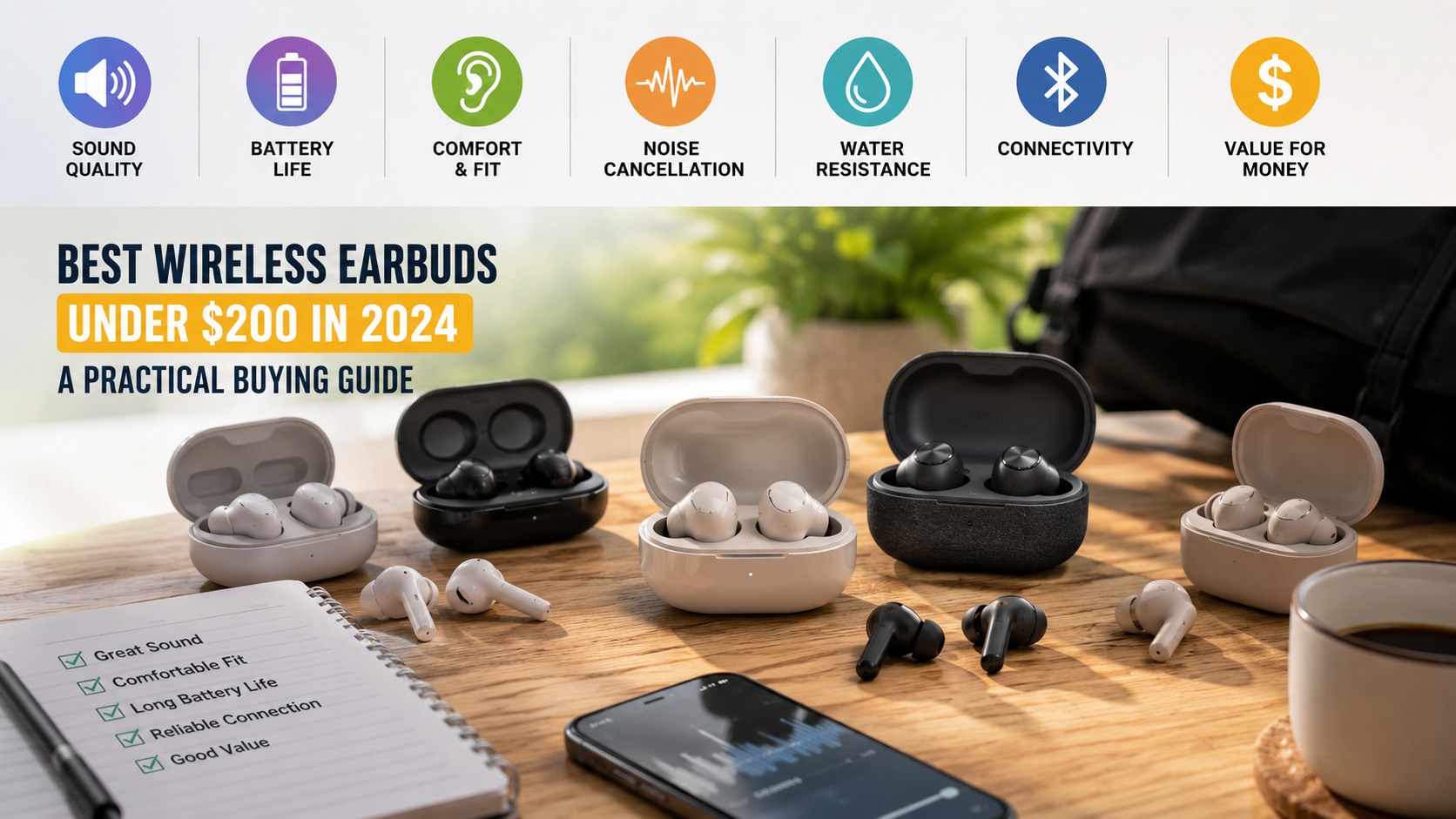
That’s really the core problem with this category. A pair that’s perfect for a runner might be a poor fit for someone who spends their day on video calls. A pair with the strongest noise cancellation might have mediocre battery life. This guide walks through how these tradeoffs actually work, so choosing among the best wireless earbuds under 200 dollars 2024 comes down to your habits rather than guesswork.
Direct Answer: Best wireless earbuds under 200 dollars 2024
There’s no universal winner among the best wireless earbuds under 200 dollars 2024, because “best” depends on use case. For call quality and comfort, models like the Sony WF-C700N stand out. For stronger active noise cancellation, the Anker Soundcore Liberty 4 NC is a common pick. For workouts, rugged options like the Jabra Elite 8 Active hold up better. The right pair matches your daily habits, not just the highest spec number.
Who Searches for This, and What They’re Usually Trying to Solve
People land on searches like this for a few overlapping reasons. Some are replacing a broken or lost pair and want to avoid making the same mistake twice. Others are upgrading from wired headphones and aren’t sure which features are worth paying for. A smaller group is comparing two or three specific models they’ve already narrowed down and want a tiebreaker.
Across all three groups, the same questions tend to come up: how much does noise cancellation actually matter, is battery life as advertised, and will the earbuds stay in place during exercise or a commute. The rest of this guide is organized around answering those questions directly.
How Active Noise Cancellation Works, and Where It Falls Short
Active noise cancellation uses tiny microphones on the earbuds to pick up ambient sound, then generates an inverted sound wave to cancel it out before it reaches your eardrum. It’s genuinely effective against constant, low-pitched noise, like an airplane engine, a train, or an air conditioner running in the background.
Where ANC struggles is sudden or high-frequency sound. A dog barking, a car horn, or someone talking nearby will still get through most ANC systems, even good ones. This is a common source of disappointment for buyers who expect total silence and get partial noise reduction instead.
It’s also worth knowing that ANC quality varies more by brand than by price point specifically. A $140 pair with a well-tuned ANC chip can outperform a $190 pair that spent its budget on other features. Reading independent test results, rather than the percentage figures printed on the box, is the more reliable way to judge this.
Battery Life: Reading Past the Marketing Number
Battery specs on packaging are almost always a combined figure: playback time from the earbuds themselves, plus additional charges stored in the case. A box that says “32 hours total” might mean the earbuds only last 6 hours per charge before needing to go back in the case.
For day-to-day use, the number that matters most is playback time per charge, since that determines how long you can go without interrupting your listening. Six to eight hours per charge covers a typical workday for most people. The total battery life figure matters more if you travel and don’t want to pack a charging cable.
Quick charging has also become common in this price range. A 10-minute charge that delivers an hour of playback can be the difference between showing up to a call with working earbuds or none at all.
Fit and Comfort: Why This Matters More Than the Sound Chip
It’s tempting to assume the internal components decide sound quality, and they do play a role. But the physical seal between the earbud and your ear canal has an outsized effect on both bass response and how much outside noise gets blocked passively, before any ANC processing kicks in.
Most earbuds in this range come with three or four sizes of silicone tips. Testing each size and checking for a light suction feeling when they’re seated correctly usually improves the sound more than any EQ adjustment would. Some apps include a built-in fit test that plays a short tone and reports whether the seal is adequate, which is worth using if your earbuds offer it.
Ear shape varies enough between people that a model praised for comfort in one review might feel loose or pressure-heavy for someone else. This is one of the few specs that’s genuinely hard to judge without trying the earbuds yourself.
Call Quality and Microphones
Call quality gets less attention in marketing than ANC or battery life, but it matters just as much for people who use earbuds for work calls or frequent phone conversations. Most earbuds in this range use two to four microphones per earbud, combined with software noise reduction, to isolate your voice from background sound.
The results vary a lot by environment. Indoor, quiet-room calls tend to sound clear across most models. Outdoor or windy conditions expose the differences, since wind noise is one of the harder problems for microphone software to filter out. If calls are a priority, it’s worth checking reviews that specifically test outdoor or noisy-environment call quality, rather than assuming all “clear call” claims are equal.
Connectivity Features Worth Knowing
Bluetooth version. Bluetooth 5.2 and newer generally provide a steadier connection and better battery efficiency than older versions. Most current earbuds in this range use 5.2 or 5.3.
Codec support. AAC is the standard codec for iPhone users, since iOS doesn’t support higher-bitrate alternatives like aptX or LDAC. Android users benefit more from checking for aptX or LDAC support if streaming audio quality matters to them.
Multipoint connection. This lets the earbuds stay paired to two devices simultaneously, such as a laptop and a phone, switching automatically based on which one is playing audio. It’s a genuinely practical feature for anyone who alternates between work and personal devices throughout the day.
Water resistance. IPX4 is common in this price range and covers sweat and light rain. It does not cover submersion, so swimming or heavy rain exposure can still cause damage even with an IPX4 rating.
How This Price Range Has Changed
A few years ago, spending under $200 usually meant giving up real ANC, settling for average call quality, or dealing with a battery that couldn’t make it through a full day. That’s shifted noticeably. Component costs have dropped, and competition among Sony, Samsung, Anker’s Soundcore line, JBL, and newer brands like Nothing has pushed features that used to be reserved for $250-plus flagships down into this range.
Adaptive ANC, which adjusts noise cancellation strength based on your environment, is now common in mid-range earbuds rather than exclusive to premium ones. The same is true for multipoint connection and companion apps with detailed EQ controls. This doesn’t mean every pair under $200 is worth buying, since quality still varies a lot between brands, but the baseline has moved up significantly compared to a few years ago.
Wireless Earbuds vs. Other Listening Options
Wired earbuds still offer lower latency and no battery to manage, which matters for some gaming or professional audio use, but most everyday listeners have moved away from them for convenience reasons.
Over-ear wireless headphones typically deliver stronger ANC and longer battery life than earbuds, since there’s more physical space for batteries and drivers, but they’re bulkier and less practical for workouts or commuting in warm weather.
Bone conduction headphones leave your ear canal open, which some runners and cyclists prefer for safety awareness, but they trade away bass response and noise isolation to do it.
For most people comparing options under $200, true wireless earbuds hit the best balance of convenience, sound quality, and price, which is part of why they’ve become the default choice for this budget rather than an alternative worth debating.
Considerations by Use Case
If most of your listening happens at a desk or at home, comfort for long sessions and sound balance matter more than ANC strength or water resistance.
If you commute on public transit or fly often, ANC effectiveness and total battery life across a full day become the higher priorities.
If you work out regularly, a secure fit, sweat resistance, and stable connection during movement matter more than premium audio codecs.
If you’re on frequent calls, microphone quality and multipoint connection should outweigh bass response or driver size in your decision.
Step-by-Step: Narrowing Down Your Options
- Write down your top two use cases. Most people have one primary use (commuting, workouts, calls) and one secondary use. This shapes which specs to prioritize.
- Set a minimum battery life per charge. Base this on your actual daily routine, not the total advertised number.
- Check independent ANC test results. Look past brand claims and compare how models perform against real background noise.
- Confirm the ear tip sizes included. More sizes generally mean a better chance of finding a proper seal.
- Match codec support to your phone. This determines whether higher-resolution audio streaming will actually make a difference for you.
- Check the return window. Fit and comfort are personal enough that a flexible return policy is worth checking before buying.
Understanding Sound Signatures
Beyond raw specs, earbuds are often described by their “sound signature,” which refers to how they balance bass, mids, and treble. Knowing the basic types helps make sense of reviews that use this language without fully explaining it.
Bass-forward signatures emphasize low frequencies, which suits electronic music, hip-hop, and pop but can make vocals or acoustic instruments sound less clear by comparison.
Balanced or neutral signatures aim to reproduce audio close to how it was originally mixed, without boosting any particular range. This tends to suit podcasts, classical music, and genres where vocal clarity matters most.
V-shaped signatures boost both bass and treble while slightly reducing midrange, creating an energetic sound that works well for casual listening across many genres but can feel fatiguing during long sessions.
Most earbuds in this price range lean toward a bass-forward or V-shaped signature out of the box, since it tends to impress in quick listening tests, but many offer EQ adjustment through their companion app to shift toward a more balanced sound if that’s your preference.
Common Misconceptions
“More expensive always means better ANC.” ANC quality depends on microphone placement and processing, not price alone. Some mid-range pairs outperform pricier competitors in real testing.
“A bigger driver means better sound.” Driver size is only one factor. Tuning and fit typically affect the final sound more than raw driver dimensions.
“IPX4 means the earbuds are waterproof.” IPX4 covers sweat and splashes, not submersion. Treating it as full waterproofing is a common and costly mistake.
“All earbuds sound about the same, so specs don’t matter.” Frequency response, seal quality, and codec support create real, noticeable differences, even if they’re hard to spot from a spec sheet alone.
“Firmware updates aren’t necessary.” Many connection and ANC improvements are delivered through companion app firmware updates, and skipping them means missing performance fixes the manufacturer has already released.
Warranty and Support Considerations
Warranty coverage varies more between brands than most buyers expect, and it’s worth a quick check before purchasing rather than after something goes wrong. Most manufacturers offer one year of coverage against defects, though this typically doesn’t include accidental damage like a lost earbud or a cracked case.
Retailers sometimes offer extended return windows that are more generous than the manufacturer’s warranty, which matters for a product like earbuds where fit and comfort are hard to judge until you’ve worn them for a few days. Checking the seller’s return policy separately from the manufacturer’s warranty can save a lot of frustration if a pair doesn’t work out.
Replacement parts, particularly ear tips in different sizes or materials like foam instead of silicone, are worth checking for as well. Brands that sell replacement tips separately make it easier to keep using a pair long after the included tips wear out or get lost.
Real-World Examples
A teacher who’s on their feet all day and wears earbuds during a commute needs a secure, comfortable fit above almost everything else, since hours of continuous wear will expose any pressure points or loose-fitting tips quickly.
A software developer taking back-to-back video calls will notice microphone performance far more than bass depth, since coworkers on the other end of the call are the ones judging audio quality, not the wearer.
A frequent traveler flying multiple times a month benefits more from consistent ANC and a case that holds several extra charges than from support for a high-resolution audio codec that most in-flight streaming doesn’t even use.
Getting the Most Out of Whatever You Choose
A few habits affect long-term performance regardless of which pair you end up with. Storing earbuds in their case when not in use protects the battery and keeps the charging contacts clean. Wiping down ear tips regularly prevents wax buildup, which can muffle sound over time even when the earbuds themselves are working fine.
Avoiding a full battery drain on a regular basis helps preserve battery capacity longer, similar to how phone batteries degrade faster with frequent deep discharges. Keeping the companion app’s firmware updated, when one is available, often resolves connection drops or inconsistent ANC performance that show up after a few months of use.
None of this is complicated, but it’s easy to skip, and skipping it is a common reason people feel like their earbuds “got worse” after six months when the earbuds themselves haven’t actually changed.
Notable Models Worth Knowing About
These are commonly discussed options in this price range, shown for context rather than as a ranked list.
- Sony WF-C700N — Frequently praised for a light, comfortable fit and solid battery life, with ANC that performs better on steady background noise than louder environments.
- Anker Soundcore Liberty 4 NC — Known for stronger noise cancellation relative to its price, along with an app offering custom EQ.
- Jabra Elite 8 Active — Built with a rugged design aimed at workouts and outdoor use.
- Nothing Ear (a) — Recognized for a distinctive design and a more balanced sound signature compared with bass-forward competitors.
- JBL models in this range — Often include smart charging cases with extra on-case controls for people who prefer not to reach for their phone.
Specs, availability, and pricing shift often, so checking current listings before purchase is worth the extra few minutes.
Key Facts
- ANC works best against steady, low-frequency noise and is less effective on sudden or high-pitched sounds.
- Battery specs typically combine earbud playback time with extra case charges, not just one continuous number.
- IPX4 water resistance protects against sweat and light rain, not submersion.
- Ear tip fit affects passive noise isolation and bass response as much as any internal component.
- Bluetooth 5.2 or newer generally offers better stability and efficiency than older versions.
- iPhones support AAC but not aptX or LDAC, regardless of what the earbuds themselves support.
Frequently Asked Questions
Q1: What are the best wireless earbuds under 200 dollars 2024?
Ans: It depends on your priorities. Models like the Sony WF-C700N, Anker Soundcore Liberty 4 NC, and Jabra Elite 8 Active each lead in different areas, including comfort, ANC strength, and workout durability.
Q2: Is it worth paying close to $200, or should I buy something cheaper?
Ans: It depends on your needs. The $150 to $200 range typically adds stronger ANC and better microphones compared with sub-$100 options, but the improvement over the $100 to $150 range is usually smaller.
Q3: How can I tell if ANC is actually effective before buying?
Ans: Independent review sites that measure noise reduction in decibels are more reliable than manufacturer marketing claims, since brands often report best-case figures.
Q4: Do wireless earbuds under $200 work well for gaming?
Ans: Some do, particularly models with a dedicated low-latency mode. Without one, there can be a noticeable delay between on-screen action and audio, which matters more for competitive gaming than casual play.
Q5: Are these earbuds safe to use for long periods?
Ans: Yes, for most people, when used at reasonable volumes. Extended listening at high volume carries the same hearing-health risks as any other headphone type, regardless of price.
Q6: Do I need the companion app to use the earbuds?
Ans: No. Most earbuds function normally right out of the box once paired. The app is optional and mainly useful for EQ adjustments, firmware updates, and checking battery status.
Q7: What’s the biggest difference between $100 earbuds and $200 earbuds?
Ans: Generally, ANC effectiveness, microphone quality for calls, and build materials improve most noticeably in that range, though the exact gap varies by brand.
Key Takeaways
- The best wireless earbuds under 200 dollars 2024 aren’t defined by one winning model, but by how well a pair matches your specific use case.
- ANC performance depends more on brand tuning than on price alone, so independent testing is more useful than marketing claims.
- Battery life numbers usually combine earbud playback with case charges, so check both figures separately.
- Ear tip fit has a bigger impact on sound and comfort than most buyers expect.
- Matching features to actual habits, whether that’s calls, workouts, or commuting, leads to better long-term satisfaction than chasing the highest spec number.
Conclusion
Finding the right pair among the best wireless earbuds under 200 dollars 2024 comes down to matching features to how you actually use them, not to finding a single “best” model that works for everyone. ANC strength, battery life per charge, fit, and microphone quality all trade off slightly differently across brands, and the right balance depends on whether your days are built around commuting, workouts, calls, or quiet listening at home. Checking independent test data for noise cancellation and battery performance, rather than relying on packaging claims, remains the most reliable way to make a choice that still feels right after the first few weeks.

Introduction
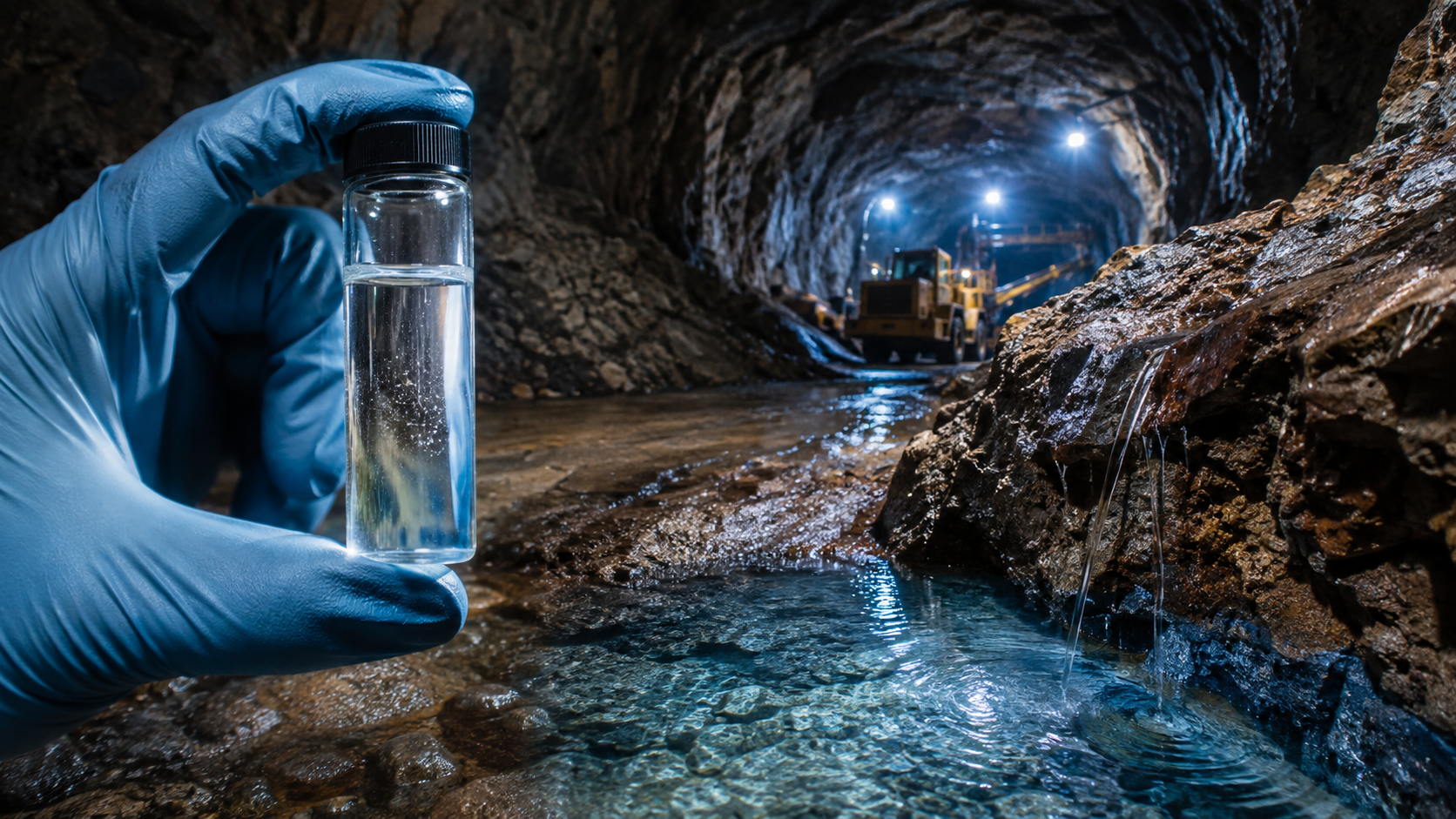
Deep beneath northern Ontario, in one of the world’s deepest mines, scientists found something far more surprising than the metal ore they were searching for: water that has been trapped underground for roughly two billion years. That’s older than plants, older than animals, and older than almost anything most people picture when they think about the history of life on Earth. It’s easy to see why this discovery keeps resurfacing in search results and news stories. This article explains where the water was found, how scientists figured out its age, what it’s actually like, and why it matters for science well beyond Canada.
Direct Answer
The Canadian mine known for billion-year-old water is Kidd Creek Mine near Timmins, Ontario. Water trapped in rock fractures roughly 2.4 to 3 kilometers underground has been dated to between about 1.5 and 2 billion years old, making it the oldest known water on Earth. Scientists dated it using noble gas analysis and found it also contains evidence of ancient microbial life that survives without sunlight.
Where This Ancient Water Was Found
Kidd Creek Mine, Ontario
The water comes from Kidd Creek Mine, an underground copper, zinc, and silver mine located about 24 kilometers north of Timmins, Ontario. Kidd Creek is the deepest base metal mine in the world, with excavation reaching close to 3,000 meters below the surface. The mine sits on the Canadian Shield, a huge expanse of ancient continental rock surrounding Hudson Bay, and its ore body formed roughly 2.7 billion years ago on what was once an ancient ocean floor.
Why This Location Made the Discovery Possible
Most of Earth’s original ocean floor has long since been recycled through plate tectonics, meaning rock from billions of years ago rarely survives at the surface or anywhere accessible to humans. Kidd Creek’s unusual depth and geological stability gave researchers a rare chance to reach rock, and the water trapped inside it, that had remained essentially undisturbed since the Precambrian era.
How Scientists Determined the Water’s Age
The Discovery Timeline
Geoscientist Barbara Sherwood Lollar, of the University of Toronto, first visited Kidd Creek in 1992. In 2013, her team, working with researchers led by Greg Holland, reported on fracture fluids collected about 2.4 kilometers underground and published findings in the journal Nature. That study estimated the water had a minimum residence time of around 1.5 billion years, already a record at the time. As mining operations pushed deeper, researchers followed. By 2016, at a depth approaching 3 kilometers, they identified water with an estimated age of roughly 2 billion years, a finding presented at the American Geophysical Union meeting that December. A follow-up 2018 study analyzing fracture fluids from about 2.9 kilometers down estimated mean residence times ranging from roughly 1 to 2.2 billion years, with the team settling on an average close to 1.7 billion years as its best overall estimate.
The Noble Gas Method
Dating water this old isn’t possible with the carbon dating methods used for more recent organic material. Instead, scientists rely on noble gases, elements like helium, neon, and xenon that accumulate in trapped water over extremely long timescales. As Sherwood Lollar has described it, the water “accumulates them, like passengers getting on a train.” By measuring the concentration of these gases, researchers can calculate roughly how long the water has been isolated from the surface and cut off from any newer water sources.
What the Ancient Water Is Actually Like
This isn’t clean drinking water sitting quietly underground. The water flowing out of Kidd Creek’s deep fractures is up to 10 times saltier than ordinary seawater, thick and almost syrupy in texture, and gives off a strong sulfuric smell. When exposed to oxygen at the surface, it changes color from clear to a faint orange, a reaction caused by iron dissolved from the surrounding rock. Sherwood Lollar has noted that, generally speaking, the older the water, the saltier it tends to be. She has personally tasted the water and described it as “terrible.”
Despite the unpleasant description, the water isn’t just a curiosity. It flows out of boreholes and fractures at rates of liters per minute, far more volume than researchers originally expected to find sealed away at that depth.
Why This Discovery Matters
A Window Into Ancient Earth Chemistry
Because this water has been isolated from the surface for so long, its chemistry offers a rare, direct look at conditions that existed on Earth billions of years ago, long before the atmosphere and oceans looked anything like they do today. Researchers see it as a potential clue to the kind of chemical environment that existed before or around the time life first began.
Evidence of Life Without Sunlight
Later research went further than simply dating the water. A 2024 study published in Communications Earth & Environment used genetic, lipid, and isotope evidence to identify an active microbial community living in fracture water roughly 2.4 kilometers down. The dominant organism identified, a salt-tolerant bacterium researchers named Candidatus Frackibacter, survives by processing hydrogen released from chemical reactions in the surrounding rock rather than relying on sunlight or photosynthesis in any way.
It’s worth being precise here: this doesn’t mean the microbes themselves are billions of years old. Researchers were careful to note that the organisms could be as young as the most recently mixed water in the fracture system, even if that water sits within a much older, isolated environment. To account for possible contamination in an active mine, the research team compared deep samples against water and microbes collected from exposed surfaces near the mine entrance.
Clues for the Search for Life on Other Planets
This kind of deep, sunless, chemically sustained ecosystem has drawn interest well beyond geology. NASA researchers have visited Kidd Creek specifically to study what its deep fluids and microbial life can suggest about the potential for similar life surviving beneath the surface of Mars or other planets, where sunlight-dependent life would be impossible but rock-water chemical reactions could still occur.
Common Misconceptions About This Discovery
Misconception: This is the only ancient water ever found underground. Kidd Creek holds the current record for the oldest dated water, but researchers don’t believe it’s necessarily unique. Similar ancient, isolated water may exist in deep, stable rock formations elsewhere in the world; scientists are actively searching other sites to compare chemistry and age.
Misconception: The water is exactly 2 billion years old, full stop. Different studies and different noble gas dating models have produced a range of estimates, generally between about 1.5 and 2 billion years, depending on the depth sampled and the specific method used. Scientists describe these as best estimates rather than a single, precise number.
Misconception: The microbes found in the water are billions of years old themselves. The water’s isolation age and the age of the organisms living in it aren’t the same thing. Researchers have explicitly cautioned that the microbes could be much younger than the water surrounding them.
Misconception: This water could safely be used as a resource. Given its extreme salinity, unusual chemistry, and depth, this water isn’t a practical source of drinking water or anything resembling it. Its scientific value lies in what its chemistry and isolation reveal, not in any practical use.
Real-World Example: A Sample You Can See
A sample of this billion-year-old water isn’t locked away in a lab forever. In November 2020, a sample collected from Kidd Creek was added to the permanent collection at Ingenium, Canada’s national museums of science and innovation, based in Ottawa. This gives members of the public a way to see, at least through a display case, physical evidence of one of the oldest known water sources on the planet.
Key Facts
- The water was found in Kidd Creek Mine, near Timmins, Ontario, the world’s deepest base metal mine.
- Estimates for the water’s age range from roughly 1.5 to 2 billion years, based on different studies and sampling depths.
- Scientists date the water using noble gas analysis rather than carbon dating.
- The water is up to 10 times saltier than seawater and gives off a strong sulfuric odor.
- The surrounding ore and rock formed approximately 2.7 billion years ago on an ancient ocean floor.
- A 2024 study identified an active microbial community living in the fracture water, sustained by hydrogen from rock-water reactions rather than sunlight.
- NASA researchers have studied the site for clues about potential life on Mars.
- A sample of the water is on public display at Ingenium in Ottawa.
Frequently Asked Questions
Q1: What is the oldest water on Earth?
Ans: The oldest confirmed water on Earth was found in Kidd Creek Mine in Ontario, Canada, with estimates placing its age at roughly 1.5 to 2 billion years old.
Q2: How do scientists know how old the water is?
Ans: Researchers use noble gas analysis, measuring elements like helium and xenon that accumulate in trapped water over long periods, to estimate how long the water has been isolated underground.
Q3: Can this ancient water be consumed?
Ans: No. It’s extremely salty, has an unpleasant sulfuric Ans: smell, and contains a complex, potentially harmful chemical composition. It isn’t intended or safe for drinking.
Q4: Does the water contain living organisms?
Ans: Yes. A 2024 study found evidence of an active microbial community in the fracture water, including a bacterium that survives on hydrogen released from surrounding rock rather than sunlight.
Q5: Is this the only place ancient water like this exists?
Ans: Probably not. Kidd Creek holds the current record for the oldest dated water, but scientists believe similar ancient, isolated water could exist in other deep, geologically stable locations around the world.
Q6: Why do scientists care about this discovery?
Ans: It offers a rare look at ancient Earth chemistry, evidence that life can survive in extreme, sunless environments, and clues that may help researchers evaluate whether similar conditions could support life on other planets, such as Mars.
Q7: Where can I see a sample of the water?
Ans: A sample collected from Kidd Creek is part of the permanent collection at Ingenium, Canada’s national museums of science and innovation, in Ottawa.
Key Takeaways
- The oldest known water on Earth was discovered in Kidd Creek Mine near Timmins, Ontario.
- Estimates place the water’s age between roughly 1.5 and 2 billion years, based on noble gas dating methods.
- The water is extremely salty, syrupy, and has a strong sulfuric smell, making it unsuitable for drinking.
- Researchers found an active microbial community living in the water, sustained by chemical reactions in the rock rather than sunlight.
- The discovery has implications for understanding both ancient Earth chemistry and the potential for life on other planets.
Conclusion
The billion-year-old water found deep in Ontario’s Kidd Creek Mine represents one of the more remarkable discoveries in modern geoscience, a direct physical link to conditions on Earth long before complex life existed. Beyond its age, the presence of microbial life surviving without sunlight has given researchers a new way to think about where life might exist, both on this planet and potentially on others. As scientists continue searching other deep, stable rock formations around the world, Kidd Creek’s record may eventually be matched or broken, but for now it remains the oldest known water on Earth.
Introduction
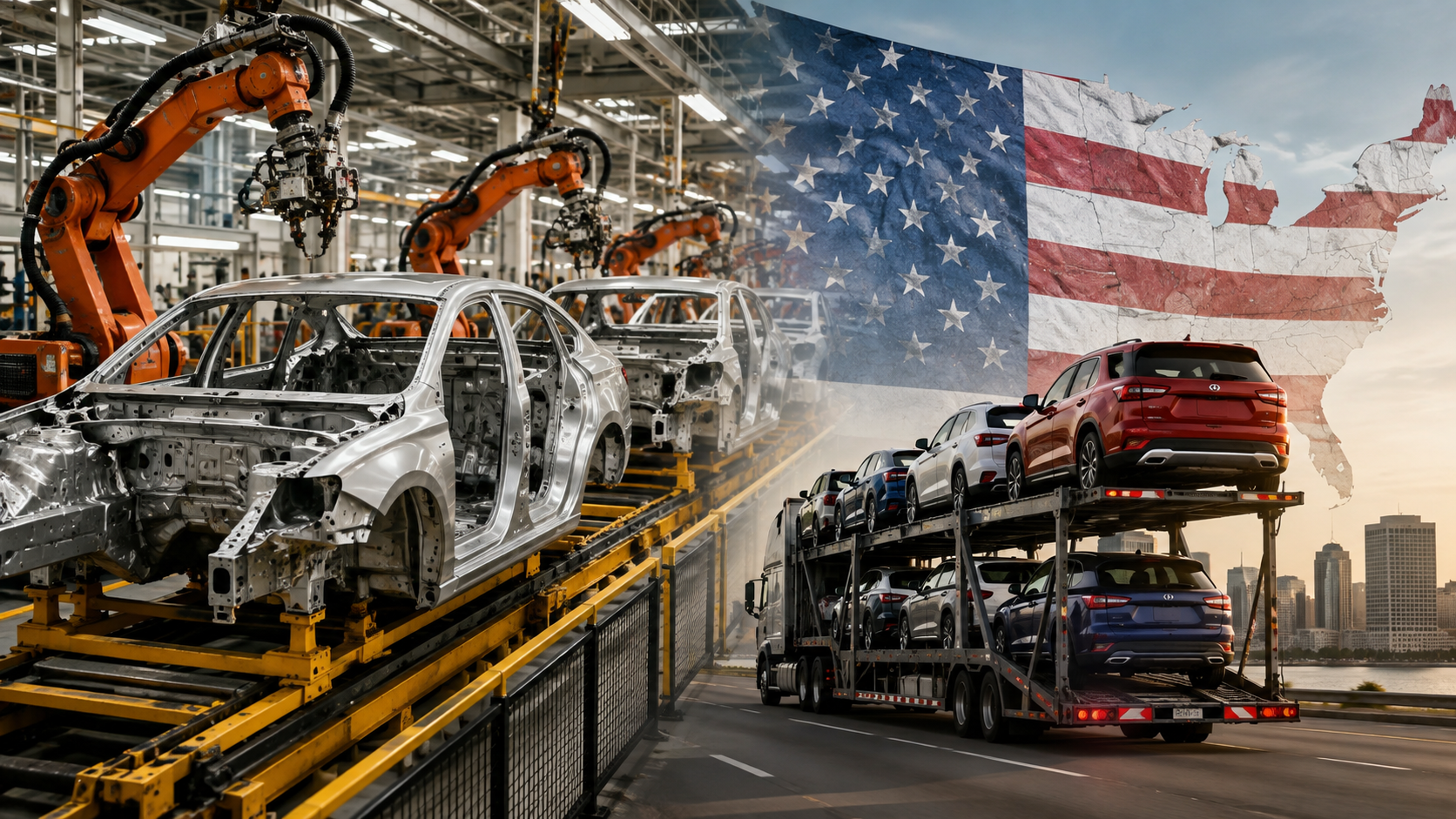
If you’ve noticed headlines about Toyota, BMW, or Nissan shifting car production into the United States, you’re seeing one of the more significant shakeups in the auto industry in decades. Buyers want to know whether their next vehicle will be built domestically, workers want to know if new plants mean new jobs, and industry watchers want to understand what’s actually driving these decisions. This article breaks down which automakers are relocating production, why they’re doing it, and what it actually means for prices, jobs, and the vehicles on dealer lots.
Direct Answer
Automaker production relocation to the US refers to car manufacturers shifting vehicle assembly from factories in Mexico, Canada, Japan, or Europe into US-based plants. This trend accelerated after 2025 due to steep new US import tariffs. Toyota, Honda, BMW, Mercedes-Benz, Volvo, and Nissan have all announced US production shifts, though most automakers are moving specific models into existing factories rather than building new ones from scratch.
Why Automakers Are Moving Production to the US
Tariff Policy Changes
The biggest driver behind this shift is trade policy. For years, light vehicles imported into the US faced a modest 2.5% tariff. That rate jumped sharply, in some cases by ten times or more, depending on the country of origin. Rates have since been negotiated down somewhat for certain trading partners: 10% for UK-made cars and SUVs (on the first 100,000 vehicles exported annually), and 15% for vehicles from the EU, Japan, and Korea. Even at these reduced levels, the tariffs are far higher than what automakers dealt with before, which changes the math on where it makes sense to build a car.
The Expiration of USMCA
Adding to the uncertainty, the United States-Mexico-Canada Agreement, the trade pact that had governed North American auto manufacturing since the first Trump administration, was not renewed. That kicked off a decade-long process to wind the agreement down, which removed a layer of predictability that automakers had relied on for years when deciding where to locate factories.
Government Pressure and Incentives
Beyond tariffs themselves, the current administration has pushed automakers directly, including linking reduced tariff rates for Japanese and Korean imports to commitments from those countries to invest more heavily in US industries. Some automakers have also floated their own proposals, such as Volkswagen’s suggestion that companies get a dollar of tariff relief for every dollar invested in US manufacturing, though this idea hasn’t been formally adopted by US authorities.
Which Automakers Are Actually Moving Production
Toyota
Toyota announced it will shift much of its Tacoma pickup production from Mexico to a $3.6 billion expansion of its existing San Antonio, Texas plant, where it already builds the Tundra and Sequoia. Notably, Toyota didn’t cite tariffs as the direct reason for the move, telling reporters its investments reflect “multi-decade decisions based on broader strategic goals” rather than a reaction to any single policy. The company will still build some Tacomas in Mexico. Toyota is also increasing RAV4 production in the US, shifting some output that had been based in Canada, while planning to maintain its existing Canadian output levels through other export allocations.
Honda
Honda has decided to build its next-generation Civic hybrid in Ohio instead of Mexico, and it’s increasing CR-V production in Ohio as well, moving some volume that had come from Canada. As with Toyota, Honda has said it intends to keep its Canadian production volumes steady by directing new export markets to its Ontario plant.
BMW
BMW is expanding SUV production at its Spartanburg, South Carolina factory, adding electric versions of the X5, X6, and X7 alongside the existing gas and plug-in hybrid models. An electric iX3, and likely a related iX4, are expected to join the lineup, built on BMW’s newer Neue Klasse platform even as the larger SUVs continue on the older CLAR platform in the same factory. A rugged off-road model, positioned as a rival to the Mercedes G-Wagen, is expected to begin US production around 2029.
Mercedes-Benz
Mercedes-Benz plans to add GLC crossover production to its existing Alabama factory by the end of 2027. Separately, Mercedes is unwinding parts of its manufacturing partnership with Nissan in Mexico and selling its stake in Nissan, a holdover from the peak years of the Renault-Nissan Alliance.
Volvo
Volvo is adding production of the XC60 plug-in hybrid to its underused factory in South Carolina, with output expected to begin by the end of 2026, ahead of Mercedes’ GLC timeline. Volvo has described this as part of a broader strategy of producing vehicles closer to where they’re sold.
Volkswagen and Audi
Volkswagen is expected to widen what it builds in the US, and Audi is likely to begin US production for the first time, probably at Volkswagen’s existing Chattanooga, Tennessee plant or at the new Scout Motors factory in South Carolina, part of a $2 billion investment.
Nissan
Nissan is taking a different path than most of its competitors: it’s cutting back production in Mexico while expanding SUV and crossover output in the US. Rogue production once planned for Japan is shifting to US plants, and the company is reviving the Xterra nameplate as a rugged SUV, with production expected to start in 2028. At the same time, Nissan is closing two Mexican factories, including its original Civac plant, the company’s first outside Japan, by March 2027.
General Motors
GM presents a more complicated picture. The company is facing an estimated $4 to $5 billion profit hit from tariffs tied to Buick imports from China and Trailblazer imports from Korea, but it hasn’t moved Buick production back to the US despite that pressure. GM is restarting limited production at its Canadian CAMI facility, while sourcing batteries from the US for those vehicles specifically to reduce the tariff burden when they’re shipped back into the American market.
Why Most Automakers Aren’t Moving Faster
Despite all the announcements, industry data shows the overall shift has been modest so far. Roughly 46% of cars purchased by US consumers were imported in the most recent full year, only slightly down from 47.7% the year before.
There are a few practical reasons the shift hasn’t been faster or broader.
Building factories is expensive and slow. Analysts note that constructing new US plants or meaningfully expanding existing ones takes years and costs billions of dollars, a level of commitment most automakers are unwilling to make in response to policies that a future administration could reverse.
Labor costs are higher in the US. Wages at US auto plants tend to run higher than in Mexico and some other manufacturing hubs, which offsets part of the savings automakers would get from avoiding tariffs.
Demand hasn’t dropped. Even with record-high vehicle prices, total US vehicle sales rose about 2% in the most recent year, giving automakers less incentive to disrupt supply chains that are still selling cars successfully.
Tariff costs vary widely by company. Mazda, which imports nearly all of its US-sold vehicles, faces an estimated $1.6 billion tariff bill that could cut its operating profits by 70 to 75%. Toyota’s estimated tariff bill is far larger in dollar terms, around $9.7 billion, but represents a smaller share of its profits, about 33%, because of its larger global scale. That difference in exposure explains why some automakers are moving faster than others.
Common Misconceptions About This Trend
Misconception: Every automaker is racing to build US factories. In reality, most companies moving production are shifting specific models into plants that already exist, not constructing new facilities. Genuinely new US factories remain rare.
Misconception: Tariffs are the only reason companies are relocating production. Some companies, including Toyota, have explicitly said their decisions reflect long-term strategic planning rather than a direct response to tariff policy, even while acknowledging that trade policy is a factor they have to account for.
Misconception: Moving production to the US will lower car prices. Higher US labor costs and the expense of building or converting factories can offset some or all of the tariff savings, so a shift in production location doesn’t automatically translate into cheaper vehicles for consumers.
Misconception: US-bound production shifts always mean production cuts elsewhere. Several companies, including Toyota and Honda, have said they intend to maintain existing production volumes in Canada by reallocating export markets, rather than simply shutting down or shrinking their non-US operations.
Key Facts
- Light vehicle import tariffs rose sharply from a historical 2.5% baseline, with current rates around 10% for UK vehicles (up to 100,000 annually) and 15% for the EU, Japan, and Korea.
- The USMCA trade agreement was not renewed, starting a 10-year wind-down process.
- Toyota is investing $3.6 billion to expand Tacoma production in San Antonio, Texas.
- BMW’s Spartanburg, South Carolina plant is adding electric X5, X6, X7, and iX3 production.
- Mercedes-Benz plans GLC production in Alabama by the end of 2027; Volvo’s XC60 PHEV production in South Carolina starts by the end of 2026.
- Nissan is closing two factories in Mexico while expanding SUV production in the US.
- About 46% of vehicles purchased by US consumers were imported in the most recent year, only slightly down from the prior year.
- Estimated tariff costs vary widely by company, from roughly $1.6 billion for Mazda to about $9.7 billion for Toyota.
Frequently Asked Questions
Q1: What does “automaker production relocation to the US” mean?
Ans: It refers to car manufacturers shifting vehicle assembly from factories outside the US, often in Mexico, Canada, Japan, or Europe, into US-based plants, typically to reduce exposure to import tariffs.
Q2:Why are automakers moving production to the US now?
Ans: Sharp increases in US auto import tariffs, the non-renewal of the USMCA trade agreement, and government pressure tied to trade negotiations have all pushed automakers to reconsider where they build vehicles.
Q3:Which automakers have announced US production moves?
Ans: Toyota, Honda, BMW, Mercedes-Benz, Volvo, Volkswagen, and Nissan have all announced some form of US production expansion or model relocation.
Q4:Will moving production to the US lower car prices?
Ans: Not necessarily. Higher US labor costs and the expense of expanding or building factories can offset tariff savings, so relocation doesn’t guarantee lower prices for buyers.
Q5:Are automakers building brand-new factories in the US?
Ans: Mostly not. Most companies are adding models to existing plants rather than constructing entirely new facilities, since new factories take years to build and cost billions of dollars.
Q6:Does this affect jobs in Mexico and Canada?
Ans: It varies by company. Nissan is closing two Mexican plants, while Toyota and Honda have said they plan to maintain their existing Canadian production volumes by shifting export markets rather than cutting output.
Q7: Is this trend likely to continue?
Ans: It depends heavily on future trade policy. Because tariff rates can change with a new administration, some automakers remain cautious about committing to large, multi-year US investments that could become unnecessary if policy shifts again.
Key Takeaways
- Rising US auto tariffs and the non-renewal of USMCA are the main forces pushing automakers toward US production.
- Toyota, Honda, BMW, Mercedes-Benz, Volvo, Volkswagen, and Nissan have all announced specific US production changes.
- Most shifts involve adding models to existing factories rather than building new ones.
- Roughly 46% of vehicles sold in the US are still imported, showing the overall shift remains limited so far.
- Tariff exposure varies significantly by automaker, which explains why some companies are moving faster than others.
- Moving production to the US doesn’t automatically mean lower prices, since US labor and construction costs can offset tariff savings.
Conclusion
Automaker production relocation to the US is a real and ongoing shift, but it’s happening unevenly and mostly through existing factories rather than a wholesale rebuilding of the industry’s footprint. Tariff policy, the unresolved future of USMCA, and each company’s specific import exposure are shaping which automakers move quickly and which ones are waiting to see how trade policy settles before committing billions of dollars to new manufacturing plans.

Christopher Knight’s Tribute to Jennifer Runyon: What Happened and Why It Matters
When a familiar face from television passes away, the tributes that follow often say as much about that person’s impact as any obituary could. That’s the case with Jennifer Runyon, an actress known to generations of TV viewers, and the heartfelt message her former co-star Christopher Knight shared after her death.
If you’re searching for details on this tribute, you’re likely trying to piece together who Jennifer Runyon was, how she and Christopher Knight knew each other, and what he actually said. Here’s the full picture.
Direct Answer
- Christopher Knight, best known for playing Peter Brady on The Brady Bunch, publicly paid tribute to actress Jennifer Runyon on Instagram after she died on March 6, 2026, at age 65. Runyon had worked with Knight both on the soap opera Another World and later in the TV movie A Very Brady Christmas, where she played a grown-up Cindy Brady. Knight’s message reflected on their years of friendship and praised her warmth and professionalism.
Who Was Jennifer Runyon?
Jennifer Runyon built a career in television and film during the 1980s and beyond. She’s best remembered for a handful of standout roles:
- A Very Brady Christmas (1988) — Runyon stepped into the role of a college-age Cindy Brady, replacing original cast member Susan Olsen, who was on her honeymoon during filming.
- Charles in Charge — a recurring role on the popular sitcom.
- Ghostbusters (1984) — a small but memorable part in the blockbuster comedy.
- Another World — a daytime soap opera where she played the character Sally Frame.
After stepping back from acting in the 1990s, Runyon shifted her focus toward family life and teaching acting to children in schools across Idaho and Oregon. That second chapter of her career, largely out of the spotlight, shaped how many people who knew her personally remembered her: as a mentor as much as a performer.
Who Is Christopher Knight?
Christopher Knight, now 68, is widely recognized for playing Peter Brady on The Brady Bunch, a role he held from the show’s original run between 1969 and 1974 and reprised in various follow-up projects through the 1980s and 1990s. Beyond that iconic part, Knight has remained connected to the extended Brady Bunch cast over the decades, often reconnecting with former co-stars for reunions, specials, and tributes.
How Knight and Runyon Knew Each Other
Their working relationship actually predates their most famous collaboration. In the early 1980s, Knight and Runyon appeared together on the daytime soap opera Another World, where Knight played a character named Leigh Hobson opposite Runyon’s Sally Frame. In that storyline, the two played a romantic couple.
Years later, the pair reunited for A Very Brady Christmas, where the dynamic flipped: Runyon took on the role of Cindy Brady, making her Knight’s on-screen sister instead of his soap opera love interest. That shift — from on-screen couple to on-screen siblings — became a detail many outlets highlighted when covering the tribute, since it captured the kind of long, winding relationships that develop between actors who cross paths more than once in an industry built on recurring collaborations.
What Christopher Knight Said
Following news of Runyon’s death, Knight shared a tribute on Instagram accompanied by a photo from their time together on A Very Brady Christmas. In it, he expressed sadness at learning of her passing and reflected on the privilege of having worked with her multiple times over the years. He described her as an unusually kind and dedicated person to work alongside, and extended his sympathy to her family and everyone who knew her.
The tribute was brief but personal, focused less on her filmography and more on the kind of colleague and friend she had been.
Other Tributes to Jennifer Runyon
Knight wasn’t the only person to speak publicly about Runyon’s death. Her brother, David Runyon, also shared a tribute, describing her as a devoted mother and talented actress who had a deep appreciation for the natural world. Other former colleagues and fans added their own remembrances across social media in the days that followed, many echoing the same themes: her kindness, her warmth on set, and the quiet second act of her life spent teaching young people to act.
Taken together, these tributes paint a picture of someone whose influence extended well beyond her on-screen credits.
Why This Story Resonated With Fans
Part of why this tribute drew attention comes down to nostalgia. The Brady Bunch remains one of the most recognized family sitcoms in American television history, and A Very Brady Christmas served as a reunion special that brought much of the original cast back together for new audiences. Runyon’s role in that special, stepping into an established character during a beloved franchise moment, gave her a lasting connection to a show far bigger than her single appearance in it.
For fans who grew up watching both The Brady Bunch and Charles in Charge, Runyon’s death connected two different corners of their television childhood, which explains why the story spread across entertainment outlets fairly quickly.
Common Misconceptions
Misconception: Runyon played the original Cindy Brady. She didn’t. The original role belonged to Susan Olsen throughout the classic series. Runyon only took over the part temporarily in A Very Brady Christmas because Olsen was unavailable during filming.
Misconception: Knight and Runyon only worked together once. In fact, their collaboration began years earlier on Another World, well before the Brady Christmas special brought them together again.
Misconception: The tribute was their only public interaction. While the Instagram tribute is what circulated most widely after her death, it reflected a working relationship and friendship that spanned more than one production over several years.
Key Facts
- Jennifer Runyon died on March 6, 2026, at age 65.
- She was known for roles in A Very Brady Christmas, Charles in Charge, Ghostbusters, and Another World.
- She played a grown-up Cindy Brady in A Very Brady Christmas, replacing Susan Olsen for that production.
- Christopher Knight and Runyon first worked together on the soap opera Another World in the early 1980s.
- Knight, 68, is known for playing Peter Brady on The Brady Bunch.
- Knight shared his tribute to Runyon on Instagram, alongside a photo from their time on A Very Brady Christmas.
- After leaving acting in the 1990s, Runyon taught acting to children in Idaho and Oregon.
Frequently Asked Questions
Q1: Who was Jennifer Runyon?
Ans: She was an American actress known for roles in Charles in Charge, Ghostbusters, Another World, and A Very Brady Christmas. She later became an acting teacher for children.
Q2: How did Jennifer Runyon die?
Ans: Public reporting has confirmed she died on March 6, 2026, at age 65, surrounded by her family. A specific cause of death has not been widely or consistently confirmed across major outlets.
Q3: What did Christopher Knight say about Jennifer Runyon?
Ans: He shared an Instagram tribute expressing sadness over her passing, describing her as one of the kindest and most conscientious people he had worked with, and sending condolences to her family and loved ones.
Q4: How are Christopher Knight and Jennifer Runyon connected?
Ans: They worked together twice: first on the soap opera Another World in the early 1980s, and later in the TV movie A Very Brady Christmas, where Runyon played a grown-up Cindy Brady opposite Knight’s Peter Brady.
Q5: Did Jennifer Runyon play the original Cindy Brady?
Ans: No. She took over the role for A Very Brady Christmas only, filling in for original cast member Susan Olsen. The role in the classic 1969–1974 series belonged to Olsen.
Q6: What is Christopher Knight known for today?
Ans: Beyond his role as Peter Brady, Knight has remained a recognizable figure connected to The Brady Bunch legacy, appearing in reunions, specials, and tributes tied to the show and its cast over the decades.
Key Takeaways
- Jennifer Runyon died on March 6, 2026, at age 65, and was remembered for roles in A Very Brady Christmas, Charles in Charge, Ghostbusters, and Another World.
- Christopher Knight, known for playing Peter Brady, shared a personal Instagram tribute honoring their years of friendship and collaboration.
- Knight and Runyon first worked together on the soap opera Another World before reuniting for A Very Brady Christmas.
- Runyon later taught acting to children after stepping away from her on-screen career.
- Tributes from Knight, her brother David Runyon, and others emphasized her kindness and lasting impact both on set and off.
Conclusion
Christopher Knight’s tribute to Jennifer Runyon captured more than a passing professional connection. It reflected a friendship built across two very different projects, separated by years, and it added to a broader wave of remembrances that highlighted who Jennifer Runyon was beyond her screen credits. For fans of The Brady Bunch and the shows Runyon appeared in over her career, the tribute offered a genuine, human reminder of the relationships that outlast the productions that create them.
-

 News2 months ago
Did Bruce Willis Pass Away? The Truth Explained
-

 News4 months ago
Who Is Julissa Thaler? The Case of Eli Hart and a Broken Child Welfare System
-

 Food3 months ago
What Is VMC Paloma? Everything You Need to Know
-

 Technology2 months ago
Christopher Knight’s Tribute to Jennifer Runyon Explained
-

 Heath2 months ago
How to Prevent Freezer Burn: A Complete Guide
-

 Sports3 months ago
Red Sox vs Reds: History, 2026 Matchups, and What Makes This Rivalry Worth Watching
-

 News3 months ago
Alexander Brothers: Case Timeline and Key Facts
-

 News3 months ago
Cheapest States to Live In: 2026 Rankings and Guide
Pingback: Best Wireless Earbuds Under 200 Dollars 2024: Top Picks