
Sports
Red Sox vs Reds: History, 2026 Matchups, and What Makes This Rivalry Worth Watching

Introduction
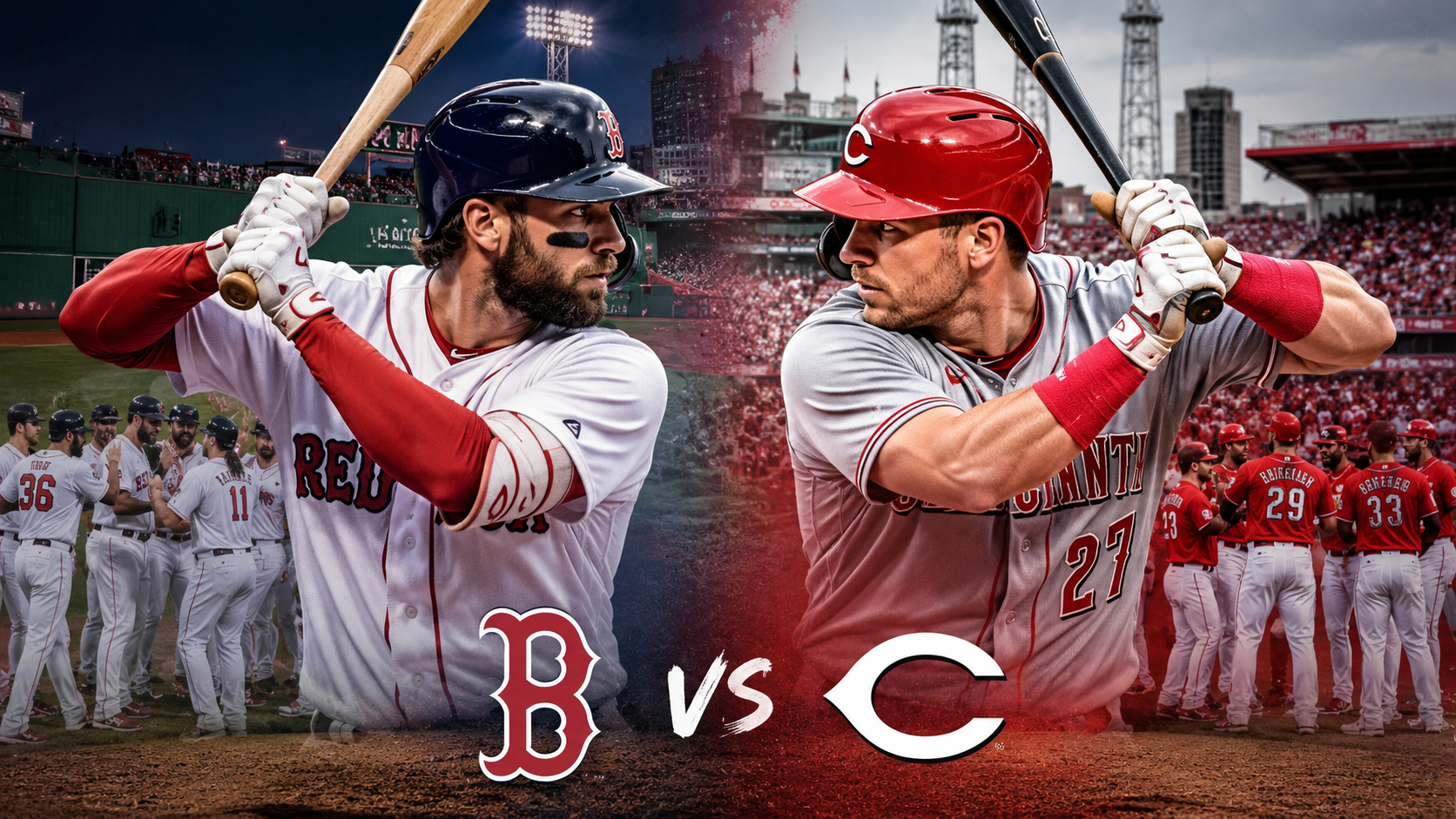
Type “Red Sox vs Reds” into a search bar and you’ll likely land in one of two eras: a legendary World Series from the 1970s, or a fresh set of box scores from a recent Major League Baseball season. Both are worth understanding, because the two teams don’t share a division and rarely meet, which is exactly why every encounter between them tends to draw attention.
Boston plays in the American League East. Cincinnati plays in the National League Central. Outside of interleague scheduling or a World Series appearance, these two franchises simply don’t cross paths. That rarity is part of the appeal, and it’s also why people search for background on the matchup instead of just checking a daily scoreboard.
Direct Answer
Red Sox vs Reds refers to matchups between the Boston Red Sox (American League) and Cincinnati Reds (National League). The two teams met in the 1975 World Series, one of the most celebrated in baseball history, decided by Carlton Fisk’s Game 6 home run before Cincinnati won Game 7. In 2026, they opened the MLB regular season against each other in a three-game series at Great American Ball Park in Cincinnati, split 2-1 in the Reds’ favor.
Background: Two Franchises, Different Leagues
The Red Sox and Reds are both charter members of baseball’s oldest traditions. Boston has played in the American League since 1901, while Cincinnati is one of the National League’s founding franchises, tracing its roots to the 1880s. Because they sit in separate leagues, they only meet under two circumstances:
- Interleague play, a scheduling format MLB introduced in 1997 that lets AL and NL teams face off during the regular season
- The World Series, where the American League and National League champions meet each October
This structural separation is the main reason “Red Sox vs Reds” isn’t a familiar week-to-week rivalry the way Red Sox vs Yankees is. When these two do meet, it tends to be a notable event rather than a routine game.
The 1975 World Series: Why It Still Comes Up
Ask longtime baseball fans about Red Sox vs Reds and many will point straight to 1975. That October, the Cincinnati Reds — known as the “Big Red Machine” and led by Pete Rose, Joe Morgan, and Johnny Bench — faced a Boston team built around rookies Fred Lynn and Jim Rice, along with catcher Carlton Fisk.
Cincinnati had won 108 regular-season games that year and looked nearly unbeatable. Boston had upset the three-time defending champion Oakland Athletics to reach the Series. What followed was a seven-game battle that’s still ranked among the greatest World Series ever played.
The signature moment came in Game 6. With the Red Sox facing elimination, Bernie Carbo hit a game-tying three-run homer late in the game, and Carlton Fisk won it in the 12th inning with a home run down the left-field line, famously waving his arms to try to keep the ball fair as it sailed toward the foul pole. That image, captured by an unattended TV camera, became one of the most replayed moments in sports broadcasting history.
Cincinnati answered the next night, winning Game 7 to take the championship and end a 35-year title drought of its own. For Boston, the loss extended a championship drought that had started in 1918 and wouldn’t end until 2004.
Key takeaway: the 1975 World Series is the reason Red Sox vs Reds carries historical weight, even though the teams meet infrequently. It’s often mentioned alongside the 1991 World Series as one of the two best in the sport’s history.
The 2026 Season-Opening Series
More recently, Red Sox vs Reds resurfaced because Major League Baseball scheduled the two teams to open the 2026 season against each other at Great American Ball Park in Cincinnati. The series played out as follows:
- Game 1 (March 26): Boston won 3-0. Red Sox starter Garrett Crochet allowed just three hits over six scoreless innings, and Ceddanne Rafaela drove in the go-ahead run in the seventh.
- Game 2 (March 28): Cincinnati won 6-5 in 11 innings. Dane Myers singled home the winning run after both teams traded leads late.
- Game 3 (March 29): Cincinnati won 3-2, taking the series two games to one.
For fans checking scores or catching up after the fact, this series is the most likely reason “Red Sox vs Reds” is trending as a search term in 2026. It’s a good example of how interleague and opening-series matchups can put two franchises with little shared history back in the same conversation.
How Interleague Games Between These Two Work
Since the introduction of a balanced schedule format in recent years, every MLB team plays every other team at least once per season, including across leagues. That means Red Sox vs Reds now happens on a fairly predictable basis rather than depending on chance scheduling or a World Series pairing. A season series between the two is typically short — often two or three games — rather than the extended series clubs play against division rivals.
This matters for readers trying to understand why coverage of Red Sox vs Reds looks different from coverage of, say, Red Sox vs Yankees. There’s no decades-long grudge or standings implication tied to the head-to-head record. The interest comes from watching two well-known, historically significant franchises play a short series rather than from postseason stakes.
Common Mistakes and Misconceptions
Mistake: Assuming Red Sox vs Reds is a long-running rivalry like Red Sox vs Yankees. It isn’t. The two teams are in different leagues and different regions, and their games carry no built-in division rivalry.
Mistake: Confusing the Reds (Cincinnati) with the Red Sox (Boston) due to similar names. They’re separate, unrelated franchises. The Reds are named for their uniform color, dating back to the 1869 Cincinnati Red Stockings, one of the first professional baseball teams. The Red Sox trace their name to Boston’s early 20th-century uniforms as well, but the two clubs have never been affiliated.
Mistake: Thinking the two teams meet every year. Before the 2023 schedule changes, interleague matchups depended on rotating schedules, so Red Sox vs Reds games could be several years apart. Under the current balanced schedule, they meet more predictably, though usually for only a short series.
Mistake: Believing the 1975 World Series was a blowout. It was the opposite — a tightly contested seven-game series where four of the seven games were decided by one run or in extra innings.
Key Facts
- The Red Sox and Reds have met in the World Series once, in 1975, won by Cincinnati four games to three.
- Carlton Fisk’s Game 6 home run in that series is widely regarded as one of the most iconic moments in World Series history.
- Pete Rose was named the 1975 World Series MVP after batting .370.
- The Red Sox and Reds opened the 2026 MLB regular season against each other in Cincinnati, with the Reds taking the three-game series 2-1.
- Interleague play between AL and NL teams has existed since 1997; a fully balanced schedule guaranteeing yearly matchups between every pair of teams began in 2023.
Frequently Asked Questions
Q1: What is the history between the Red Sox and Reds?
Ans: Their most significant history is the 1975 World Series, which Cincinnati won in seven games. Outside of that, they’ve met occasionally in interleague play, most recently as 2026 season-opening opponents.
Q2: Why did the Red Sox and Reds play each other in 2026?
Ans: MLB’s schedule makers set Cincinnati as Boston’s Opening Day opponent for the 2026 season, part of the league’s practice of scheduling marquee or notable interleague matchups to open the year.
Q3: Is there a rivalry between the Red Sox and Reds?
Ans: Not in the traditional sense of division rivals with decades of repeated head-to-head games.
Q4: Who won the 1975 World Series?
Ans: The Cincinnati Reds won, four games to three, clinching the title in Game 7 at Fenway Park.
Q5: How often do the Red Sox and Reds play now?
Ans: Under MLB’s current balanced schedule format, every team plays every other team at least once per season, so Red Sox vs Reds games now happen annually, typically as a short series of two or three games.
Q6: Where can I find current Red Sox vs Reds schedules and results?
Ans:MLB.com, ESPN, and Baseball-Reference all publish schedules, box scores, and standings that are updated in real time during the season.
Key Takeaways
- Red Sox vs Reds is best known historically for the 1975 World Series, a seven-game classic capped by Carlton Fisk’s walk-off home run in Game 6.
- The two franchises play in different leagues, so they only meet through interleague scheduling or a World Series matchup.
- In 2026, the Red Sox and Reds opened the MLB season against each other in Cincinnati, with the Reds winning the series 2-1.
- Under MLB’s current schedule format, these two teams now meet at least once every season, usually for a short series rather than an extended set of games.
- The matchup isn’t a traditional rivalry — its significance comes from shared postseason history rather than ongoing competitive stakes.
Conclusion
Red Sox vs Reds isn’t a matchup defined by yearly tension or a long shared history the way some rivalries are. Its significance comes from a single, unforgettable World Series in 1975 and from the occasional modern meeting that reminds fans of that history. Whether someone is searching for details on Fisk’s home run or checking how a recent series between the two teams played out, the story behind Red Sox vs Reds is really a story about two storied franchises crossing paths only rarely — and making it count when they do.
Introduction
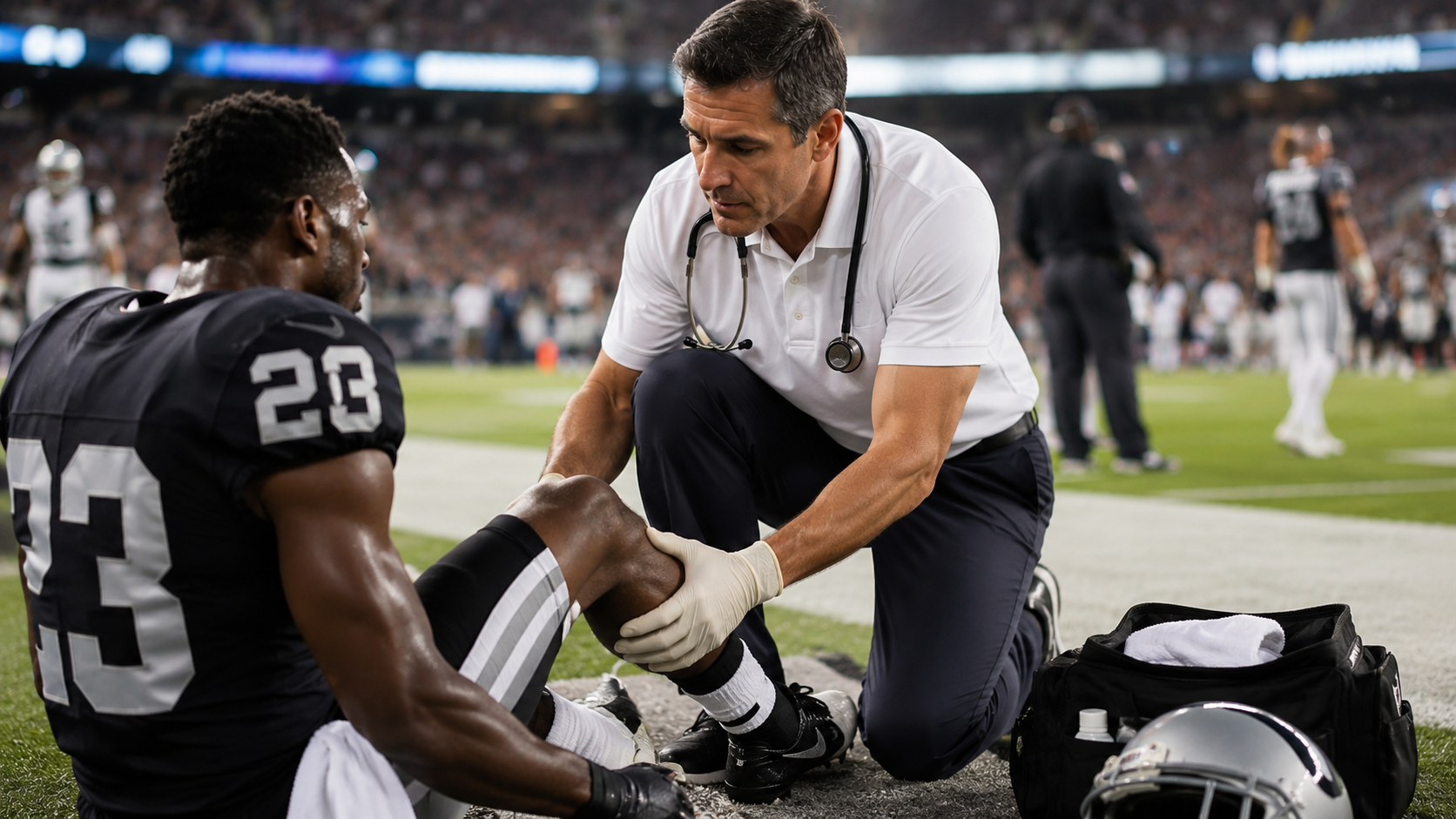
Every time a player goes down on the field and a cart rolls out, there’s a doctor involved in that decision long before the cameras find them. NFL doctors work far beyond the sidelines you see on Sundays. They’re the people deciding whether a concussed player can return to a game, whether a torn ligament needs surgery this week or this offseason, and whether a prospect’s medical history is a red flag before the draft.
People search for “NFL doctor” for a few different reasons. Some are curious what the job actually involves. Others are medical students or athletic trainers wondering how someone lands that role. And some just want to understand who’s making the call when a player gets hurt on television. This article covers all of it.
Direct Answer: What Is an NFL Doctor?
An NFL doctor, formally called a team physician, is a licensed physician responsible for the medical care of a professional football team’s players. Their duties include diagnosing and treating injuries, managing concussion protocol, clearing players for return to play, conducting pre-draft physicals, and coordinating with athletic trainers and specialists. Most are orthopedic surgeons or sports medicine specialists hired directly by a team’s front office, and they remain on call year-round, not just on game days.
What NFL Doctors Actually Do
The title “team doctor” undersells how broad the job is. A head team physician typically oversees a full medical staff that can include additional physicians, athletic trainers, physical therapists, and specialists in areas like cardiology or neurology. Team physicians also help shape specific NFL recommendations, guidelines, and treatment protocols, so every club handles injuries with a consistent standard of care.
Their responsibilities generally break down into a few core areas:
Injury care and treatment. This is the most visible part of the job. When a player is hurt during a game or practice, the team physician evaluates the injury, decides on immediate treatment, and maps out a recovery plan.
Return-to-play decisions. One of the more sensitive parts of the role is deciding when an injured player is medically cleared to play again. This applies to everything from a sprained ankle to a concussion to post-surgical recovery.
Pre-draft and pre-signing physicals. Before a team signs or drafts a player, doctors review their medical history and conduct physical exams to flag any injury risks. This information factors into a team’s decision on whether to draft or sign someone.
Ongoing player health. Team doctors don’t disappear in the offseason. Players train, rehab, and sometimes get injured outside the regular season, and the medical staff stays involved.
Injury documentation. Injuries are tracked in a league-wide injury surveillance system, which helps researchers and teams study injury trends, treatment outcomes, and long-term patterns across the NFL.
Who Actually Employs NFL Doctors
NFL team doctors aren’t league employees. Each of the 32 NFL clubs selects and hires its own medical staff, typically through a partnership with a local hospital system or orthopedic practice rather than as a direct in-house hire. That’s why you’ll often see a team physician’s name tied to a regional medical group, such as an orthopedic surgeon from a hospital system in the team’s home city.
Many team physicians also work with other pro sports franchises in the same market, covering an NHL, NBA, or MLB team in addition to their NFL role. It’s common practice, and it reflects how specialized and limited the pool of qualified sports medicine physicians really is.
How Someone Becomes an NFL Doctor
There’s no shortcut into this career, and the training path is long. A typical route looks like this:
- Four years of undergraduate study, usually with a pre-med focus in biology, chemistry, or a related science.
- Four years of medical school, earning an MD or DO degree.
- Four to five years of residency, most often in orthopedic surgery, though some team doctors come from internal medicine, family medicine, or emergency medicine backgrounds.
- One year of fellowship training in sports medicine, which is where most future team physicians gain hands-on experience working with athletes.
- Years of experience at lower levels, typically starting as a team physician for a high school or college program before ever being considered for a professional team.
That last step matters more than people expect. Nearly every NFL team physician built their reputation working with younger athletes first. Reaching the professional level generally means putting in years, and often volunteering, at the high school and collegiate level while building relationships within the sports medicine community.
Beyond formal training, several current NFL team physicians have pointed to networking and reputation as being just as important as credentials. Dr. James Voos, head team physician for the Cleveland Browns and president of the NFL Physicians Society, has said that relationships built early in a career, like working alongside athletic trainers or scouts who later move into influential roles, often open doors that qualifications alone don’t.
The NFL Physicians Society
Most NFL team doctors belong to the NFL Physicians Society (NFLPS), a professional organization founded in 1966. The NFLPS has more than 150 members representing all 32 NFL teams, and it works closely with the Professional Football Athletic Trainers Society, the NFL itself, and the National Athletic Trainers Association to coordinate medical standards across the league. The organization exists to support consistent, high-quality care across every team, rather than leaving injury management entirely up to each individual club.
Salary Range for NFL Team Doctors
Compensation for NFL team physicians varies quite a bit depending on specialty, experience, and location. Orthopedic surgeons, who make up the largest share of team physicians, tend to earn toward the higher end of the range, while other specialists such as sports psychiatrists typically earn less. Overall estimates for NFL team doctor compensation span roughly $200,000 to over $500,000 annually, though it’s worth noting that most team physicians aren’t paid a standalone NFL salary. Instead, their team role is usually layered on top of income from their primary hospital or private practice position.
Why the Job Is More Demanding Than It Looks
Being an NFL doctor isn’t a part-time gig limited to Sunday afternoons. Physicians who’ve done the job describe being on call around the clock, all year, not just during football season. Injuries don’t stop when the season ends, and players continue training, rehabbing, and occasionally getting hurt in the offseason.
Football also produces a different injury profile than most other sports. It’s a collision sport rather than a simple contact sport, meaning the physical forces involved tend to produce more severe injuries than in non-collision sports. One study by an NFL team physician found that close to 9% of players tear their ACL within two years of being drafted, which gives a sense of how significant the injury burden really is at the professional level.
Common Mistakes and Misconceptions
Mistake: Thinking team doctors only work on game day. In reality, most of the job happens during the week, in the training room, and in the offseason. Game day is just the most visible part.
Mistake: Assuming NFL doctors are hired by the league. They’re hired individually by each team, usually through a partnership with a local hospital or orthopedic group, not by the NFL as a central employer.
Mistake: Believing the job is purely medical, with no complications. Team doctors sit in an unusual position. They have a duty to care for the player as a patient, but they’re also employed by the club, which has its own interests in whether a player is available to play. Researchers who study sports medicine ethics have pointed out that this creates an inherent structural tension, since the same doctor is often responsible both for treating the player and for advising the team on the player’s availability. This doesn’t mean team doctors act unethically, but it’s a real and recognized aspect of how the role is structured.
Mistake: Assuming every team physician is an orthopedic surgeon. While orthopedics is the most common background, team physicians can also come from internal medicine, primary care sports medicine, emergency medicine, cardiology, or neurology, depending on the needs of the specific medical staff.
Real-World Example: A Concussion on Game Day
Here’s how a typical scenario plays out. A player takes a hard hit and appears disoriented getting up. Play stops, and an unaffiliated neurotrauma consultant, working alongside the team’s medical staff, pulls the player aside for a concussion evaluation using the league’s standardized protocol. If there’s any sign of a concussion, the player is removed from the game immediately, regardless of what the score is or how important the moment seems.
The team physician then oversees the player’s recovery over the following days, which can include cognitive rest, a gradual return to physical activity, and a series of check-ins before the player is cleared to practice, let alone play in another game. This protocol exists specifically because return-to-play decisions used to be inconsistent across teams, and head injuries carry long-term risk if managed poorly.
Key Facts
- NFL team doctors are called team physicians and are hired individually by each of the 32 NFL clubs, not by the league office.
- Most come from orthopedic surgery, though internal medicine, family medicine, and emergency medicine backgrounds are also common.
- Becoming a team physician typically requires four years of undergraduate study, four years of medical school, four to five years of residency, and one year of sports medicine fellowship.
- Most team physicians previously worked with high school or college teams before reaching the NFL level.
- The NFL Physicians Society, founded in 1966, has more than 150 members supporting all 32 teams.
- Estimated compensation ranges roughly from $200,000 to over $500,000 annually, varying by specialty and role.
- Team doctors are on call year-round, not just during the football season.
- All player injuries are logged in a league-wide injury surveillance database to track treatment and outcomes over time.
FAQ
Q1: What does an NFL doctor do?
Ans: An NFL doctor, or team physician, diagnoses and treats player injuries, manages concussion protocol, decides when injured players can return to play, and conducts medical evaluations of prospective players.
Q2: How do you become an NFL team doctor?
Ans: The typical path includes four years of undergraduate study, medical school, a residency (commonly in orthopedic surgery), and a sports medicine fellowship, followed by years of experience treating athletes at the high school or college level before reaching the professional level.
Q3: Are NFL doctors employed by the NFL?
Ans: No. Each team hires its own medical staff, usually through a partnership with a local hospital system or orthopedic practice, rather than through the league itself.
Q4: How much does an NFL team doctor make?
Ans: Compensation estimates generally range from around $200,000 to over $500,000 per year, depending on specialty, experience, and the physician’s role with the team. Many also maintain separate income from a primary hospital or private practice.
Q5: Is being an NFL doctor a full-time job?
Ans: It’s typically layered on top of a physician’s primary medical practice rather than a standalone full-time position, but the on-call responsibility is essentially year-round.
Q6: What’s the difference between a team physician and an athletic trainer?
Ans: A team physician is a licensed doctor responsible for diagnosis, treatment decisions, and medical clearance. Athletic trainers work under the physician’s direction, handling day-to-day injury prevention, rehabilitation, and on-field first response.
Q7: Do NFL doctors decide if a player can play, or does the coach?
Ans: Medical clearance is a doctor’s decision, not a coaching decision. Coaches don’t have authority to override a medical disqualification, particularly under concussion protocol.
Key Takeaways
- NFL doctors, formally called team physicians, manage injury treatment, return-to-play decisions, and pre-draft medical evaluations for their team.
- They’re hired by individual clubs, not the league, often through a hospital or orthopedic group partnership.
- Becoming one requires medical school, residency, and a sports medicine fellowship, plus years of lower-level team experience first.
- Most belong to the NFL Physicians Society, which supports consistent medical standards across all 32 teams.
- The role carries an inherent tension between serving the player’s health interests and the team’s competitive interests, which researchers have identified as a structural feature of the job rather than a personal ethics failure.
- Compensation varies widely and is often combined with income from a physician’s primary practice.
Conclusion
The doctor standing on an NFL sideline has usually spent close to a decade and a half in training and lower-level team roles before ever reaching that position. Their work covers far more than game-day injuries. It includes offseason rehab, pre-draft evaluations, concussion management, and constant coordination with athletic trainers and specialists. Understanding what the role actually involves gives a clearer picture of just how much medical infrastructure sits behind every player on the field.
-

 News1 month ago
Who Is Julissa Thaler? The Case of Eli Hart and a Broken Child Welfare System
-

 Society3 weeks ago
Sexism Story: Real Experiences, What They Reveal, and Why They Matter
-

 Food1 week ago
What Is VMC Paloma? Everything You Need to Know
-
 Sports1 week ago
NFL Doctor: What They Do and How to Become One
-

 News1 week ago
Giraffe Calf Euthanized Seneca Park Zoo: What Happened
-

 News3 weeks ago
Cook Øerne: Alt du skal vide om Stillehavets perle
-

 News3 weeks ago
Wgton: What It Means and Everything About Wellington, New Zealand
-

 News1 week ago
Cheapest States to Live In: 2026 Rankings and Guide